Reflexology Socks: What They Are, How to Use Them, and Do They Work?
Updated November 5, 2026 · 8 min read
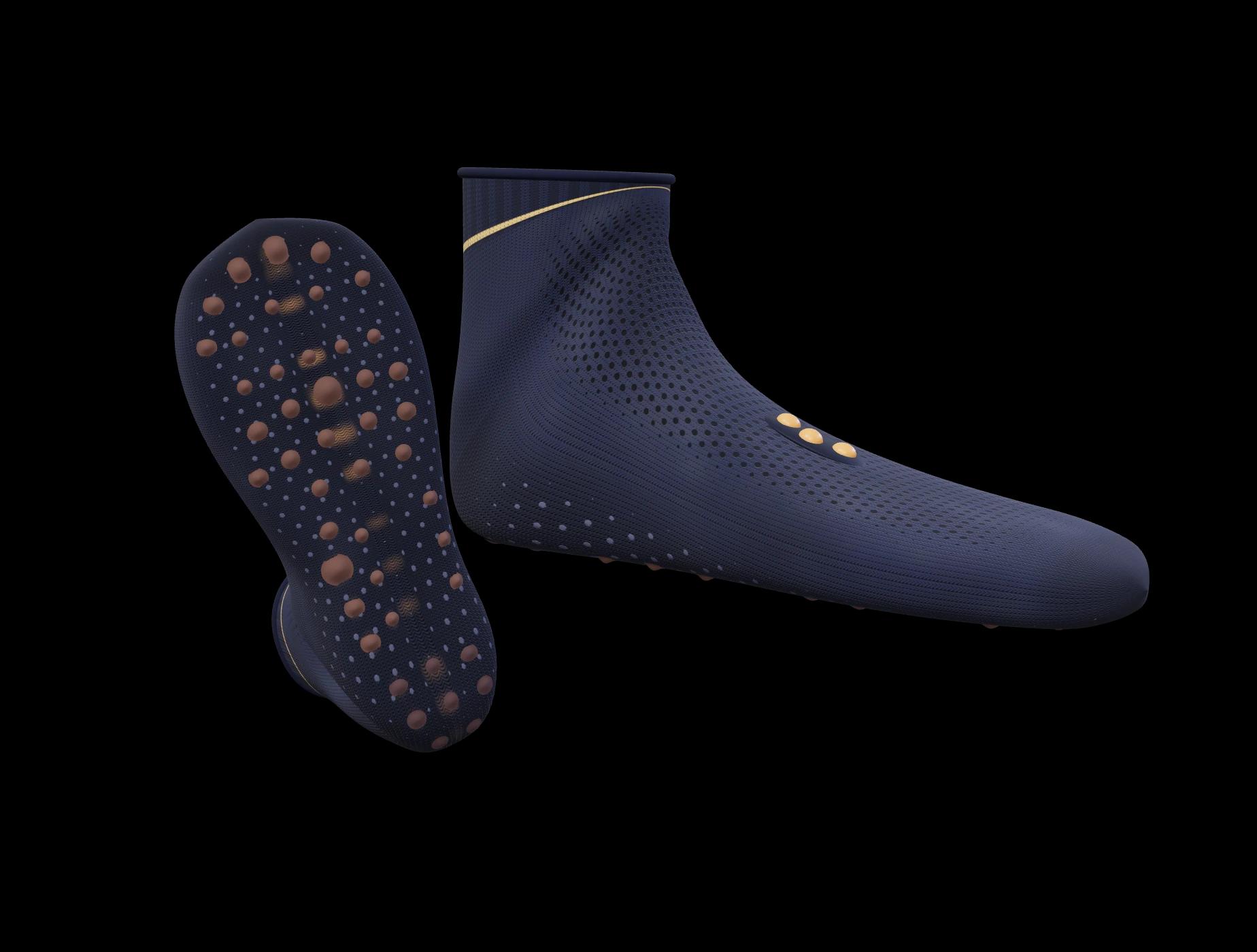
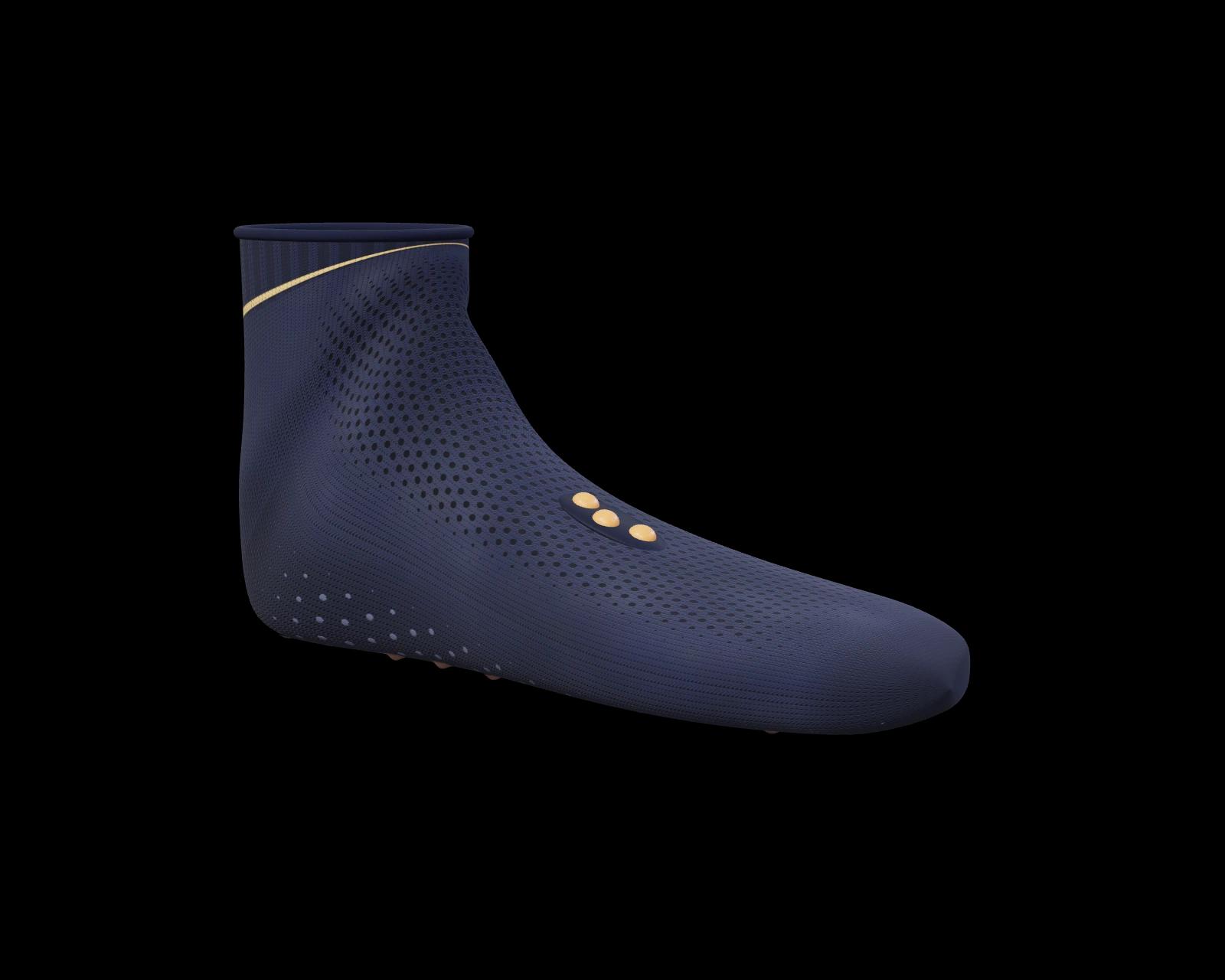
3D rendering of the production design.
The short answer
Reflexology socks come in two kinds: printed chart socks that show you where to press with a thumb or tool, and socks with raised nubs inside that press into the sole when you push your foot against something. Firm pressure on the feet feels good and relaxing to many people. The idea that foot points affect organs is not supported by good evidence, so buy them for comfort, not as a treatment.
Search for reflexology socks and you will find two quite different products sharing one name, plus two more names (acupressure socks and massage socks) used for the same things. This guide sorts out which is which, how to use each kind, what to check before you buy, and what the evidence says about whether they work. The short version: they can feel very good, and that is the claim that holds up.
Two products, one name
Printed chart socks
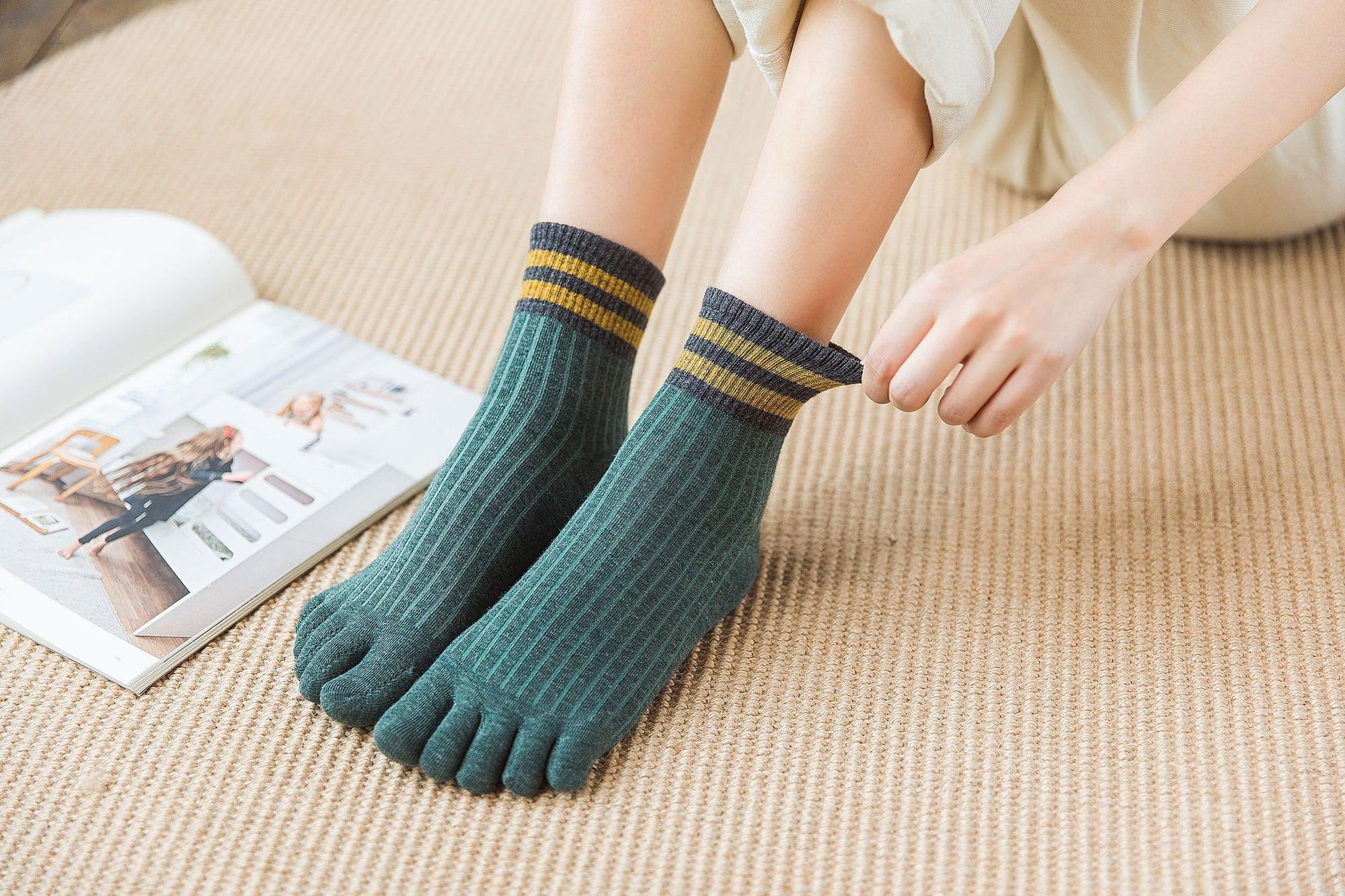
These are ordinary knit socks with a reflexology chart printed on the sole. Each outlined zone is labeled with the part of the body it is traditionally associated with. They are often sold with a small massage stick or other tools.
The sock itself applies no pressure. It is a wearable map: you, or someone kind, press the labeled areas with a thumb, a knuckle or the tool. That makes chart socks a reasonable way to learn the layout of a chart. It also means you need free hands, good light and a position where you can reach your own foot. If the map is what you are after, our interactive reflexology chart does the same job on your phone.
Nub socks
The second kind has raised bumps, such as silicone nubs, on the inside of the sole. Here the sock does the pressing. When you push your foot against something firm, the nubs press into the sole. No hands, no tool, no chart to read.
With nub socks the design details decide everything: where the nubs are, how firm they are, and whether the fabric is something you would want on your feet for more than ten minutes. More on that below.
Acupressure socks and massage socks
Sellers use these names interchangeably with reflexology socks, often all three in one product title. The traditions behind the words do differ. Reflexology applies pressure to specific points on the feet or hands that are believed to match up with other parts of the body [1]. Acupressure, as the US National Cancer Institute defines it, means applying pressure or localized massage to specific sites on the body [7]. Massage socks is simply the plain description.
None of the three names tells you which product you are looking at. Check the photos: is it a printed map, or are there nubs inside?
How to use reflexology socks
Chart socks
Put the socks on and sit where you can reach one foot comfortably. Resting it on the opposite thigh works well.
Pick an area on the printed chart and press it with the pad of your thumb or the rounded end of the tool. Use slow, firm circles or small steps, a few seconds per spot.
Work across the whole sole, not just one point, then switch feet.
Into a wall or footboard. Lying on your back, place one sole flat against the wall or the footboard. Push, hold for a slow breath, release. Then roll the foot slowly from heel to toes so each row of nubs takes a turn.
Sole to sole. Let your knees fall open and bring your soles together. Press, then slide one foot slowly along the other.
Sole over the instep. Glide one sole over the top of the other foot. This works best when the sock has something on the instep for the sole to work against.
Our how it works page shows each position in detail.
How hard, and for how long
Start lighter than you think you need. Aim for pressure that is firm and comfortable, give it a few minutes, and stop if anything feels sharp. The NCCIH says the risk of harmful effects from massage appears to be low, and that the rare serious problems reported have sometimes involved vigorous types of massage [8]. Firm is fine. Forceful is not the goal.
What to look for
Feature
Why it matters
What to check
Nub coverage
Nubs under only the ball and heel leave the toes, arch and outer edge untouched.
A photo or diagram of the inside of the sole.
Firmness
One firmness everywhere can feel too hard under a resting heel and too soft under the ball.
Graded nubs: firmer at the ball and arch, softer at the heel.
Breathability
A thick, warm sock gets kicked off in the night.
A thin knit, a mesh top, and the fiber content.
Cuff
A tight band is unpleasant over hours. Compression socks are a different product with a different purpose.
A soft band, and no compression rating.
Washability
A sock worn on bare feet needs frequent washing.
Clear care instructions.
Grip
A smooth sock slides down a smooth wall.
Grip dots on the outside.
Claims
A brand that promises to treat conditions is telling you about its marketing, not its sock.
Plain language about comfort and relaxation.
Somnisole's nub map: 45 silicone nubs across the toes, toe groove, ball, inner arch, outer edge and heel, in three firmness levels.
Somnisole is our version of the nub sock, designed around one situation: lying in bed. The reflexology sock you can sleep in is an ultra-thin, breathable knit of Tencel lyocell, nylon and spandex, with an open-mesh top, no seam across the toes and a soft band in place of a tight cuff. It is not a compression sock.
Inside the sole are 45 firm silicone nubs mapped to every reflexology zone: toes, toe groove, ball, inner arch, outer edge and heel. They come in three firmness levels. Larger 3.5 mm thumb nubs sit at the centers of the ball and arch, standard nubs are 2.5 mm, and softer 1.5 mm low domes cover the heel so back sleepers can rest on them. A small pad of three nubs on the instep gives the other sole something to glide over, and light grip dots on the outside hold against a wall or footboard. Care is simple: machine wash cold, inside out, and air dry.
Two honest caveats. Somnisole is a pre-order and has not shipped yet, so there are no customer reviews or test results to show you. And it is made for achy, tired, restless-feeling feet at bedtime, as a 5-minute wind-down ritual. It makes no treatment claims.
Do reflexology socks work?
That depends on what you are asking them to do.
As something that feels good: yes, for many people
Cleveland Clinic's review of reflexology makes a useful point. Having your feet rubbed is relaxing and calming, and there are no well-designed studies showing that reflexology does more than an ordinary foot massage [4]. In other words, the pleasant part is the pressure itself. A nub sock is a way to get that pressure without using your hands.
As a way to affect organs or treat conditions: the evidence is not there
The NCCIH states that the claim that reflexology causes relaxation and healing in the matching parts of the body has not been proven [1].
A 2009 systematic review in the Medical Journal of Australia examined 18 randomized controlled trials. Methodological quality was often poor, most of the higher-quality trials did not produce positive findings, and the author concluded that the best evidence does not convincingly show reflexology to be an effective treatment for any medical condition [2]. A 2011 update covering 23 trials reached the same conclusion [3].
Charts have been tested too. In a blinded study, two reflexologists examined the feet of 18 adults and rated how likely each was to have each of six conditions. The method was very poor at telling who had what, and the two examiners showed no meaningful agreement with each other [5]. The University of Minnesota notes that reflexologists do not agree on every point, though they broadly agree on the major ones [6].
Research on the socks themselves is very thin. We know of one small hospital trial of reflexology socks in a specific group of patients, and none on healthy people using them at home at bedtime.
The fair summary
Buy reflexology socks because firm pressure on your soles feels good to you and you like the ritual. Do not buy them, ours included, to treat anything. A chart zone is traditionally associated with a body part. It is not a control for that body part.
Who should skip them
Not for feet with numbness, open wounds, diabetes-related foot problems or poor circulation without a doctor's OK. The NIDDK explains why: nerve damage can stop you from feeling a pebble in your sock or a blister on your foot, and reduced blood flow makes sores harder to heal [10]. You cannot judge pressure you cannot feel.
The University of Minnesota's reflexology guidance adds a few more cases. Avoid foot reflexology if you have a foot fracture, an unhealed wound or active gout in the foot, or a current blood clot. Take care during pregnancy, and check with your doctor first if you have osteoarthritis in the foot or ankle or vascular disease in the legs or feet [9].
One last point from the NCCIH applies to every product in this category: do not use massage to put off seeing a health care provider about a medical problem [8]. Feet that hurt most nights deserve a proper look.
Common questions
Do reflexology socks work?
They work as a way to put firm, pleasant pressure on your soles, which many people find relaxing. They have not been shown to treat any medical condition. Two systematic reviews of reflexology trials concluded that the best evidence does not convincingly show reflexology to be an effective treatment for any medical condition, and research on the socks themselves is very thin: we know of one small hospital trial in a specific patient group, and nothing on everyday use at home.
How do you use reflexology socks?
With printed chart socks, you put them on and press the labeled areas with your thumb or the tool supplied. With nub socks, the sock does the pressing: push your sole into a wall or footboard, press one sole against the other, or glide one sole over the top of the other foot. Start gently, stay at a comfortable pressure, and stop if anything feels sharp.
How does foot reflexology work?
Reflexology is based on the belief that points on the feet match up with other parts of the body. The US National Center for Complementary and Integrative Health says the claim that pressing those points causes relaxation and healing in the matching body parts has not been proven. A simpler explanation for why it feels good is that having your feet pressed and rubbed is relaxing in itself.
What is the difference between reflexology socks, acupressure socks and massage socks?
Sellers use the three names loosely, often for the same product. Reflexology refers to maps of the feet, acupressure to pressing specific sites anywhere on the body, and massage socks is the plain description. What matters when you buy is whether the sock is only a printed chart or has raised nubs that apply pressure.
Are reflexology socks safe for people with diabetes or neuropathy?
Not without a doctor's OK. Nerve damage can reduce feeling in the feet, so you may not notice pressure that is too hard or a sore that is forming, and reduced blood flow makes sores slower to heal. The same caution applies to feet with open wounds or poor circulation.
Can you sleep in reflexology socks?
Printed chart socks are ordinary socks, so yes, if you like sleeping in socks. With nub socks it depends on the design. Look for a thin, breathable knit, a soft band with no tight cuff, and softer nubs at the heel if you sleep on your back, and take them off if they feel uncomfortable.
Sources
1Reflexology. National Center for Complementary and Integrative Health (NCCIH), NIH. Accessed 2026-11-05.
10Diabetes & Foot Problems. National Institute of Diabetes and Digestive and Kidney Diseases (NIDDK), NIH. Accessed 2026-11-05.
The sock with the chart built in.
Somnisole puts firm silicone nubs over every zone of the sole, inside a sock thin and breathable enough to sleep in. Made for achy, tired, restless-feeling feet at bedtime.
Somnisole is a wellness product, not a medical device. Not for feet with numbness, open wounds, diabetes-related foot problems or poor circulation without a doctor's OK.