An electric foot massager does the work for you: motors knead, squeeze and sometimes warm your feet while you sit. Reflexology socks with nubs are silent, need no power and work in bed, but you supply the pressure by pushing your feet against something. Choose a machine for deep, effortless kneading in a chair, and a sock for a light, quiet routine lying down.
Search for a foot massager and you get machines the size of a footstool, wooden rollers that fit in a drawer and socks with bumps inside. They all press on your feet. They do it in very different ways, and the right one depends less on which is best than on where you sit, how firm you like it and how much noise you can live with.
We make one of these, a reflexology sock, so we have a stake in the answer. The comparison below is by type, with no product rankings, and it says plainly where a machine or a roller is the better buy.
The three types
Electric foot massagers
These are powered units that you put your feet into or onto while seated. Most combine some of three mechanisms:
Shiatsu rollers. Rotating nodes under the sole that knead as they turn.
Air compression. Air bags that inflate around the foot, and on some models the ankle or calf, then release.
Heat. A warming element under or around the foot.
The defining feature is that the machine does the work. You sit still and it kneads.
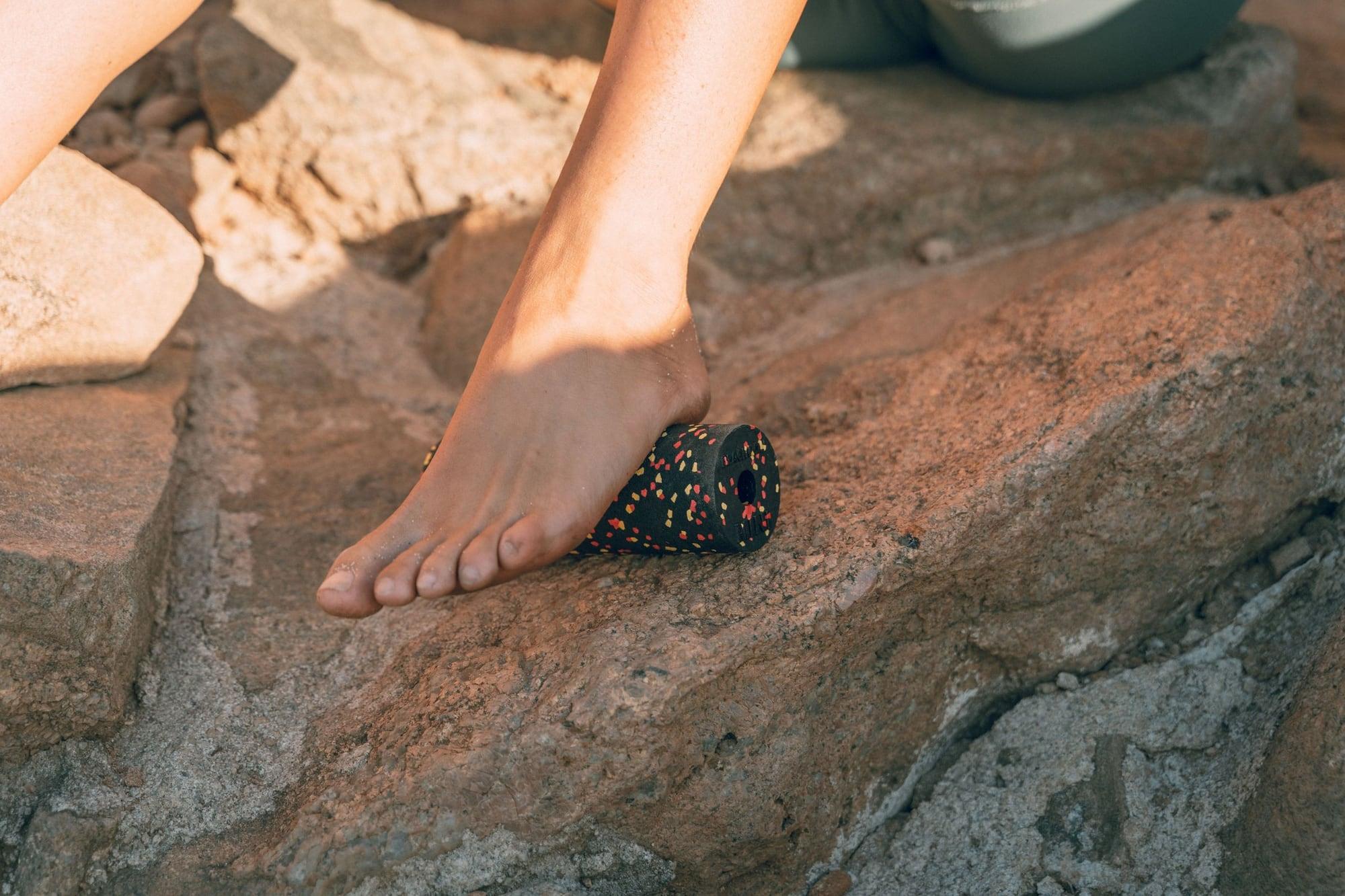
Manual rollers and balls
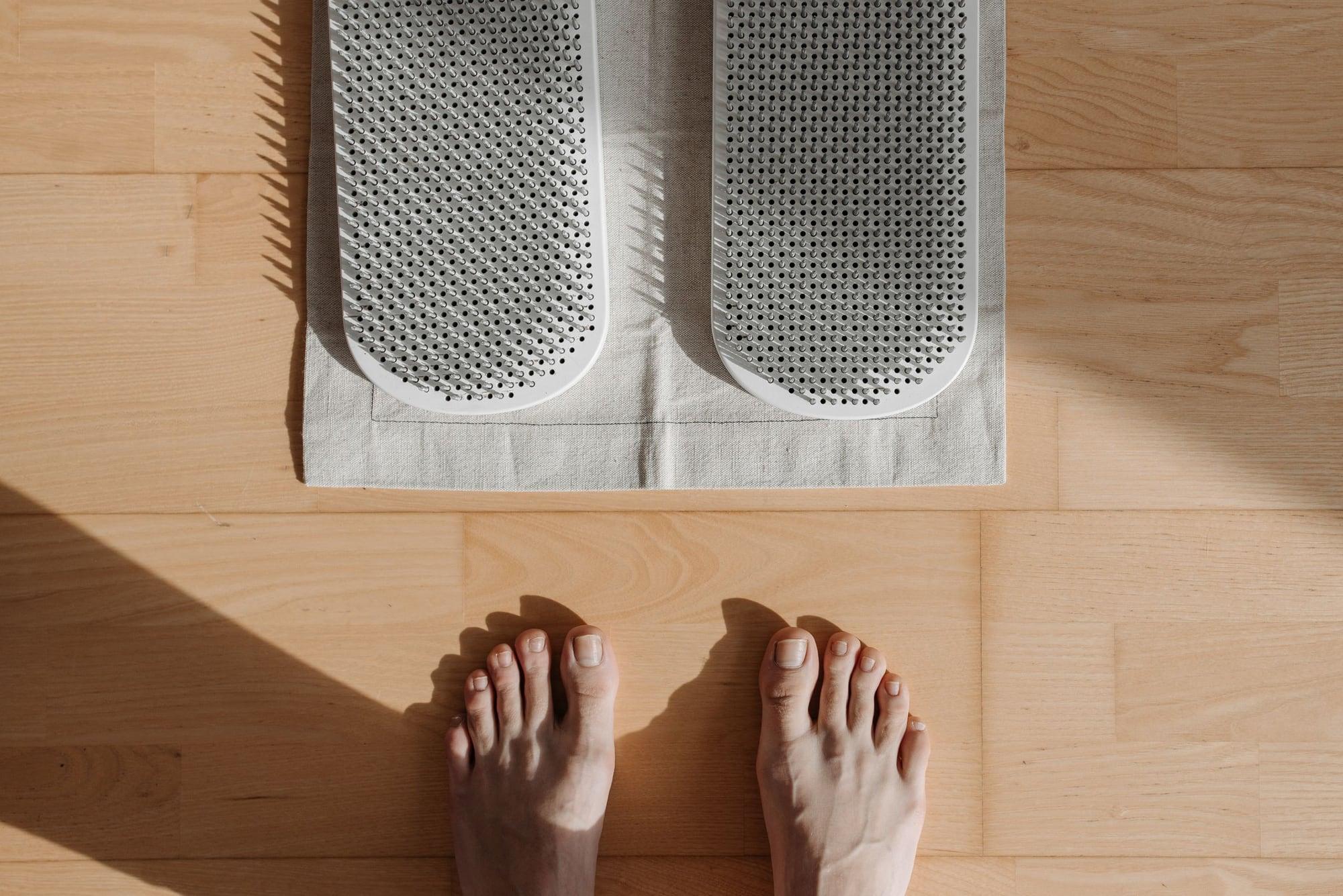
Wooden or plastic rollers, smooth or spiky balls, and textured boards. You put one on the floor and roll your foot over it. Your leg supplies the movement and your body weight supplies the pressure.
Reflexology socks
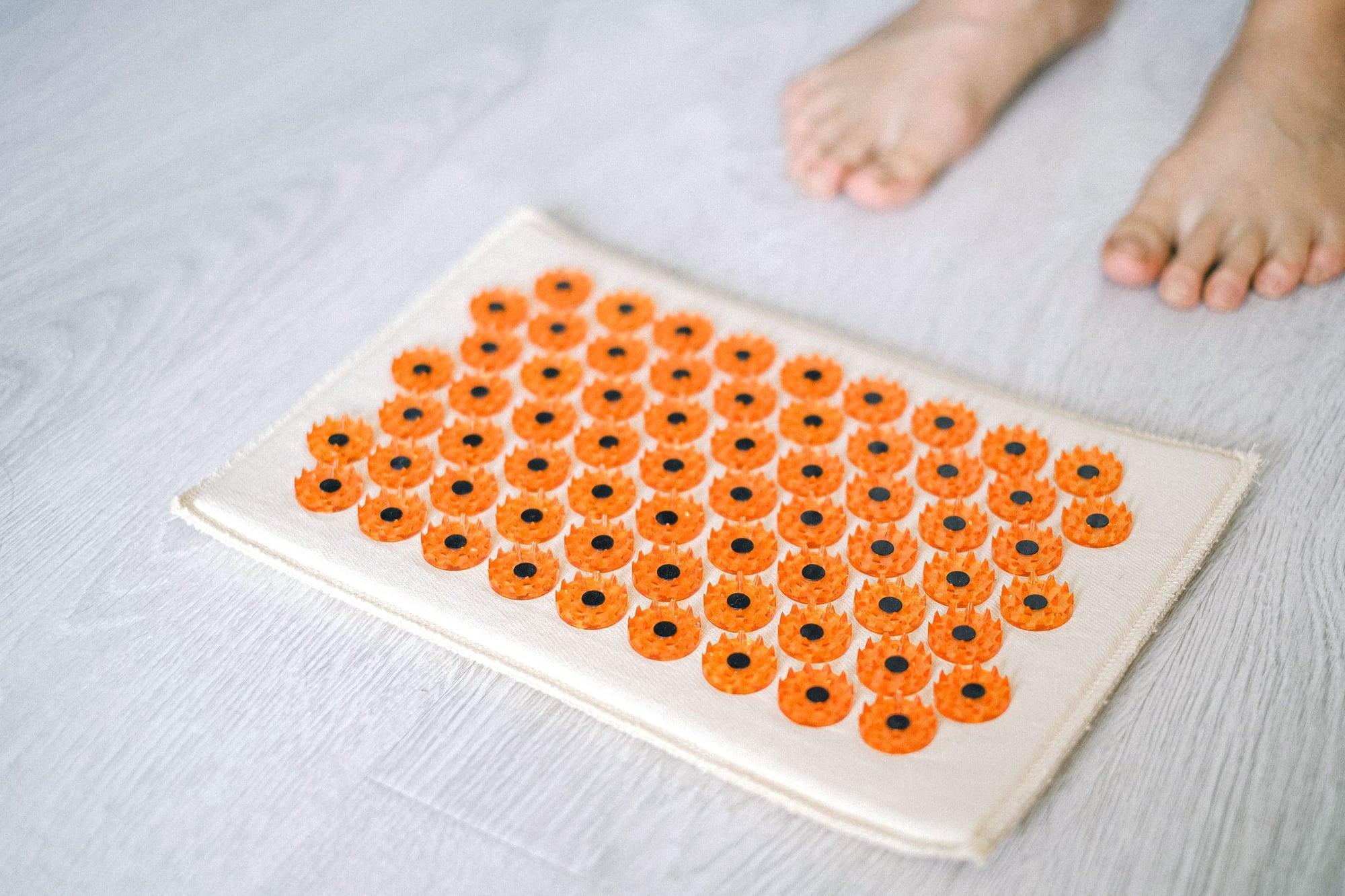
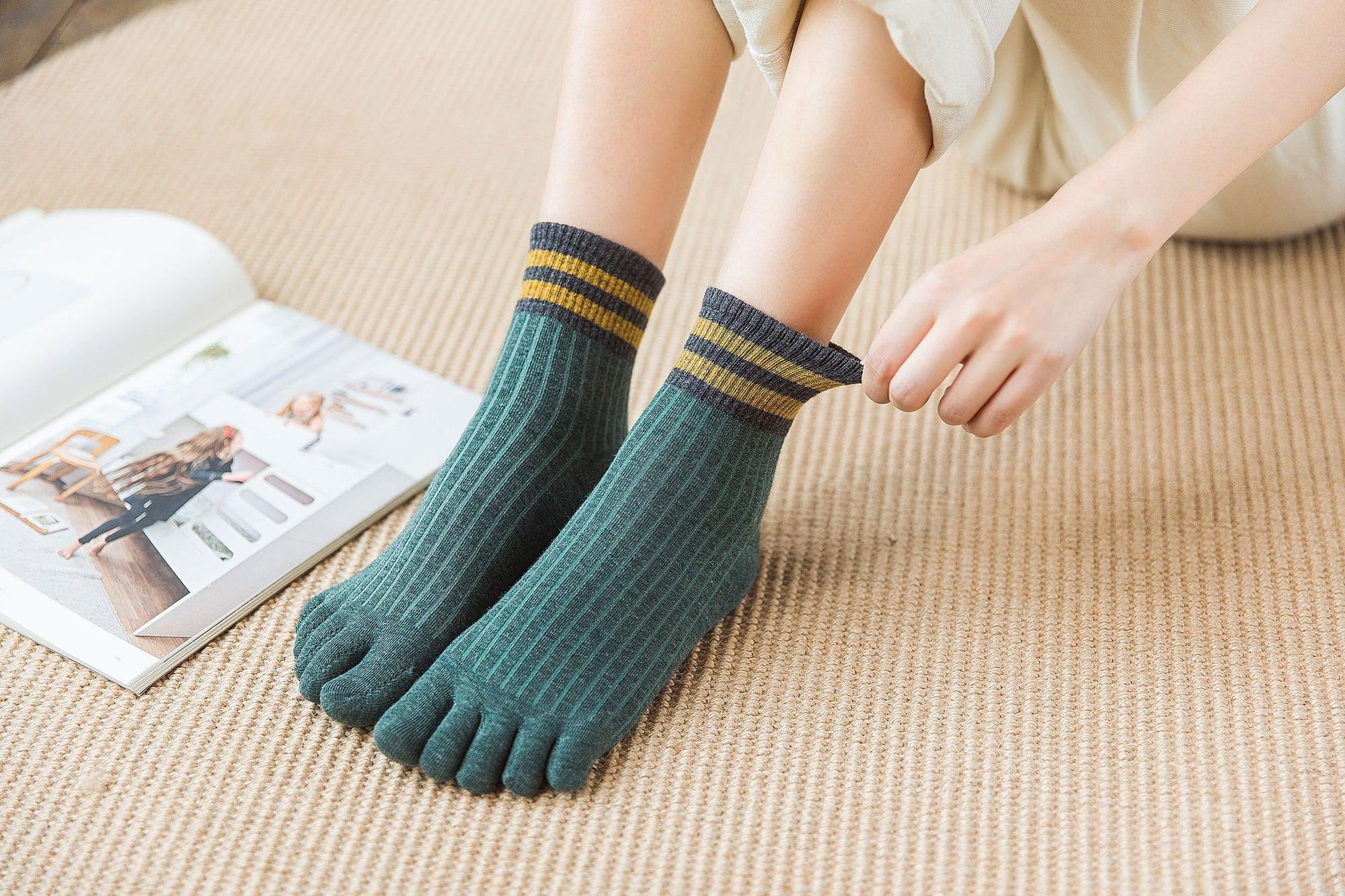
Two products share this name. Printed chart socks are ordinary socks with a reflexology map on the sole, and they apply no pressure. Nub socks have raised bumps inside the sole that press in when you push your foot against something. Only nub socks belong in this comparison. Our reflexology socks guide explains both kinds.
Foot massager vs reflexology socks, side by side
Electric massager
Manual roller
Nub sock
Depth of pressure
Deep and steady. Motor-driven kneading, often with intensity settings
As deep as you lean, up to your full weight
Light to moderate. Only as firm as you push
Who does the work
The machine
You, rolling
You, pressing
Use lying down
Rarely. Most are built for sitting
No. It needs a floor under it
Yes. Made for bed
Noise
Motors and air pumps are audible
Quiet, apart from rolling on a hard floor
Silent
Power
An outlet, or charging for cordless models
None
None
Storage
Bulky. Needs floor or closet space
Fits in a drawer
Fits in a sock drawer
Price band
Highest of the three, rising with features
Usually the lowest
Low. Usually well below a machine
Cleaning
Wipe down. Check whether the lining comes out for washing
Wipe down
Machine wash
What each one does better
What a machine does better
It does the work. You sit, press a button and it kneads for the whole session. With a sock or a roller, the pressure stops the moment you stop pushing. This is the biggest difference between the types, and it favors the machine.
Depth and consistency. Motor-driven rollers can press harder, and keep it up more evenly, than most people will push their own foot.
Heat and squeeze. Warmth and air compression are things a sock or a roller cannot provide.
Hands-free time. You can read or watch something while it runs.
Its costs are the mirror image: the highest price, the most floor space, a power cord and a motor you can hear.
What a manual roller does better
Control. You choose the spot, the depth and the speed, second by second.
Cost and size. It is usually the cheapest option, and it fits in a drawer or a bag.
No setup. Nothing to plug in or charge.
The trade is effort. You do all the rolling, and you need to be sitting or standing with a floor under your foot.
The published research on rollers is about muscles and exercise, not feet. A 2015 systematic review of 14 studies concluded that foam rollers and roller massagers may bring short-term gains in joint range of motion, and described the evidence as still emerging. [7]
What a sock does better
Lying down. A nub sock is used in bed, where a machine does not fit and a roller has nothing to roll on.
Silence. There is no motor, so it will not wake anyone.
Placement. Nubs can sit under the toes, along the arch and at the outer edge, as well as under the ball and heel.
Nothing to store. It goes in the wash and then in a drawer.
Its limits are just as clear. The pressure is lighter, and it lasts only while you push. If what you want is to switch off and be kneaded, a sock will disappoint you.
Does any of them do more than feel good?
Probably not, and feeling good is a fair reason to own one.
The US National Center for Complementary and Integrative Health (NCCIH) notes that massage has been studied for several types of pain, and that for low-back pain, for example, evaluations have found only weak evidence that it may be helpful. [1] Those studies are of massage given by therapists, not by machines, rollers or socks.
Reflexology adds a bigger claim: that points on the feet match up with other parts of the body. The NCCIH says the idea that pressing those points causes relaxation and healing elsewhere has not been proven. [3] Cleveland Clinic's review reaches a simpler explanation. Having your feet worked on is relaxing and calming, and there are no well-designed studies showing that reflexology does more than an ordinary foot massage. [2]
We did not find any trial that compares a home foot massage machine with a manual roller or a nub sock. So this comparison rests on how each one works, not on outcome data.
Judge all three on comfort, convenience and cost. None of them is a treatment, and sore feet that keep coming back deserve a proper look.
Cautions for electric foot massagers
We could not find guidance from a major medical body written specifically about home foot massage machines. The points below come from general guidance that applies to them.
Heat and numb feet. The US National Institute of Diabetes and Digestive and Kidney Diseases (NIDDK) warns people with nerve damage from diabetes that they may burn their feet and not know it, and tells them not to put a hot water bottle or heating pad on their feet. [4] A heated massager raises the same concern. If you have reduced feeling in your feet, ask your doctor before using a massager, with or without heat.
Strong pressure. The NCCIH says the risk of harm from massage appears to be low. The rare serious problems reported, such as a blood clot, nerve injury or bone fracture, have sometimes involved vigorous massage or people at higher risk of injury, such as older adults. [1] Start on the lowest setting.
Blood clots, fractures, wounds and gout. The University of Minnesota's reflexology guidance says to avoid foot work with a foot fracture, an unhealed wound or active gout, says people with a current blood clot should not have it, and asks for caution in pregnancy. [6] Treat a machine that kneads or squeezes the foot and calf the same way.
Pacemakers and implanted defibrillators. The American Heart Association lists massage chairs and massage pads among devices that pose little or no known risk, advises keeping motors at least 6 inches from the implant, and says to ask your healthcare professional about any item. It lists ab stimulators, which send electrical pulses through the skin, as likely to interfere. [5] Some foot devices work by electrical pulses instead of rollers, so find out which kind you have and ask your cardiologist first.
The manual. Follow its session length and its list of people who should not use the device.
Where Somnisole fits
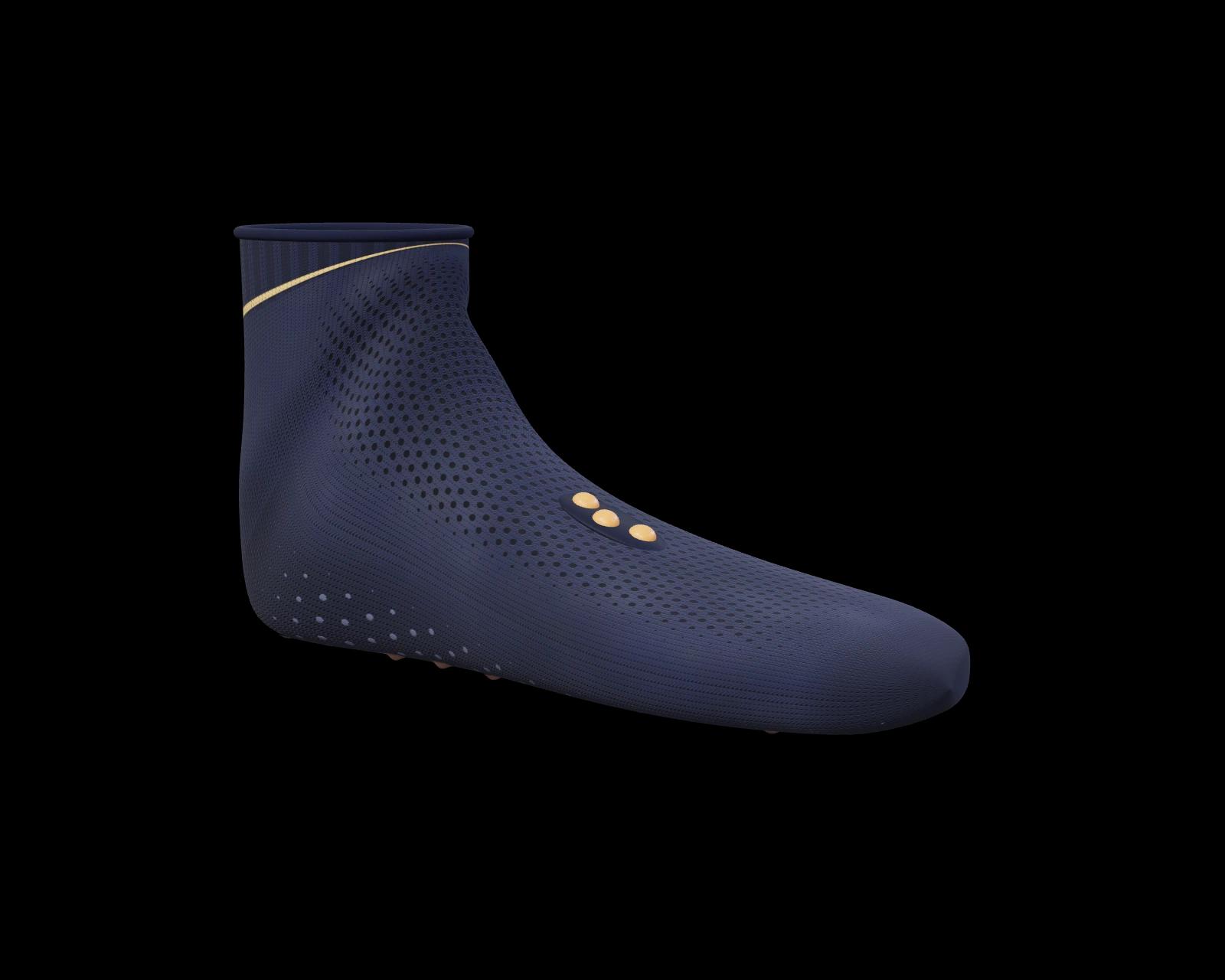
Somnisole is our nub sock, built around one situation: lying in bed. The reflexology sock you can sleep in is an ultra-thin, breathable knit of Tencel lyocell, nylon and spandex, with an open-mesh top, no seam across the toes and a soft band in place of a tight cuff. It is not a compression sock.
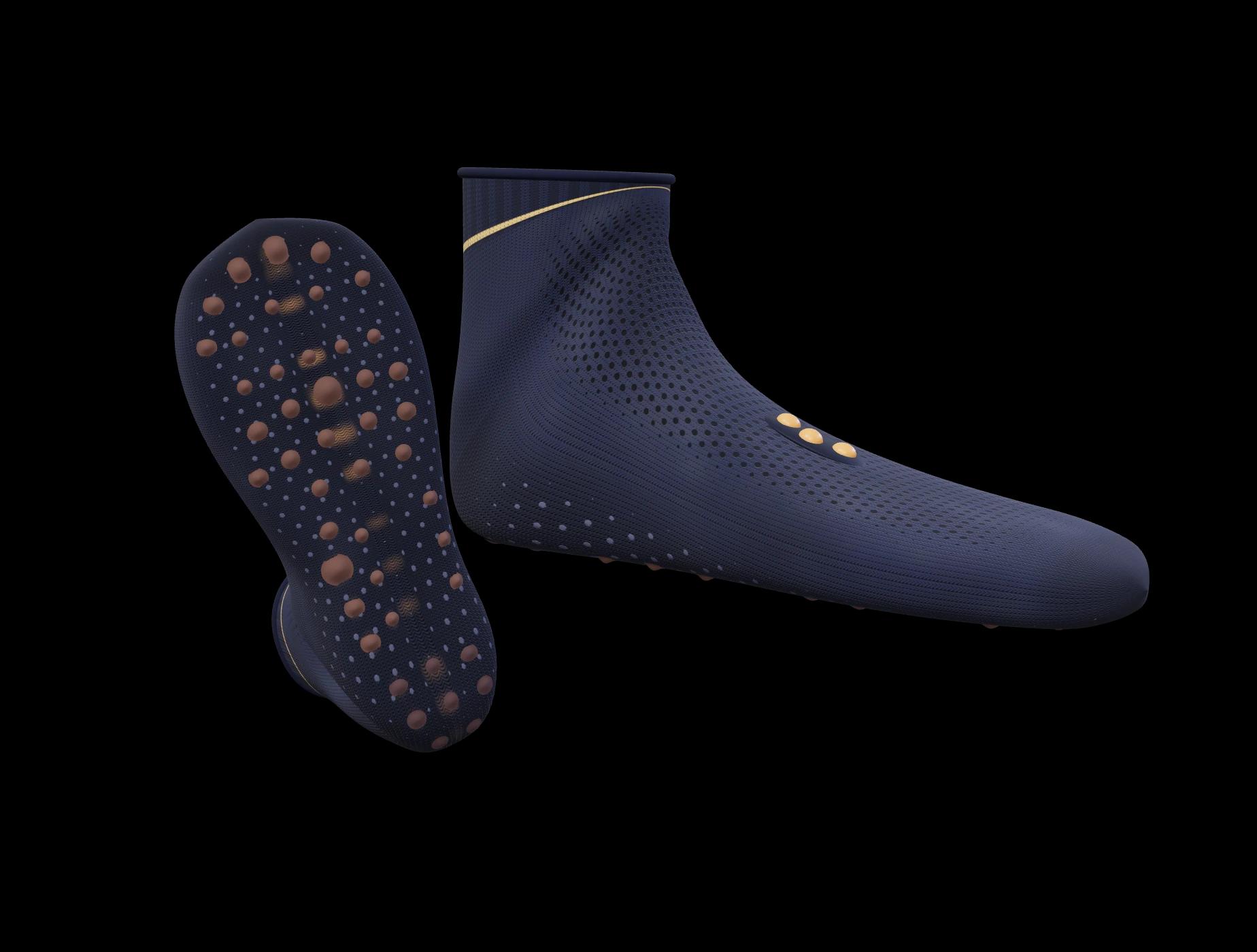
Inside the sole are 45 firm silicone nubs covering the toes, the toe groove, the ball, the inner arch, the outer edge and the heel. Larger 3.5 mm nubs sit at the center of the ball and the arch, the standard nubs are 2.5 mm, and softer 1.5 mm low domes sit at the heel so back sleepers can rest on them. Light grip dots on the outside hold against a wall or footboard. Care is machine wash cold, inside out, then air dry.
Somnisole's 45 nubs cover the toes, toe groove, ball, inner arch, outer edge and heel.
You supply the pressure in one of three ways: soles into a wall or footboard, sole to sole, or one sole over the other foot's instep. Our how it works page shows each one. It is made for achy, tired, restless-feeling feet at bedtime, as a 5-minute wind-down ritual.
Somnisole is a pre-order that has not shipped, so there are no customer reviews or test results to show you.
Not for feet with numbness, open wounds, diabetes-related foot problems or poor circulation without a doctor's OK.
Which suits you?
Choose an electric foot massager if
you want deep kneading with no effort
you will use it sitting in a chair, with space to leave it out
There is no single best one, and we could not find independent trials that rank them. Choose by type: a shiatsu machine for deep kneading, air compression for a squeeze, heat for warmth, a manual roller for control at low cost, and a nub sock for use in bed. Then check that it fits your foot size, your space and your tolerance for noise.
Are foot massagers worth it?
They can be, if you enjoy deep kneading and will sit down with one regularly. A machine is the most expensive and bulkiest option, so it pays off only when it gets used. If you mostly want something small for a few minutes at bedtime, a roller or a nub sock does that job for less.
Are you supposed to wear socks in a foot massager?
Check the manual, because makers differ. Thin, clean socks keep the lining cleaner and soften the pressure, while bare feet give firmer contact. Do not wear a nub sock inside a machine, since rollers pressing on firm nubs concentrate pressure in a way neither product was designed for.
Can you use a foot massager in bed?
Most electric foot massagers are built to sit on the floor in front of a chair, so they are awkward in bed, and the manual is the place to check. A manual roller needs a firm surface under it. A nub sock is the one type made for lying down, because you press your soles into a wall, a footboard or each other.
Who should not use a foot massager?
People who cannot feel their feet properly, including numbness linked to diabetes, should ask a doctor first, especially before using heat, because a burn or sore can go unnoticed. The same goes for open wounds, a foot fracture, active gout, a current blood clot and pregnancy. If you have a pacemaker or implanted defibrillator, ask your cardiologist before using any device that sends electrical pulses through the skin.
Do reflexology socks work as well as a foot massager?
Not for depth. A machine kneads harder and for longer than you will push your own foot, and it does the work for you. A nub sock does a different job: light, quiet pressure you can use lying in bed with no power. Neither has been shown to treat a medical condition.
Somnisole puts firm silicone nubs over every zone of the sole, inside a sock thin and breathable enough to sleep in. Made for achy, tired, restless-feeling feet at bedtime.
Somnisole is a wellness product, not a medical device. Not for feet with numbness, open wounds, diabetes-related foot problems or poor circulation without a doctor's OK.