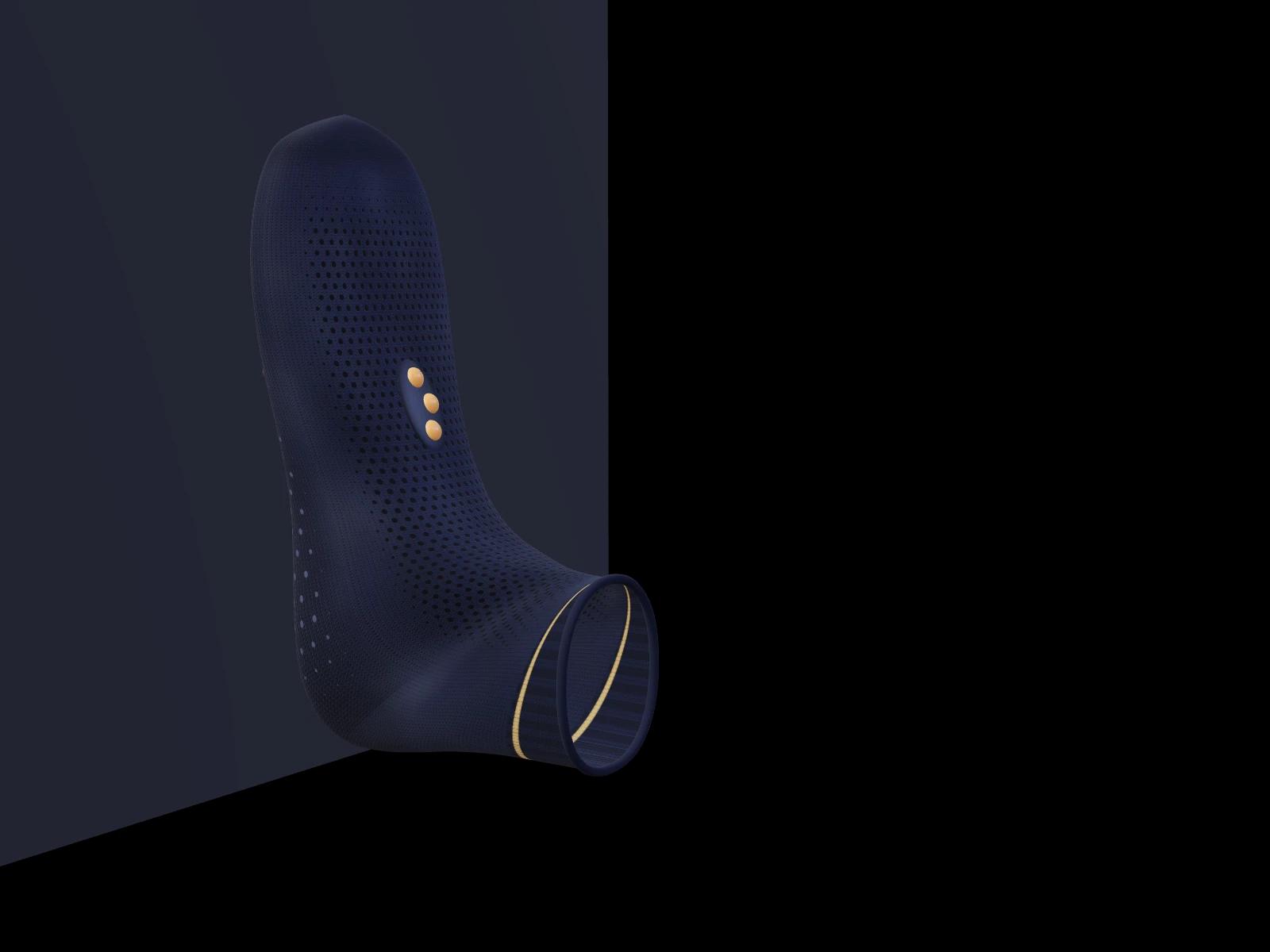
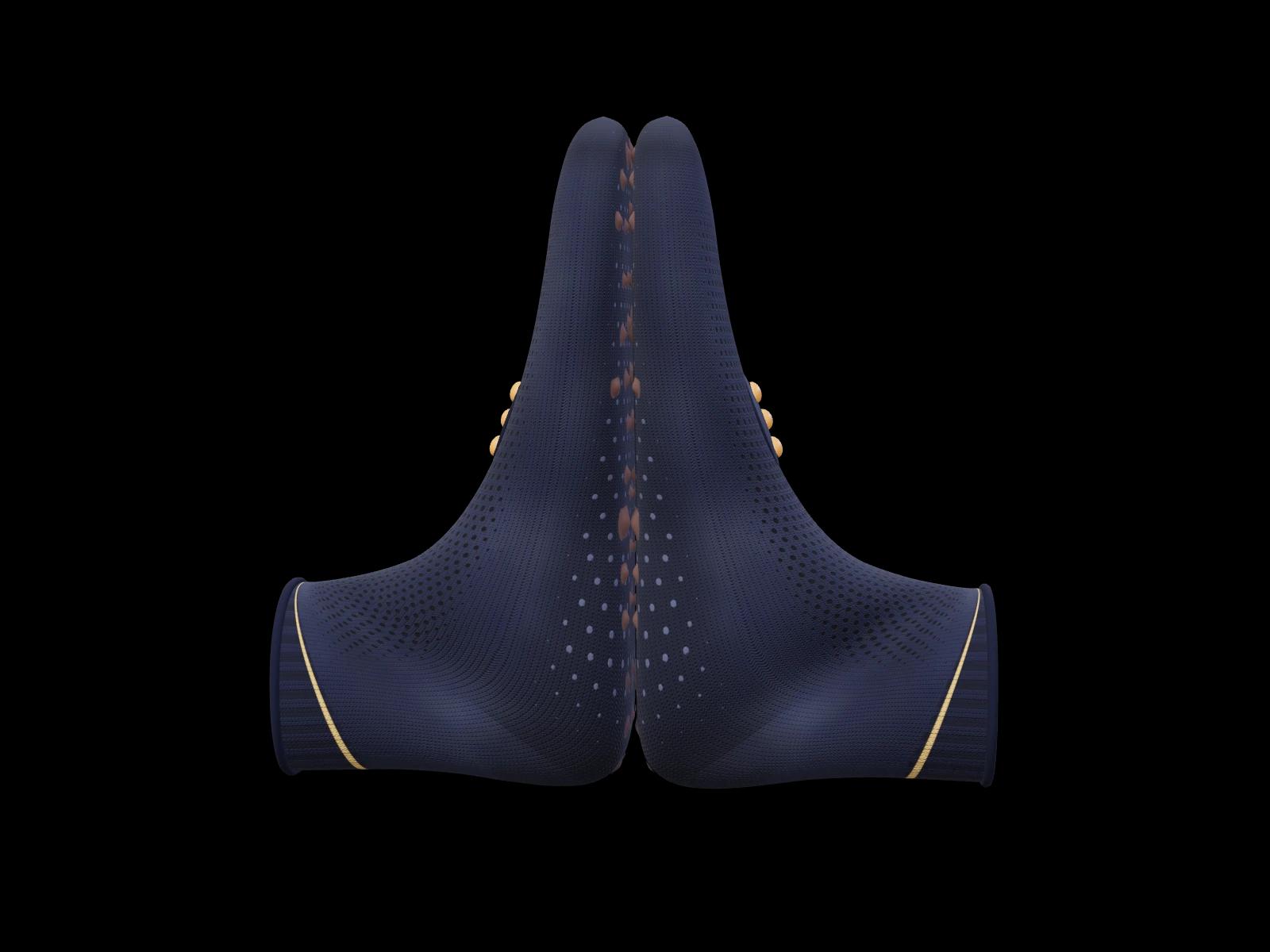
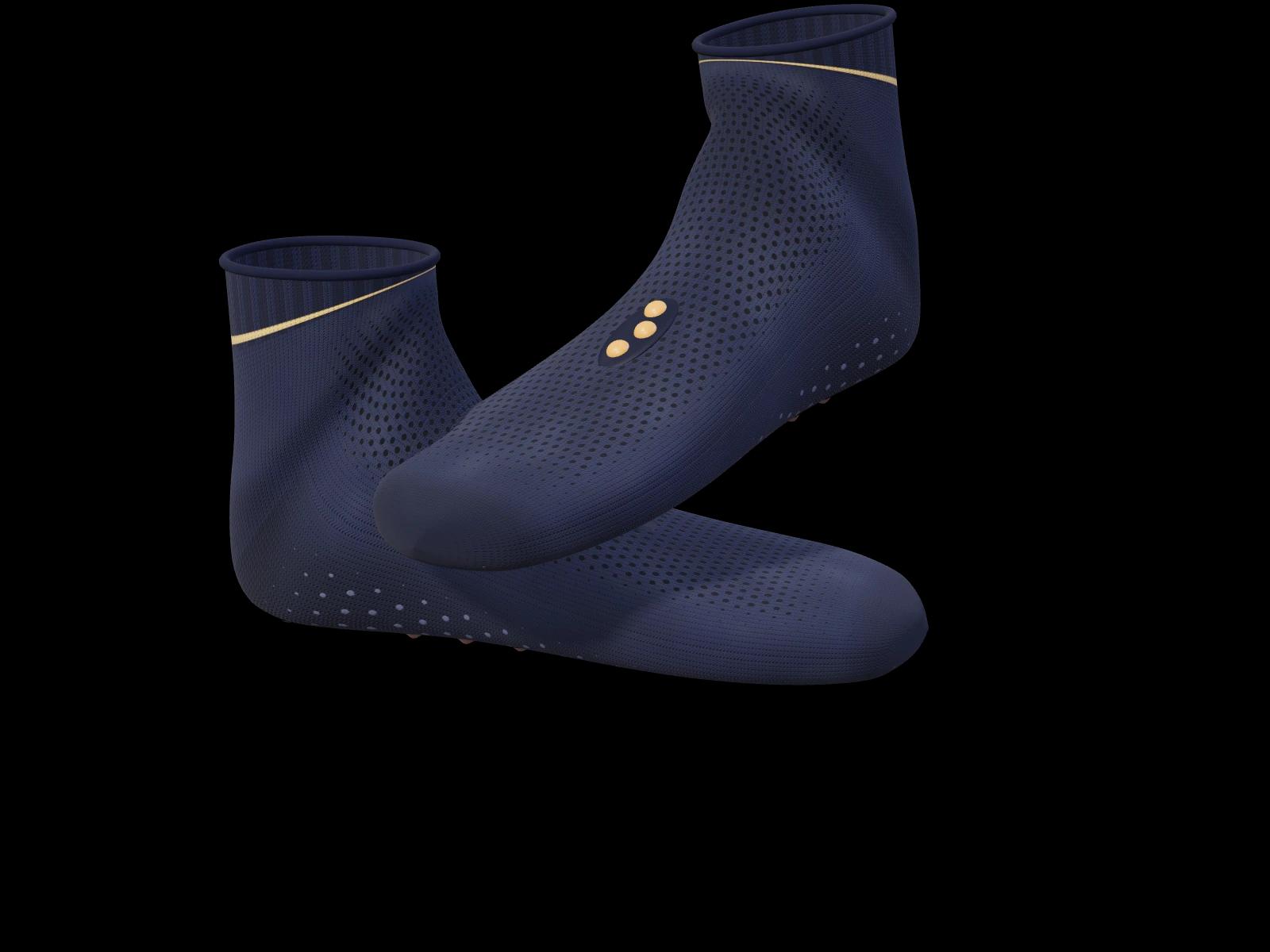
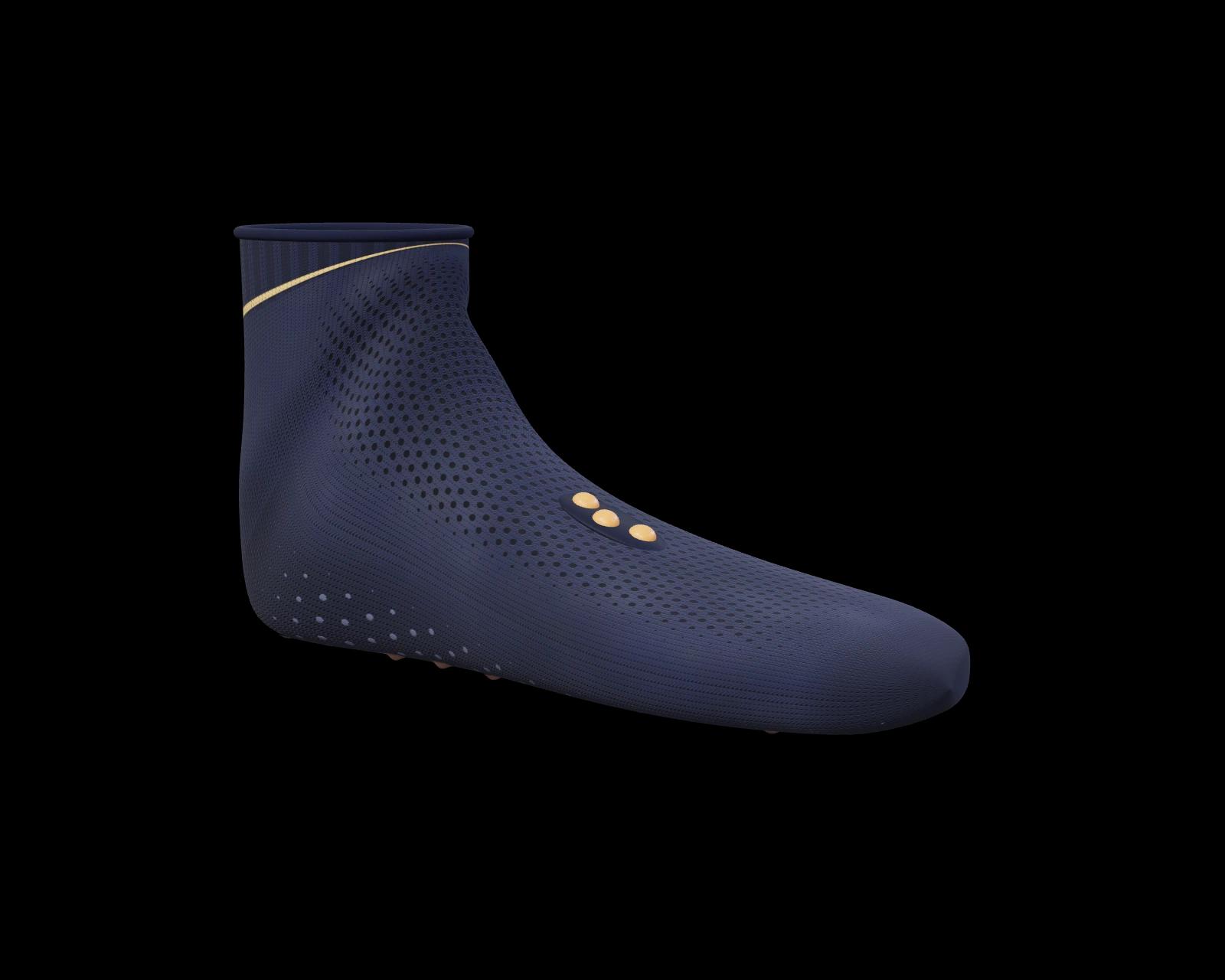
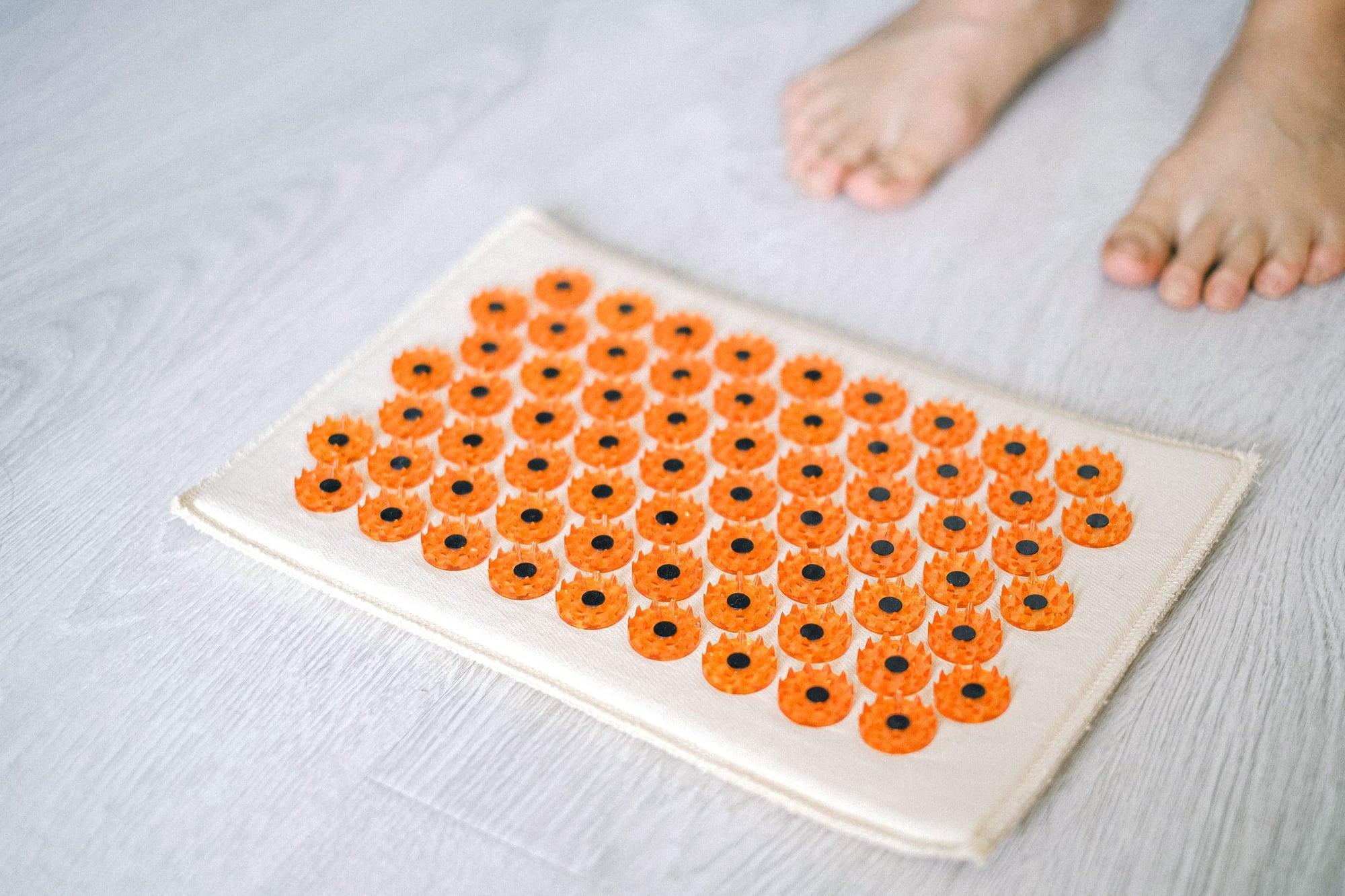
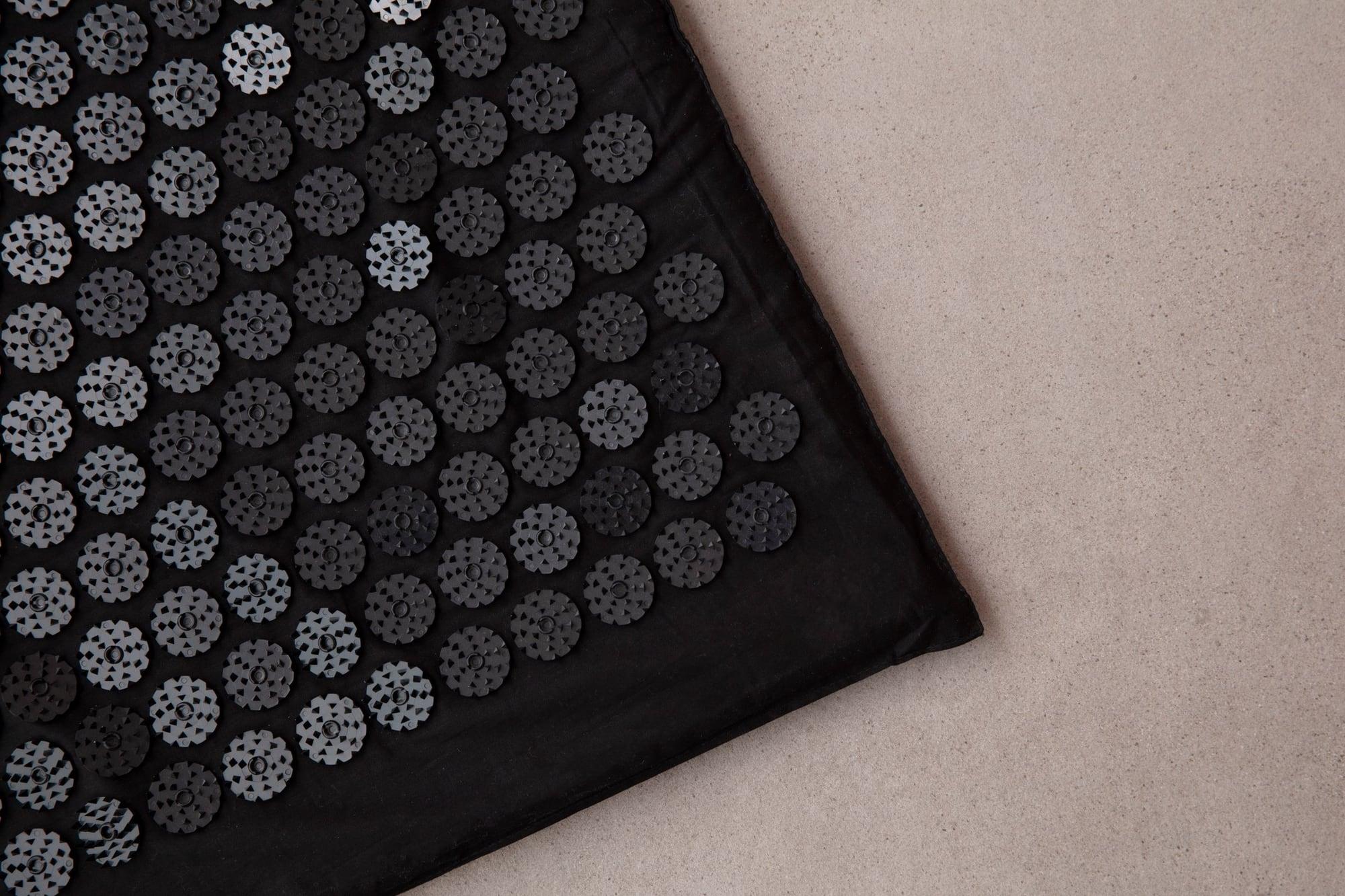
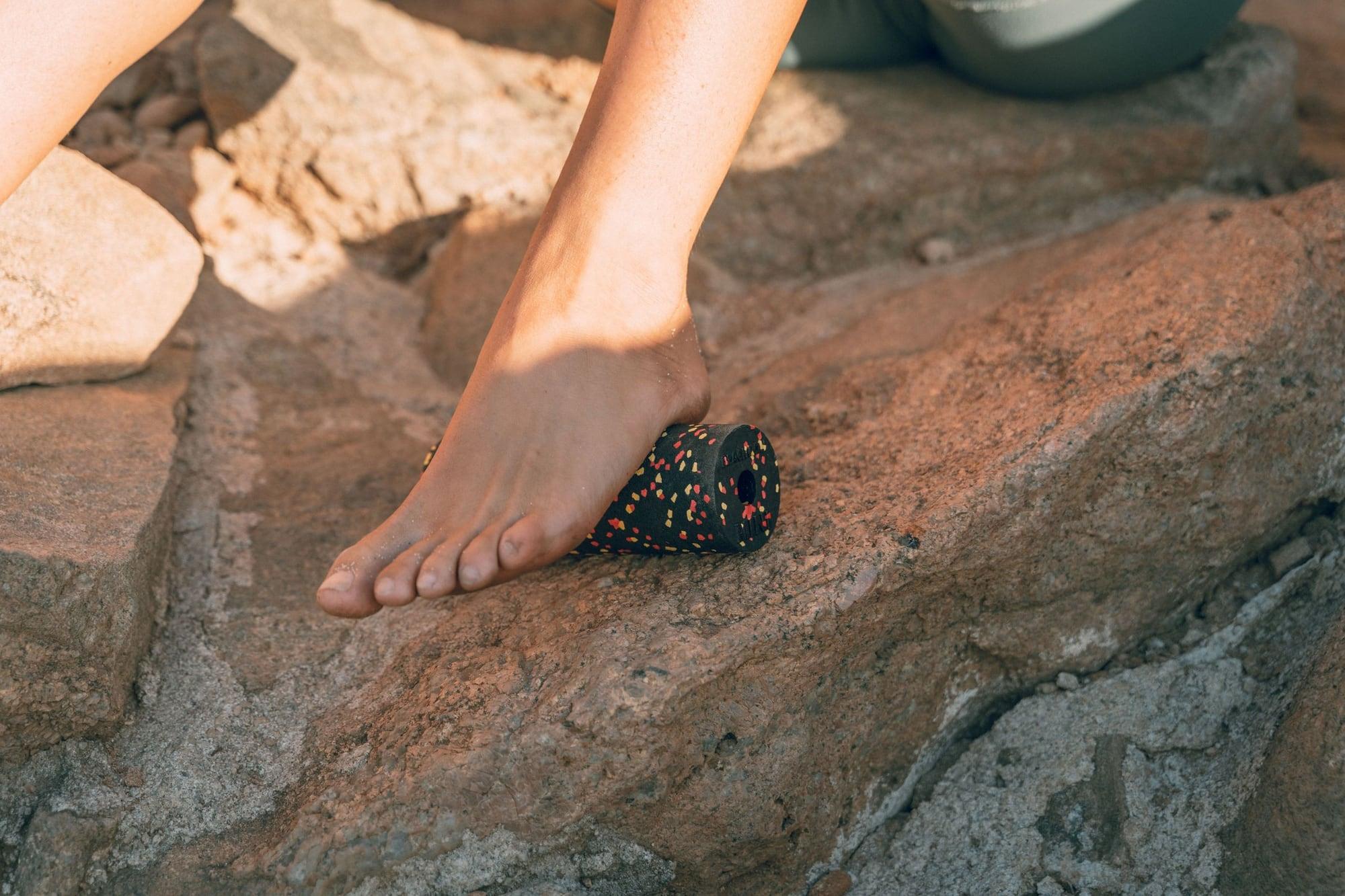
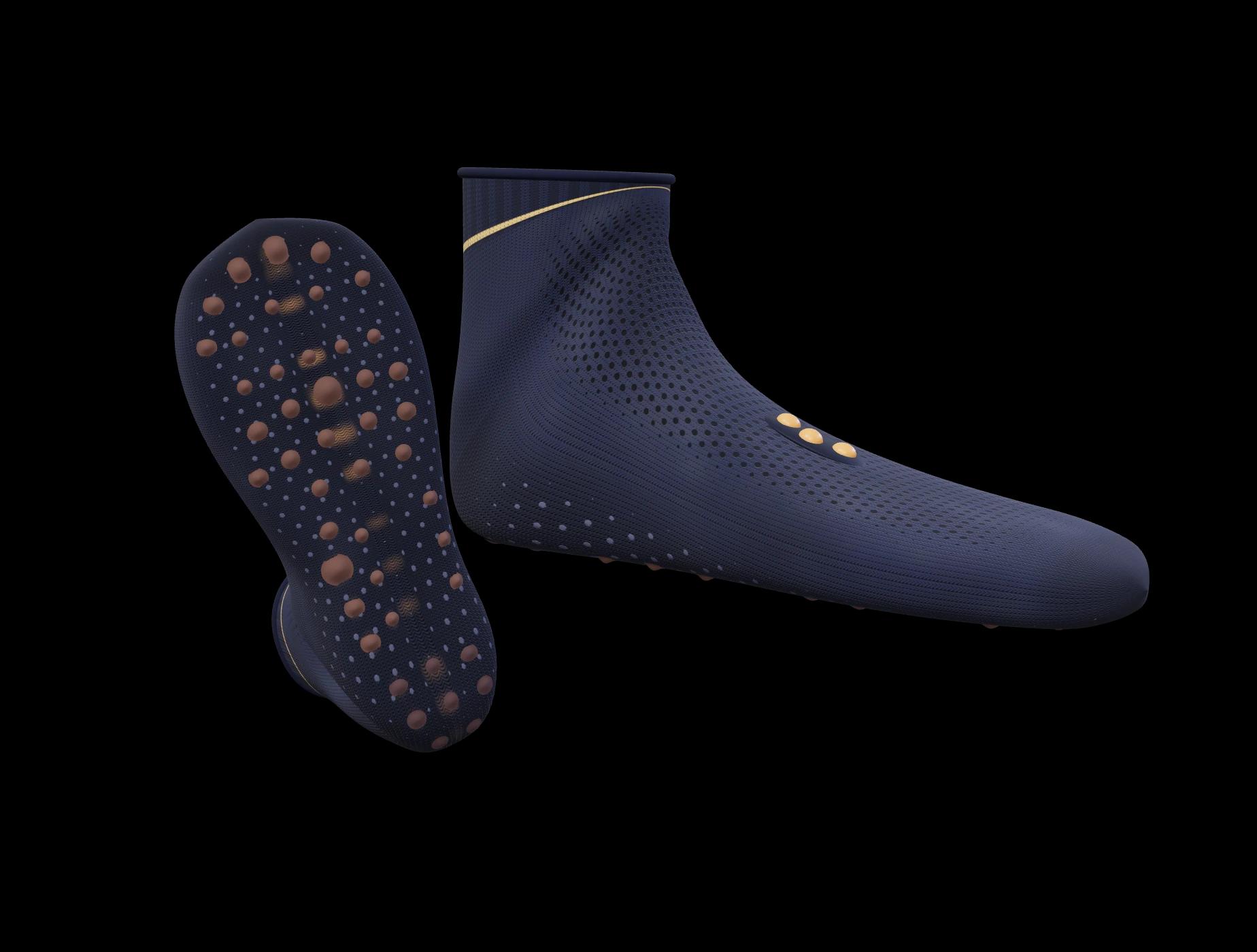
Somnisole is a sock with the pressure built in. Nubs inside the sole, a wall or your other foot to press against, and a knit light enough to keep on all night.
Why a sock
Reflexology pressure in a massage shop is deep and specific. Home foot massagers are bulky, and you cannot use one lying down. Foot discomfort tends to show up at night, in bed, when the day is finally over.
A sock needs nothing mounted and nothing plugged in. It works against any surface, ships flat, and it is the one thing on this list you can fall asleep wearing.
Two kinds of reflexology sock
Chart socks print a reflexology map on the sole. They show you where to press, but you still do the pressing with your thumbs or a tool. Nub socks build the pressure into the sole. Somnisole is a nub sock, and it is the only one we know of designed to be slept in.
45 nubs, size M. They sit inside the sock, against your sole.
Press into a wall, a footboard, or your other foot.
Nothing to mount, plug in or charge. You choose the pressure.
Wall or footboard
The deepest pressure. Lie back, plant your sole and lean in. Grip dots on the outside keep the sock from sliding.
Sole to sole
Both feet at once. Press them together and each sole works the other.
Over the other foot
Glide one sole across the three-nub pad on the other instep. No wall needed.
The nub map: six zones, three firmnesses.
09Toes
Nine standard nubs across the toe pads.
05Base of the toes
A row of five in the crease where the toes meet the foot.
13Ball of the foot
Thirteen nubs with one larger thumb nub at the centre.
07Inner arch
Seven nubs along the arch, with a thumb nub at its deepest point.
03Outer edge
Three nubs down the outside of the foot.
08Heel
Eight low, soft domes, so back sleepers can rest on them all night.
3.5mm
Shore A 50
Thumb nubs
The centre of the ball and the deepest point of the arch. Deep, pinpoint pressure where a therapist would use a thumb.
2.5mm
Shore A 40
Standard nubs
Toes, toe groove, ball, arch and outer edge. Even coverage across the rest of the sole.
1.5mm
Shore A 25
Heel domes
The heel. Low and soft, because back sleepers rest on their heels all night.
On top of the foot, a small firm pad carries 3 more nubs on the outside. Run your other sole across it for foot-over-foot pressure.
The six zones follow the traditional reflexology map. See what each one is associated with on the interactive reflexology chart.
Built to be slept in.
Everything that is not a nub is there to disappear.
Tencel knit
70% Tencel lyocell, 25% nylon, 5% spandex. Cool to the touch and smooth against skin.
Open-mesh top
An eyelet knit over the top of the foot and ankle lets air through.
Seamless toe
The toe is linked flat, so there is no ridge to feel in bed.
Soft band
A wide band at low tension replaces the usual tight cuff. This is not a compression sock.
Grip dots outside
Small silicone dots on the outer sole hold a wall or footboard without sliding.
Washable
Machine wash cold, inside out. Air dry to protect the silicone bond.
What it does, honestly
Somnisole presses firmly and evenly on the soles of your feet. That is the whole mechanism. It is made for achy, tired, restless-feeling feet at bedtime, and as a five-minute ritual that tells your body the day is over.
The nub layout follows the reflexology map because it is a thorough, time-tested way to cover a sole. We do not claim that pressing a zone affects the organ the tradition links it to. Health authorities say that has not been proven[1]. What is well accepted is that having your feet pressed feels good and is relaxing[2], and that massage carries a low risk of harm[3].
Somnisole is a wellness product, not a medical device. Not for feet with numbness, open wounds, diabetes-related foot problems or poor circulation without a doctor's OK.
It's just a sock. Not just any sock.
Somnisole puts firm silicone nubs over every zone of the sole, inside a sock thin and breathable enough to sleep in. Made for achy, tired, restless-feeling feet at bedtime.
Somnisole is a wellness product, not a medical device. Not for feet with numbness, open wounds, diabetes-related foot problems or poor circulation without a doctor's OK.
The name covers two different products. Chart socks have a reflexology map printed on the sole and nothing else: you still press with your thumbs or a tool. Nub socks, like Somnisole, have raised silicone nubs built into the sole, so pressing your foot against something firm applies the pressure for you.
How does foot reflexology work?
Reflexology maps areas of the feet to parts of the body and applies pressure to those areas. The mapping is traditional: research has not shown that pressing an area of the foot affects the organ it is named after. What people do reliably report is that firm pressure on the soles feels good and is relaxing.
Are acupressure socks and massage socks the same thing?
The names are used interchangeably in shops. What matters is the build: whether the sock has real raised nubs, how firm they are, how much of the sole they cover and whether the sock is comfortable enough to keep on.
Do you wear them with shoes or walk in them?
Somnisole is made for lying down and pressing, not for walking. The nubs sit inside the sole, so standing on them all day would be uncomfortable. The outside has light grip dots for holding a wall or footboard, not for the street.
How long should I press for?
Start with two or three minutes a foot and see how your feet feel the next day. Most people settle at about five minutes before sleep. Use as much or as little pressure as feels good, and stop if anything hurts.
Who should not use reflexology socks?
Not for feet with numbness, open wounds, diabetes-related foot problems or poor circulation without a doctor's OK. If you are pregnant or have any foot or health condition, ask your doctor first.