For most healthy adults, sleeping with socks on is fine, and the choice comes down to comfort. One small study found that people wearing bed socks in a cool room fell asleep a few minutes sooner, but the evidence is limited. If you wear socks to bed, choose a clean, loose, breathable pair and skip tight cuffs.
Some people cannot fall asleep without socks. Others cannot stand them. Both camps tend to be sure the other one is doing something wrong.
Neither is. Whether to sleep with socks on is mostly a comfort question, with a little science behind it and a few situations where the details matter. This guide is written for adults, and it sits alongside the other bedtime guides in our sleep hub.
Is it OK to sleep with socks on?
For most healthy adults, yes. A Cleveland Clinic sleep medicine specialist describes socks versus bare feet as a personal choice and suggests doing whatever feels most comfortable. [3]
When socks in bed do cause trouble, the cause is rarely socks in general. It is a particular pair: too tight, too warm for the room, or already worn all day. Each of those is covered below.
Do socks help you sleep?
They might, a little, if cold feet are part of what keeps you awake. The research is interesting but thin.
What your feet do at bedtime
Your core body temperature starts to drop about two hours before you fall asleep. Some of that heat leaves through your skin. Blood vessels in your hands and feet widen, and sleep researchers describe the amount of widening there as a good predictor of how readily sleep begins. [2]
That is the reasoning behind bed socks. Cleveland Clinic explains that warming the feet widens the blood vessels in the skin, which lets the body release heat as part of its normal night-time temperature regulation. [3]
What the bed sock study found
The study quoted most often was published in 2018 in the Journal of Physiological Anthropology. Six young men each slept for seven hours in a cool room (23°C, about 73°F), once in bed socks and once without, in random order. [1]
What was measured
With bed socks, compared with bare feet
Time to fall asleep
About 7.5 minutes shorter on average
Total sleep time
About 32 minutes longer
Awakenings during the night
Fewer
Core body temperature
No significant difference
How people rated their own sleep
No significant difference
Read those numbers with care. Six people is a very small group, all of them young, healthy and male, and sleep was tracked with a wrist monitor in a single cool room. The authors themselves say the findings need testing in larger groups that include women and older adults, and in people with sleep disorders. [1]
How much weight to give it
A fair reading is this: if your feet feel cold in a cool bedroom, socks are a cheap, low-risk thing to try, and you may drift off a little sooner. Socks are not a treatment for insomnia or any other sleep disorder. If you regularly struggle to fall asleep or stay asleep, bring that to a doctor.
Is it bad to sleep with socks on?
Not in itself. Three things can make it the wrong call on a given night.
The socks make you too warm
The CDC lists a cool bedroom among the habits that support good sleep, and Cleveland Clinic suggests keeping the room at about 60 to 67°F. [4][5] Thick socks under a heavy comforter in a warm room work against that. If you keep waking up to kick your socks off, trust the signal and leave them off. If your feet run hot most nights, read why are my feet hot at night.
The cuff is too tight
A band that leaves a deep groove above your ankle by morning is too tight for sleep. NHS self-care advice for swollen feet and ankles includes not wearing socks that are too tight. [7] Cleveland Clinic also advises against sleeping in compression socks unless they have been recommended for a medical issue. [3] We cover that in detail in can you sleep in compression socks.
The socks are not clean and dry
Socks you have walked around in all day carry sweat into bed. NHS advice on athlete's foot includes drying your feet well, especially between the toes, and wearing clean socks every day. [6] Cleveland Clinic suggests a fresh pair every night. [3] The simplest habit is a pair you only ever wear in bed.
Is it better to sleep with socks on or off?
Neither is healthier across the board. It depends on your feet, your room and your bedding.
Socks on may suit you if
Socks off may suit you if
Your feet feel cold when you get into bed
Your feet feel hot or sweaty at night
Your bedroom is on the cool side
Your bedroom is warm or your bedding is heavy
You put lotion on dry heels at night
You have itchy, flaky or broken skin between your toes
A soft layer on your feet helps you settle
Any fabric on your feet bothers you
Two notes on that table. Cleveland Clinic points out that socks help keep moisturizer on the skin overnight, which is why the lotion habit pairs well with them. [3] And skin trouble between the toes is something to show a pharmacist or doctor, not something to cover up.
What kind of socks are best for sleeping?
Cleveland Clinic's advice is to look for socks that are comfortable, breathable and loose-fitting. It favors natural fibers such as cotton, merino wool and bamboo, includes plant-based viscose on that list, and describes synthetics such as polyester as less ideal. [3]
A short checklist:
Loose at the ankle. A soft band, not a tight cuff.
Breathable. Match the thickness to your room: thin for mild nights, thicker for cold ones.
Smooth inside. If toe seams bother you, choose a pair without them.
Clean and dry. A fresh pair each night.
Easy to kick off. You should be able to shed them half asleep.
Where a textured sock like Somnisole fits
We make a bedtime sock, so weigh this section with that in mind.
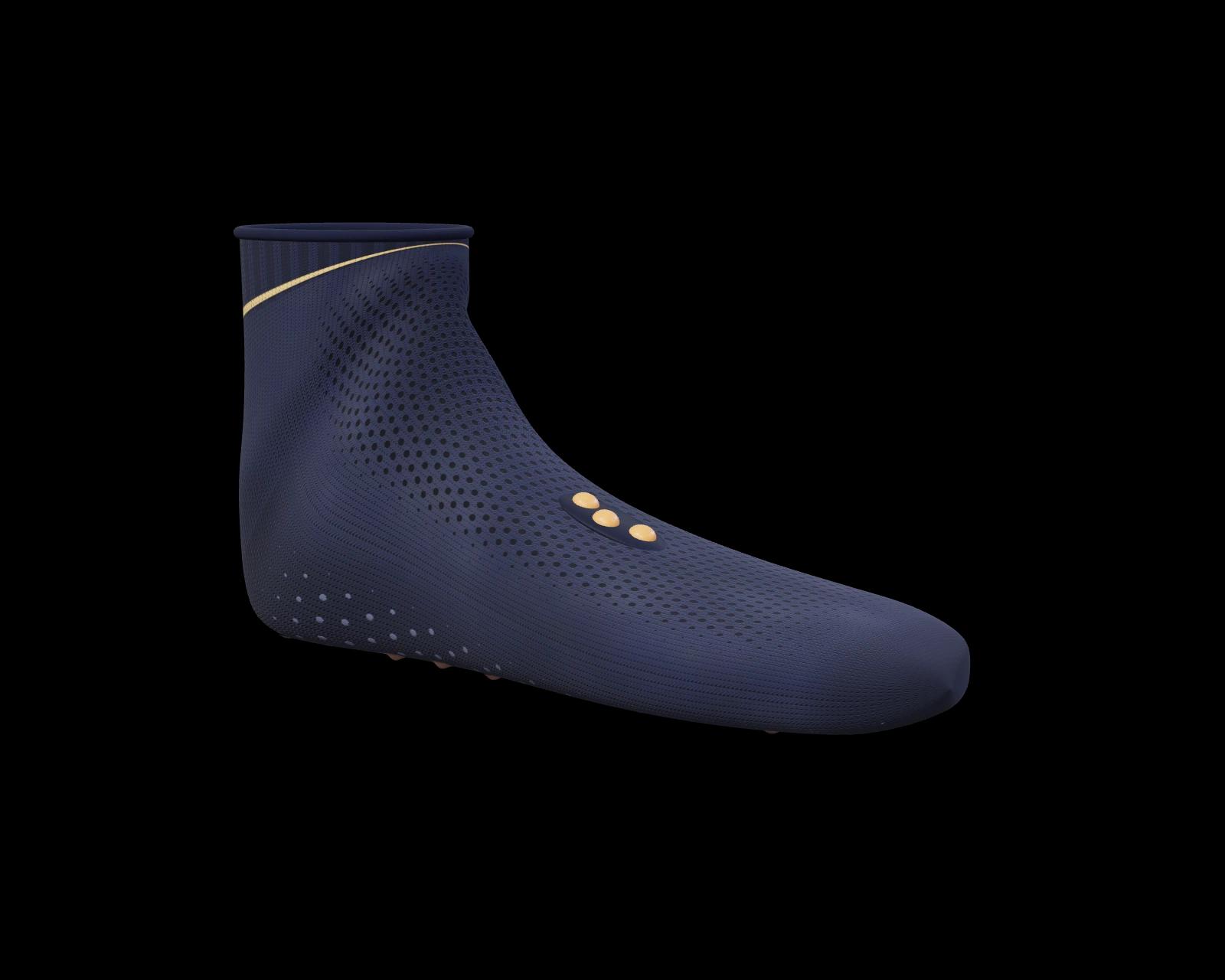
Somnisole is an ultra-thin, breathable sock knitted from Tencel lyocell, nylon and spandex. It has an open-mesh top, a toe with no seam, and a soft band with no tight cuff. It is not a compression sock.
The difference is inside. Bonded to the sole are 45 firm silicone nubs covering the toes, the groove under the toes, the ball, the inner arch, the outer edge and the heel. The heel nubs are softer, low domes, so back sleepers can rest on them. It is made for achy, tired, restless-feeling feet at bedtime and a 5-minute wind-down ritual: press your soles into a wall or footboard, press sole to sole, or glide one sole over the other foot's instep. Our how it works page walks through each one.
The six areas of the sole covered by Somnisole's nubs: toes, toe groove, ball, inner arch, outer edge and heel.
The nubs are mapped to every reflexology zone. Here is the honest part. On a reflexology chart, each area of the sole is traditionally associated with another part of the body. The US National Center for Complementary and Integrative Health says the claim that pressing these points brings relaxation and healing to those body parts has not been proven. [9]
So we offer Somnisole as a comfort ritual for the feet themselves. We do not claim that it helps you sleep or that it changes anything elsewhere in your body. It is a pre-order product that has not shipped yet, so there are no customer reviews or test results to point to.
Not for feet with numbness, open wounds, diabetes-related foot problems or poor circulation without a doctor's OK.
Diabetes or reduced feeling in your feet. The US National Institute of Diabetes and Digestive and Kidney Diseases (NIDDK) advises people with diabetes to wear socks in bed if their feet get cold, and not to put a hot water bottle or heating pad on their feet, because nerve damage can keep you from feeling a burn. The same guidance says to avoid tight socks, prefer socks with no seams, and check your feet every day. [8] That advice is about plain, soft socks. Textured socks fall under the safety note above.
Swollen feet or ankles. The NHS advises seeing a doctor if swelling has not improved after a few days of home care, and getting urgent help if one foot, ankle or leg swells with no obvious cause, or if swelling is severe, painful or sudden. [7]
Feet that are always cold, numb, burning or changing color. Socks may make you more comfortable, but a pattern like that is worth describing to a doctor.
Babies. This guide is for adults. The NHS notes that babies can overheat from too much clothing or bedding, and that cool hands or feet are normal for them. [10] Follow your pediatrician's safe-sleep advice.
How to test it for yourself
If you are still not sure which camp you belong to, run a simple two-week test.
Week one, socks on. Wear a loose, clean, breathable pair to bed every night. Keep the room and bedding the same as usual.
Week two, socks off. Change nothing else.
Each morning, write down two things. Roughly how long you felt it took to fall asleep, and whether you woke up hot or cold.
At the end, keep whichever week felt better. There is no wrong answer, and bare feet are not a problem that needs fixing.
Common questions
Is it better to sleep with socks on or socks off?
Neither is healthier for everyone. Socks can be more comfortable if your feet feel cold in a cool bedroom, and bare feet usually suit people who run hot at night. Pick whichever lets you settle fastest, and keep any socks loose, breathable and clean.
Is it bad to sleep with socks on?
Not for most healthy adults. The usual problems come from socks that are too tight, too warm for the room, or already worn during the day. People with diabetes, numbness or swelling in their feet should ask a doctor which socks are right for them.
Do socks help you sleep?
Possibly, if cold feet keep you awake. In one small 2018 study of six young men in a cool room, wearing bed socks was linked with falling asleep about 7.5 minutes sooner and waking less often. The study was too small to settle the question, and socks are not a treatment for insomnia.
What kind of socks are best for sleeping?
Look for a loose fit, a soft band that does not dig in, and breathable fabric. Cleveland Clinic suggests natural fibers such as cotton, merino wool or bamboo, and advises against sleeping in compression socks unless they were recommended for a medical issue. Put on a clean, dry pair at bedtime.
Is it okay to wear the same socks for 2 days?
For bed, it is better not to. The NHS advises wearing clean socks every day as part of its athlete's foot guidance, and Cleveland Clinic suggests a fresh pair each night. The easy habit is to keep a pair that you only wear in bed.
Can babies sleep with socks on?
Babies follow different rules from adults. The NHS notes that babies can overheat from too much clothing or bedding, and that cool hands or feet are normal for them. Ask your pediatrician how to dress your baby for sleep.
Somnisole puts firm silicone nubs over every zone of the sole, inside a sock thin and breathable enough to sleep in. Made for achy, tired, restless-feeling feet at bedtime.
Somnisole is a wellness product, not a medical device. Not for feet with numbness, open wounds, diabetes-related foot problems or poor circulation without a doctor's OK.