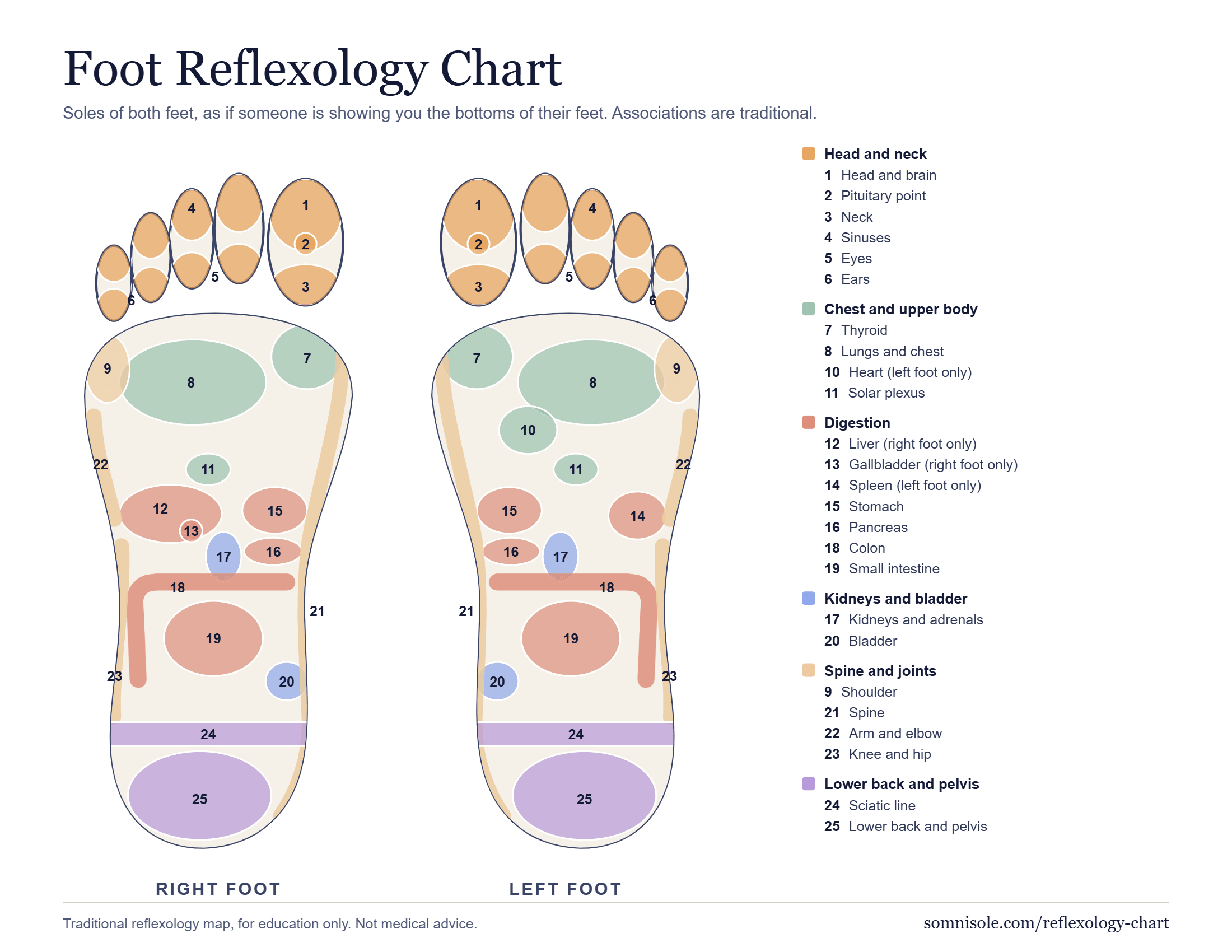
An interactive map of both soles. Tap any zone to see what it is traditionally associated with, where it sits and how to press it.
Right footLeft foot
Head and neck
Head and brain
Traditionally associated with the head and brain.
Where it is
The pad of the big toe.
How to press it
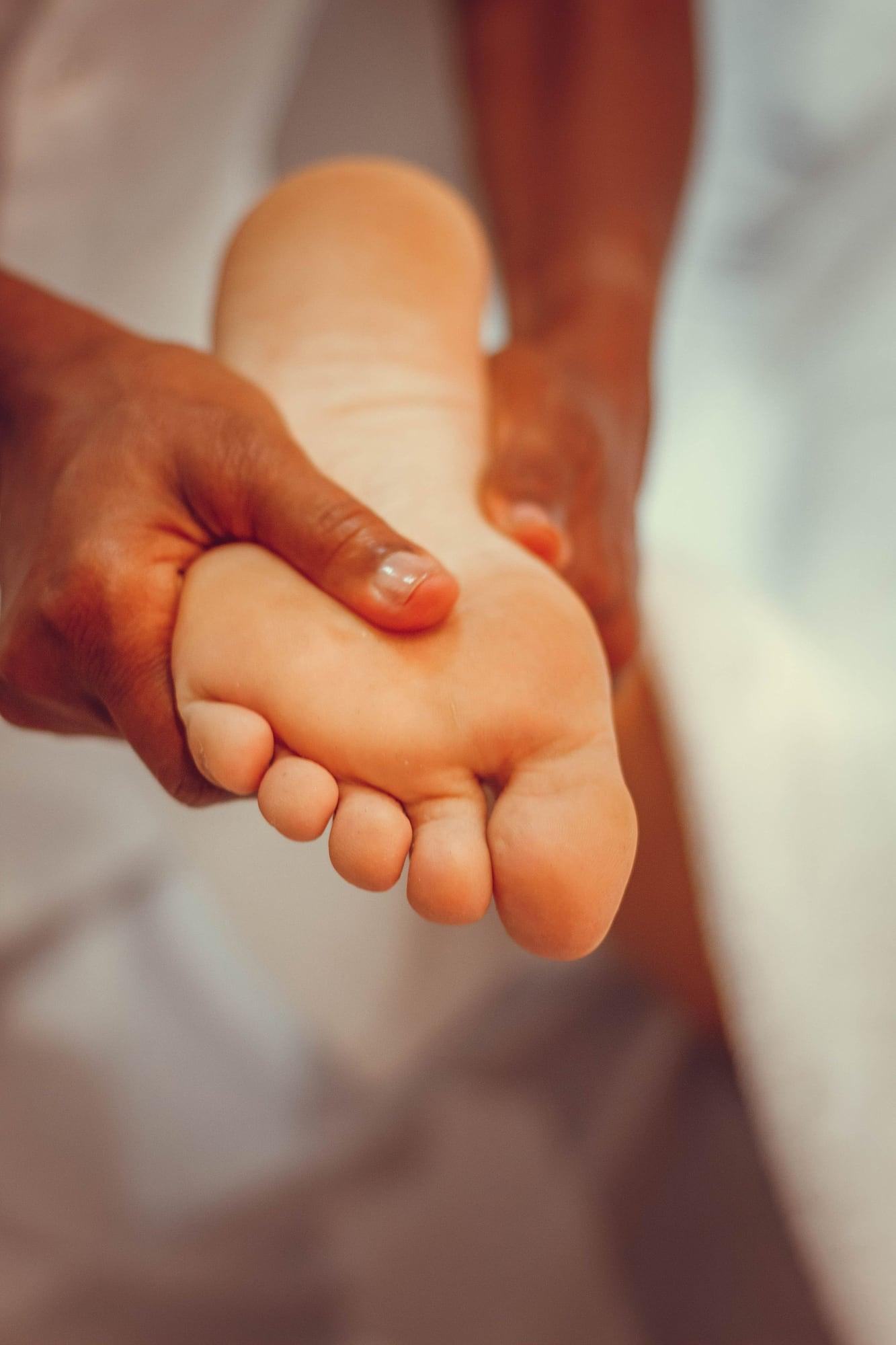
Thumb-walk across the pad of the big toe in small steps, from the tip down toward its base.
On the sock
Covered by the toes zone of the Somnisole nub map: 9 nubs per sole.
A traditional association, not a medical one. Pressing a zone has not been shown to affect the organ it is named after.
Reflexology maps are a tradition, not anatomy. Research has not shown that pressing a zone affects the organ it is named after[1]. Charts also differ between schools[5]; this one follows the layout most often published.
How to read a foot reflexology chart
The chart lays the body over the foot, head at the toes and hips at the heel. Five rules cover almost all of it.
Toes are the head
The big toe stands for the head and neck. The smaller toes stand for the sinuses, with the eyes and ears in the groove beneath them.
The ball is the chest
Lungs across the ball, the thyroid under the big toe, the shoulder at the outer edge.
The arch is digestion
Stomach and pancreas on the inner side, kidneys in the centre, intestines in the lower arch.
The heel is the pelvis
The heel pad stands for the lower back and pelvis, with the sciatic line running across it.
The inner edge is the spine
From the neck at the big toe, down the arch, to the tailbone at the heel.
Right is right, left is left
Each foot stands for its own side of the body. That is why the liver appears only on the right sole and the heart only on the left.
Reflexology zones on the sole, toe to heel
All 25 areas on the chart above, grouped by the part of the body each is traditionally associated with.
Head and neck
1
Head and brain. The pad of the big toe. Traditionally associated with the head and brain.
2
Pituitary point. The centre of the big toe pad, at its fullest point. Traditionally associated with the pituitary gland.
3
Neck. The base of the big toe, where it meets the foot. Traditionally associated with the neck and throat.
4
Sinuses. The pads of the four smaller toes. Traditionally associated with the sinuses.
5
Eyes. Under the second and third toes, in the groove where they join the foot. Traditionally associated with the eyes.
6
Ears. Under the fourth and little toes, in the same groove. Traditionally associated with the ears.
Chest and upper body
7
Thyroid. The ball of the foot directly under the big toe. Traditionally associated with the thyroid.
8
Lungs and chest. Across the ball of the foot, under the four smaller toes. Traditionally associated with the lungs and chest.
10
Heart. On the left foot only: the lower part of the ball, toward the inner side. Traditionally associated with the heart.
11
Solar plexus. The centre of the sole, in the soft hollow just below the ball. Traditionally associated with the solar plexus and diaphragm.
Digestion
12
Liver. On the right foot only: the upper arch, from the centre out to the outer edge. Traditionally associated with the liver.
13
Gallbladder. On the right foot only: a small point inside the liver area. Traditionally associated with the gallbladder.
14
Spleen. On the left foot only: the upper arch toward the outer edge. Traditionally associated with the spleen.
15
Stomach. The upper arch on the inner side, just below the ball. Traditionally associated with the stomach.
16
Pancreas. A narrow band on the inner arch, just below the stomach area. Traditionally associated with the pancreas.
18
Colon. A band that frames the lower arch: up the outer side and across under the kidney point. Traditionally associated with the colon (large intestine).
19
Small intestine. The lower arch, in the middle of the sole. Traditionally associated with the small intestine.
Kidneys and bladder
17
Kidneys and adrenals. The centre of the arch. Traditionally associated with the kidneys and adrenal glands.
20
Bladder. The inner edge of the sole where the arch meets the heel. Traditionally associated with the bladder.
Spine and joints
9
Shoulder. The outer edge of the ball, just below the little toe. Traditionally associated with the shoulder.
21
Spine. The whole inner edge of the foot, from the big toe to the heel. Traditionally associated with the spine, from the neck at the big toe to the tailbone at the heel.
22
Arm and elbow. The outer edge of the foot, between the ball and the middle of the arch. Traditionally associated with the arm and elbow.
23
Knee and hip. The outer edge of the foot, from the middle of the arch down to the heel. Traditionally associated with the knee and hip.
Lower back and pelvis
24
Sciatic line. A band across the heel, about a third of the way down it. Traditionally associated with the sciatic nerve.
25
Lower back and pelvis. The pad of the heel. Traditionally associated with the lower back and pelvis.
The edges and the top of the foot
Reflexology charts continue around the sides of the foot. Switch views on the chart above to see these.
Inner edge
Neck (cervical spine). The inner edge of the big toe and the base of the big toe joint.
Upper back (thoracic spine). The inner edge of the foot along the ball and the start of the arch.
Lower back (lumbar spine). The inner edge of the foot along the highest part of the arch.
Tailbone (sacrum). The inner edge of the heel.
Bladder. The soft area on the inner side of the foot, just below and in front of the ankle bone.
Pelvic area. The hollow between the inner ankle bone and the back of the heel.
Outer edge
Shoulder. The outer edge of the foot just below the little toe.
Arm and elbow. The outer edge of the foot around its bony midpoint.
Knee. The outer edge of the foot just in front of the heel.
Hip. Below the outer ankle bone, on the side of the heel.
Pelvic area. The hollow between the outer ankle bone and the back of the heel.
Top of the foot
Face, teeth and jaw. The tops of the toes, below the nails.
Chest and upper back. The top of the foot behind the toes, over the long bones.
Lymph and groin line. A band across the top of the foot where it meets the ankle.
Printable foot reflexology chart
One page, both soles, 25 numbered zones and a legend. Print it, save it as a PDF from the print dialog, or download the image.
Reflexology is built on the idea that areas of the feet correspond to organs and systems elsewhere in the body. That idea has not held up in research. The U.S. National Center for Complementary and Integrative Health says reflexology's claimed effects on other parts of the body have not been proven[1].
Two systematic reviews of randomized trials, covering 18 and then 23 studies, concluded that the best evidence does not show reflexology to be an effective treatment for any medical condition[2][3]. In a blinded test of the charts themselves, reflexologists could not reliably identify which conditions people had, and did not agree with one another[4].
What is not in doubt is simpler: having your feet pressed and rubbed feels good and is relaxing, and studies have not shown reflexology to do more than an ordinary foot massage does[8]. So use the chart the way a cook uses a traditional recipe: as a structure handed down, a way to cover the whole foot in an order that is easy to remember, not as a diagnosis or a treatment.
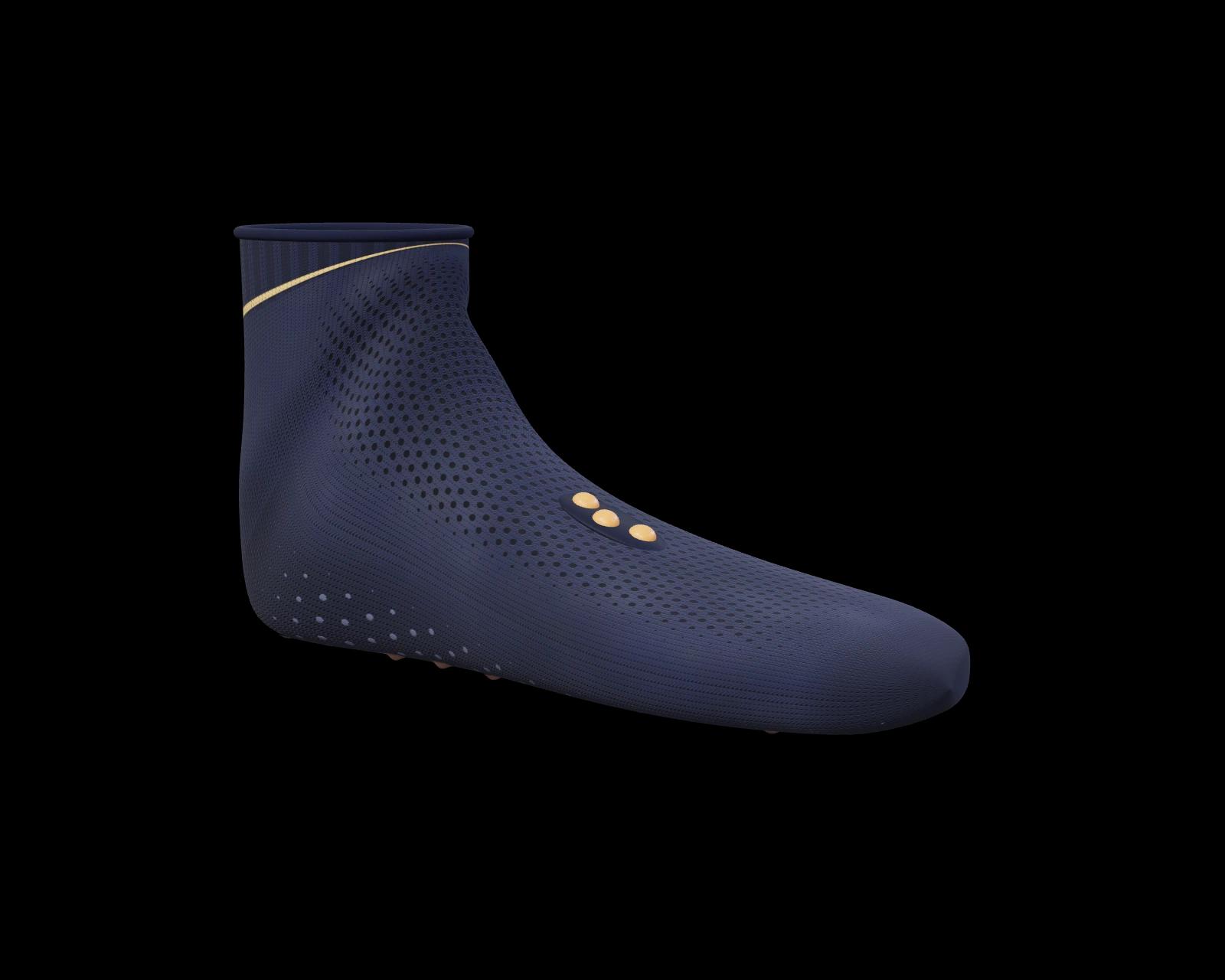
The sock with the chart built in.
Somnisole places 45 firm silicone nubs over every zone on this chart, inside a sock thin and breathable enough to sleep in. Press into a wall, a footboard or your other foot. Each box includes a printed chart card.
Somnisole is a wellness product, not a medical device. Not for feet with numbness, open wounds, diabetes-related foot problems or poor circulation without a doctor's OK.
Usually that the tissue under your thumb is sensitive: a tight muscle, a callus, a bruise or a foot that has had a long day. Reflexology tradition reads a sore point as a message about the matching body part, but in a blinded test reflexologists using charts could not reliably identify people's medical conditions from their feet. Ease off the pressure. If a spot stays painful, is swollen or hurts when you walk, see a doctor or podiatrist.
How often should you do reflexology on your feet?
There is no evidence-based dose. As a comfort routine, a few minutes on each foot in the evening is common, and professional sessions typically last 30 to 60 minutes. Use pressure that feels good and stop if anything hurts.
When should you not do reflexology?
Skip it on a foot with a fracture, an unhealed wound or active gout, and if you have a blood clot. Check with your doctor first if you are pregnant or have a circulation or vascular condition. Not for feet with numbness, open wounds, diabetes-related foot problems or poor circulation without a doctor's OK.
What can reflexologists tell from your feet?
Not your medical conditions. A practitioner can notice tension, tender areas, calluses and skin changes, and may suggest you see a doctor about anything unusual, but reflexology is not a diagnostic tool and a foot chart is not a body scan.
Is the left foot chart different from the right?
Mostly they mirror each other, with the right foot standing for the right side of the body and the left foot for the left. A few areas are traditionally charted on one foot only: the liver and gallbladder on the right, the heart and spleen on the left.
Can I print this reflexology chart?
Yes. Use the Print button on the chart for a clean one-page version with both soles and a numbered legend, or Download PNG to save it as an image. It is free for personal use.
Sources
1Reflexology. National Center for Complementary and Integrative Health (NCCIH), NIH.