Toe socks are socks with a separate sleeve for each toe, worn mostly by runners, hikers and people who dislike their toes rubbing together. They are a reasonable comfort choice, but a 2024 research review found they have not been tested well enough to say they prevent blisters. They will not straighten toes, and they suit roomy shoes better than narrow ones.
Toe socks split people the way socks in bed do. Fans say they will never go back to a shared toe pocket. Skeptics see a glove on the wrong end of the body.
Both reactions are fair, because the case for toe socks rests more on how they feel than on research. This guide covers what they are, what the evidence does and does not show, how to fit a pair, and who is better off without them.
What are toe socks?
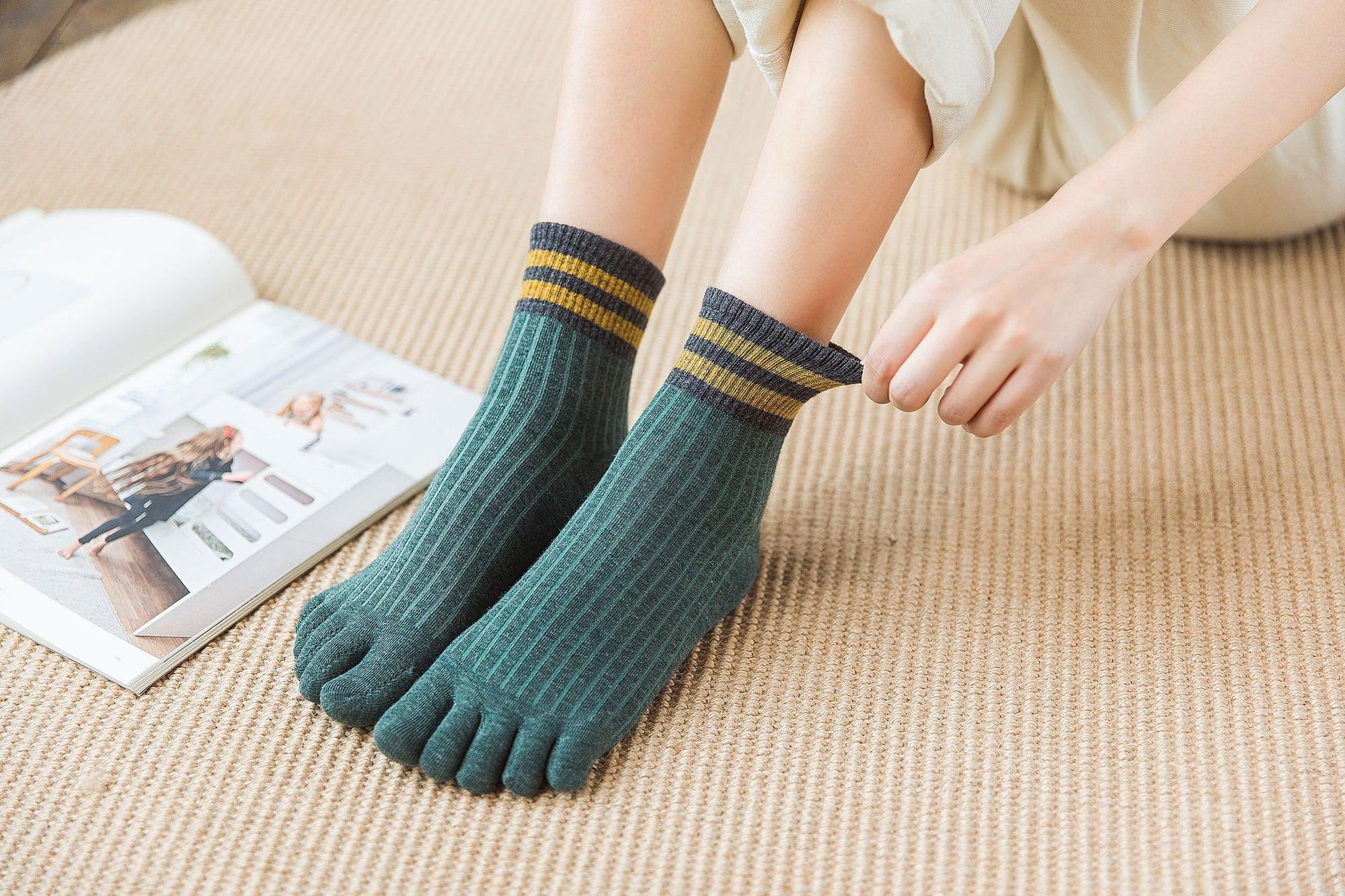
A toe sock is knitted with five separate sleeves, one for each toe, where a regular sock has a single toe pocket. You will also see them sold as five-toe socks, five-finger socks or glove socks.
They come in most of the forms regular socks do:
Athletic toe socks for running and hiking, usually thin synthetic or merino wool blends.
Liner toe socks, very thin pairs worn under a thicker hiking sock.
Grip toe socks with rubber dots on the sole, common in yoga, Pilates and barre studios.
Everyday pairs in cotton or wool, including the striped novelty kind.
A 2024 review of blister research notes that toe socks have become popular in endurance running and hiking. [1] A separate review adds that five-toe socks are very popular in Japan, especially among athletes and people in physical jobs. [3]
A toe sock wraps each of these toes in its own sleeve, so there is fabric in the spaces where skin normally touches skin.
What about Injinji toe socks?
Injinji is one of the best-known names in toe socks. The company describes itself as a California-based toesock company founded in 1999, and it sells its socks in several weights and in heights from no-show to over the calf. [10]
Other sock makers sell toe socks too. We have not tested one brand against another, so this guide covers the type and is not a ranking.
Are toe socks good for your feet?
For most healthy feet they are fine, and some people find them more comfortable than regular socks. Whether they do anything beyond comfort is less certain. These are the four reasons people give for wearing them, with the evidence for each.
Fewer blisters between the toes
This is the selling point aimed at runners and hikers. The logic is simple: put a sleeve of fabric between two toes and skin stops rubbing on skin.
The science of blisters is a little more involved. The 2024 review, published in the Journal of Athletic Training, describes a friction blister as a tear within the outer layer of skin caused by repeated shearing, and notes that even mildly damp feet have higher skin friction and blister more readily. It suggests two ways toe socks might help: the added fabric cushions the spaces between the toes, and the double layer there may lower friction. [1]
"Might" is as far as it goes. The review's verdict is that the effectiveness of toe socks has not been established, and that they have not been tested enough to draw conclusions. It also describes an ultramarathon trial of taped toes in which wearing toe socks as well was associated with more blisters. That trial was built to test tape, not socks, and its authors did not say whether the extra blisters were on the toes. [1]
So the fair summary is that plenty of runners say toe socks work for them, which is anecdote, and the trials have not caught up. The American Academy of Dermatology's general advice for feet is nylon or moisture-wicking socks, plus shoes that are neither too tight nor too loose. [2] Toe socks can be one way of following that advice. They are not a proven step beyond it.
Drier skin between the toes
The idea is that a toe sock puts absorbent fabric into four spaces a regular sock leaves bare, so sweat there has somewhere to go.
The evidence is thin here too. A 2023 scoping review went looking for every study of five-toe socks and found only four it could include. One followed 18 older adults at a day care service, and the review credits the socks with helping to prevent skin problems caused by dampness between the toes. The socks were one part of a foot-care routine that also included nail care, foot baths and massage, so the study cannot show what the socks did on their own. [3]
What is well established is the basic hygiene around it. The NHS advises drying your feet after washing, particularly between the toes, and wearing clean socks every day. [6] The American Academy of Dermatology suggests socks made of natural fabrics, or fabrics that dry quickly or wick moisture away, changed daily or sooner if they get wet. [7] A toe sock that stays damp all day is no better than any other damp sock.
Room for the toes to spread
Sellers often say toe socks let your toes spread naturally, sometimes called toe splay. There is something to the comfort side of this. A regular sock's toe pocket can press the toes together, and separate sleeves do not.
But a thin knitted sleeve cannot push toes apart or hold them in a new position. Toe socks are not toe spacers, and we could not find trials showing that they change how toes line up.
For bunions in particular, the American Academy of Orthopaedic Surgeons says a common first step is switching to shoes with a wide toe box that does not squeeze the toes, and that nonsurgical treatment cannot reverse a bunion. [5] If your toes feel crowded, the shoe matters far more than the sock.
Balance and grip
Grip toe socks are popular in studios because rubber dots stop feet sliding on a mat, and separate toes can press into the floor one at a time.
The research is small and mixed. Of the three balance studies in the 2023 review, two found no significant difference between five-toe socks and regular socks or bare feet. [3] The third tested 26 healthy young adults standing on one leg. With eyes open, their sway was slightly slower, a sign of steadier balance, in five-toe socks with rubber bits on the sole than in regular socks, in one of the two directions measured. With eyes closed there was no significant difference. [4] Because the separate toes and the rubber grips came as a package, the study cannot say which one mattered.
Reason people wear them
What the evidence says
Fewer blisters between the toes
Plausible and often reported by wearers, not established in trials
Drier skin between the toes
Plausible; one small study where socks were part of a wider routine
Room for toes to spread
A comfort benefit; no trials found showing a change in alignment
Balance and grip
Three small studies with mixed results
Fit and materials: how to choose a pair
Fit matters more with toe socks than with regular ones, because five sleeves have to line up with five toes.
Size by the chart, then check the toes. Each sleeve should reach the base of its toe without tugging at the web of skin, and there should be no spare fabric folded over a toe tip.
Mind your shoes. Toe socks add fabric between every toe, so your forefoot takes up a little more width. The blister review points out that any pressure relief from that padding depends on the room available in the toe box of the shoe. [1] AAOS shoe-fitting advice is to leave about half an inch between your longest toe and the tip of the shoe, and to try shoes on with socks of the same thickness you plan to wear. [8]
Pick the fiber for the job. For running and hiking, look for nylon, polyester or merino wool blends. The review notes that cotton fibers absorb three times as much moisture as acrylic ones, which is one reason runners tend to avoid all-cotton pairs. [1] For lounging at home, cotton is fine.
Choose a thickness. Thin pairs and liners suit snug shoes. Cushioned pairs need more room.
Drawbacks of toe socks, and who should skip them
Toe socks have real downsides.
They take longer to put on, especially at first or with damp feet.
They can crowd narrow shoes. If your shoes are already snug at the toes, extra fabric makes that worse.
Sizing is fussier. Toes that are much longer, shorter or more curled than average may not match the sleeves.
Laundry is slower. Sleeves turn inside out in the wash and need pulling straight.
Some people dislike fabric between their toes, and that feeling does not fade for everyone.
You are probably better off in regular socks if any of these apply:
Your toes are webbed or joined, or they overlap or curl so that the sleeves will not sit flat.
You spend most of the day in narrow dress shoes or other tight footwear.
You have diabetes or reduced feeling in your feet and have not asked your doctor. The US National Institute of Diabetes and Digestive and Kidney Diseases advises socks with no seams that are not tight, and checking your feet every day, because lost feeling can hide a blister. [9] Five sleeves mean more places where fabric could bunch or press, so get advice first.
You have itchy, white or cracked skin between your toes. Show it to a pharmacist or doctor. A different sock is not the answer.
How to put on toe socks
It takes a few tries to get quick at it.
Start with dry feet. Damp skin grabs the fabric.
Turn the sock right side out and push each sleeve out fully with a finger.
Gather the sock down to the toes, the way you would with tights.
Line up the big toe first, then walk the other toes into their sleeves one at a time. Spreading your toes with your fingers helps.
Seat each sleeve down to the base of the toe, then pull the sock over your heel and up the ankle.
Wiggle your toes. If a sleeve is twisted or a tip is folded over, fix it now, before your shoes go on.
Toe socks are shaped for a left foot and a right foot. If the big-toe sleeve ends up on the outside, swap them over.
Can you wear toe socks to bed?
If you like socks in bed, a loose, clean, breathable toe sock is no different from any other bed sock. Leave tight athletic pairs with firm arch bands for daytime. Our guides to sleeping with socks on and the best socks for sleeping cover what to look for.
A note on the Somnisole Five-Toe
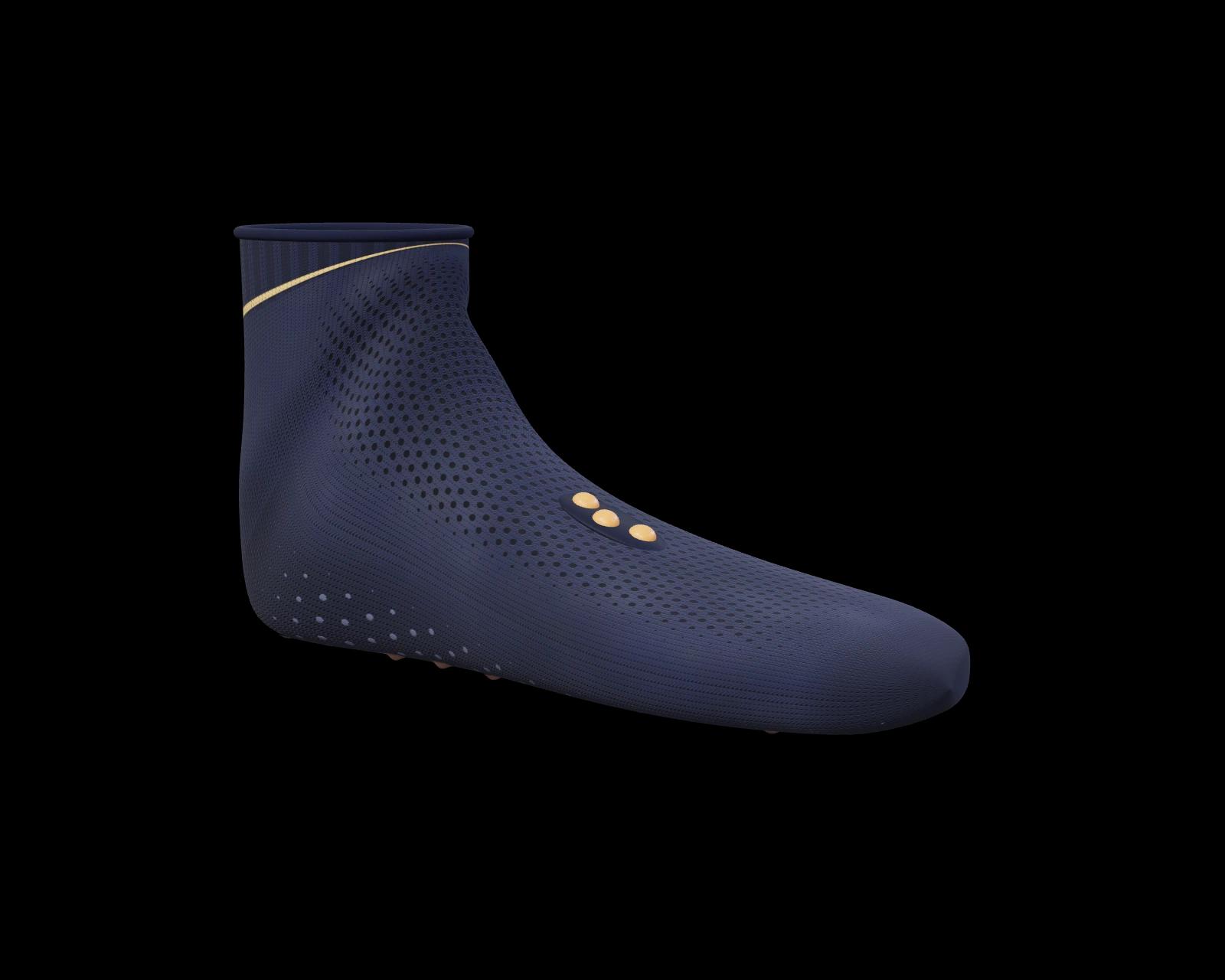
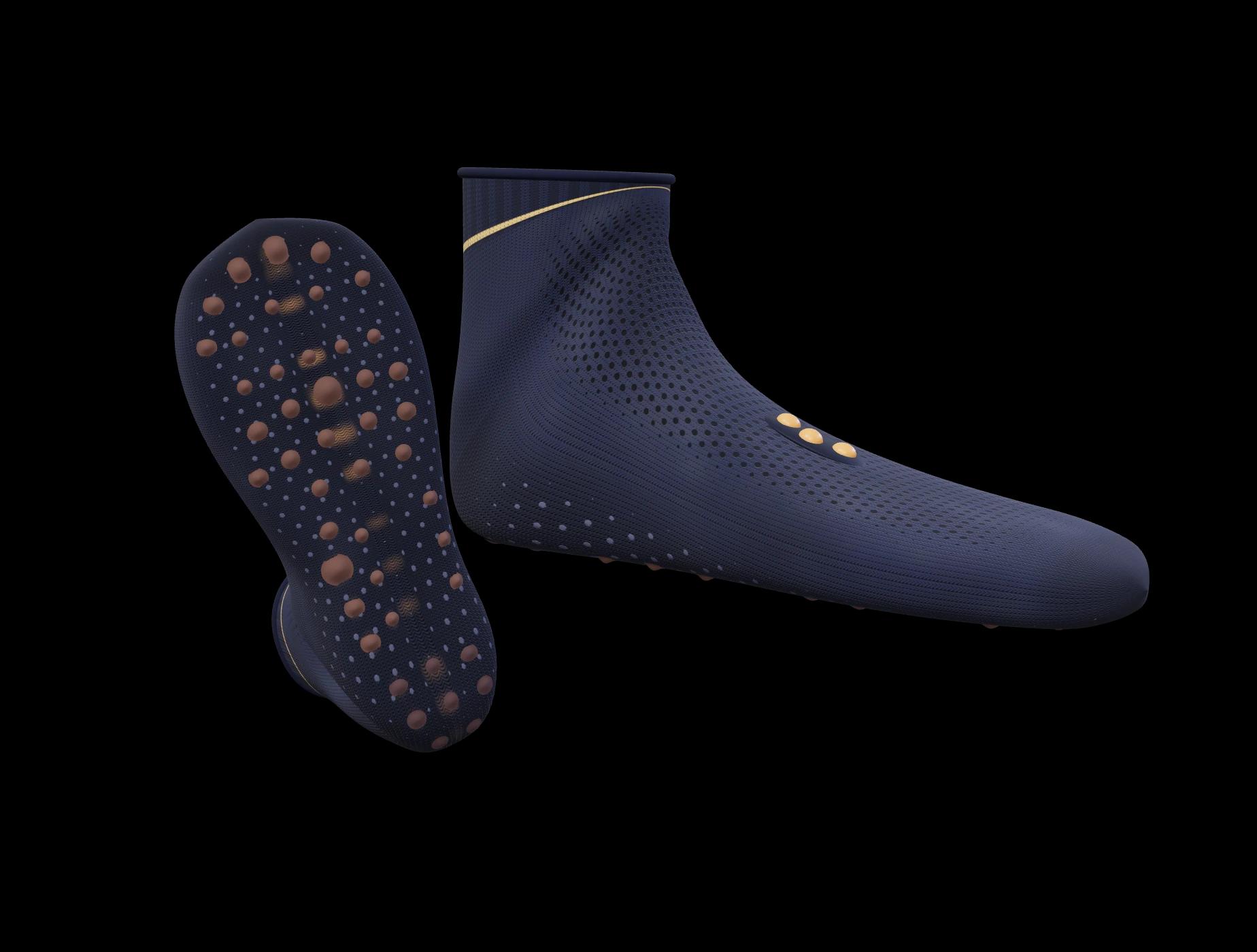
We make socks, so here is where we stand. Somnisole makes a Five-Toe version of its reflexology sleep sock, with each toe knit separately. Both socks are pre-orders that have not shipped yet, so we have no reviews or test results to share. Our how it works page explains the nubs inside the sole. The reflexology zones they follow are only traditionally associated with other parts of the body, a link that has not been proven. [11] Not for feet with numbness, open wounds, diabetes-related foot problems or poor circulation without a doctor's OK.
Common questions
Are toe socks good for your feet?
For most healthy feet they are a safe comfort choice, and many wearers like having fabric between their toes. A 2024 review of blister research found that their effectiveness has not been established, so treat the benefits as plausible, not proven. People with diabetes, numb feet or toes that overlap should ask a doctor before switching.
Do toe socks prevent blisters?
They might cut down on toe-on-toe rubbing, which is why runners and hikers wear them, but this has not been shown in trials. A 2024 review in the Journal of Athletic Training concluded that toe socks have not been tested enough to draw conclusions. Well-fitting shoes and nylon or moisture-wicking socks are the standard advice from dermatologists.
Do toe socks help with bunions or toe alignment?
No sock has been shown to straighten toes. The American Academy of Orthopaedic Surgeons says nonsurgical treatment cannot reverse a bunion and points to shoes with a wide toe box as a first step. Toe socks may feel roomier than a shared toe pocket, but they are not toe spacers.
What are Injinji toe socks?
Injinji is a California-based company, founded in 1999, that makes toe socks in several weights and heights. It is one of the best-known toe sock brands. Other sock makers sell toe socks too, so compare fit, fiber and thickness, not only the label.
How do you put on toe socks?
Start with dry feet and a sock turned right side out. Gather the sock down to the toes, guide the big toe into its sleeve first, then work the other toes in one at a time. Seat each sleeve at the base of the toe before pulling the sock over your heel.
Can you sleep in toe socks?
Yes, if you like socks in bed and the pair is loose, clean and breathable. Leave tight athletic toe socks with firm arch bands for daytime, and take any sock off if it leaves a deep mark or makes your feet too warm.
Somnisole puts firm silicone nubs over every zone of the sole, inside a sock thin and breathable enough to sleep in. Made for achy, tired, restless-feeling feet at bedtime.
Somnisole is a wellness product, not a medical device. Not for feet with numbness, open wounds, diabetes-related foot problems or poor circulation without a doctor's OK.