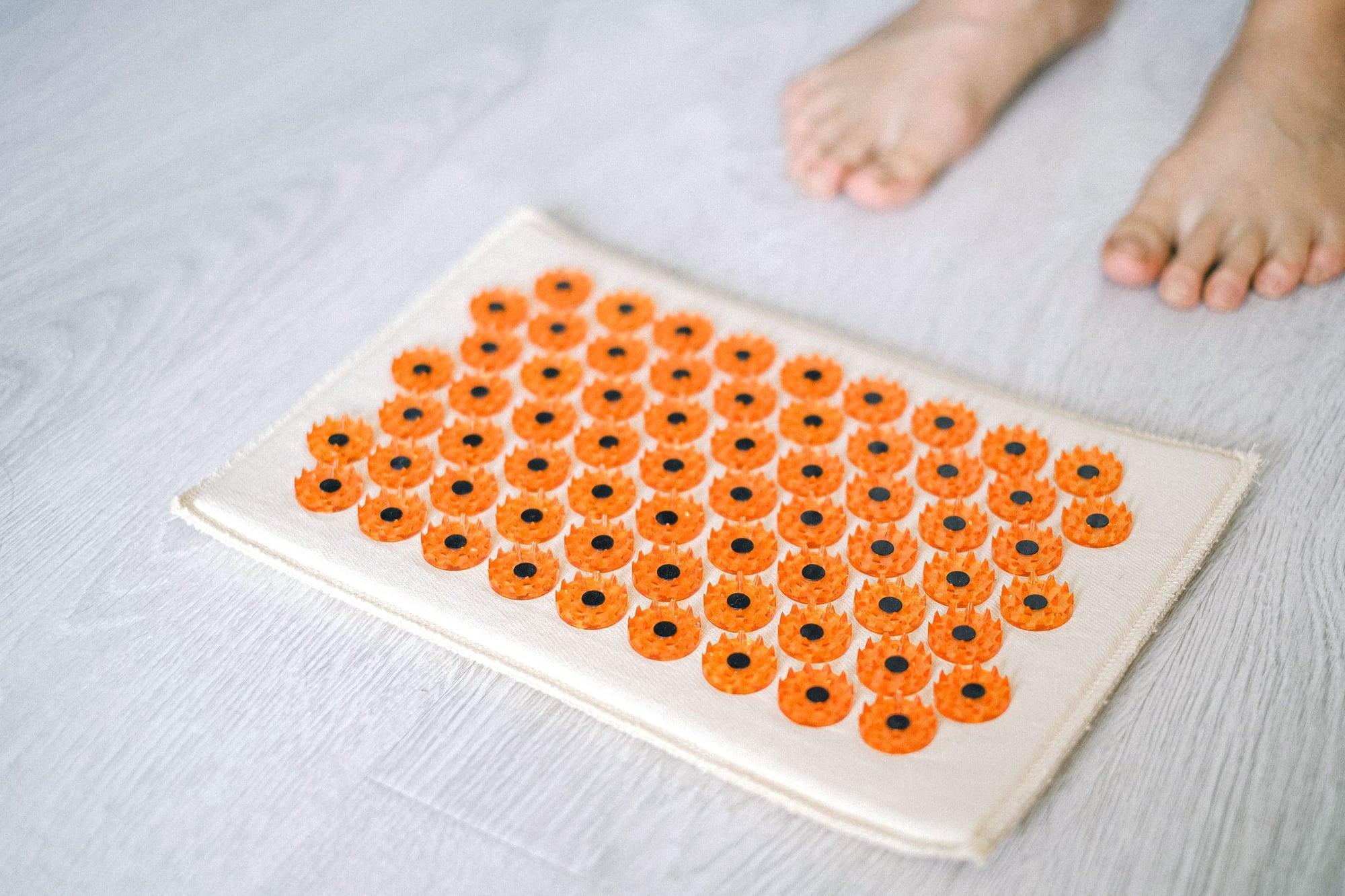
You can use an acupressure mat on your feet seated or standing. Start seated, in thin socks, for a couple of minutes, because standing puts your full body weight on the spikes. It is a strong sensation that many people enjoy, but it has not been shown to treat anything, and people with numb feet, diabetes-related foot problems, open wounds or poor circulation should ask a doctor first.
Acupressure mats are sold mostly for backs, but the spikes do not care which part of you is on top of them. Some mat owners stand on theirs, and small foot-sized pads are sold for exactly that.
This guide covers how to use a mat on your feet, seated and standing, how long to stay on, and who should not. It ends with a plain comparison between a mat and a sock with nubs inside, because the two solve slightly different problems.
Can you use an acupressure mat on your feet?
Yes. Soles are built for load. The hairless skin of the palms and soles is the thickest on the body, with an extra layer in the outer skin that other areas lack. [2]
Researchers have put feet on spike pads too. In a German pilot trial of a spike pad for chronic low back pain, each daily session began with participants pressing both feet on the pad for 10 minutes while sitting on a chair, before they lay on it. That routine came from the clinic's own experience. The foot step was never tested by itself. [1]
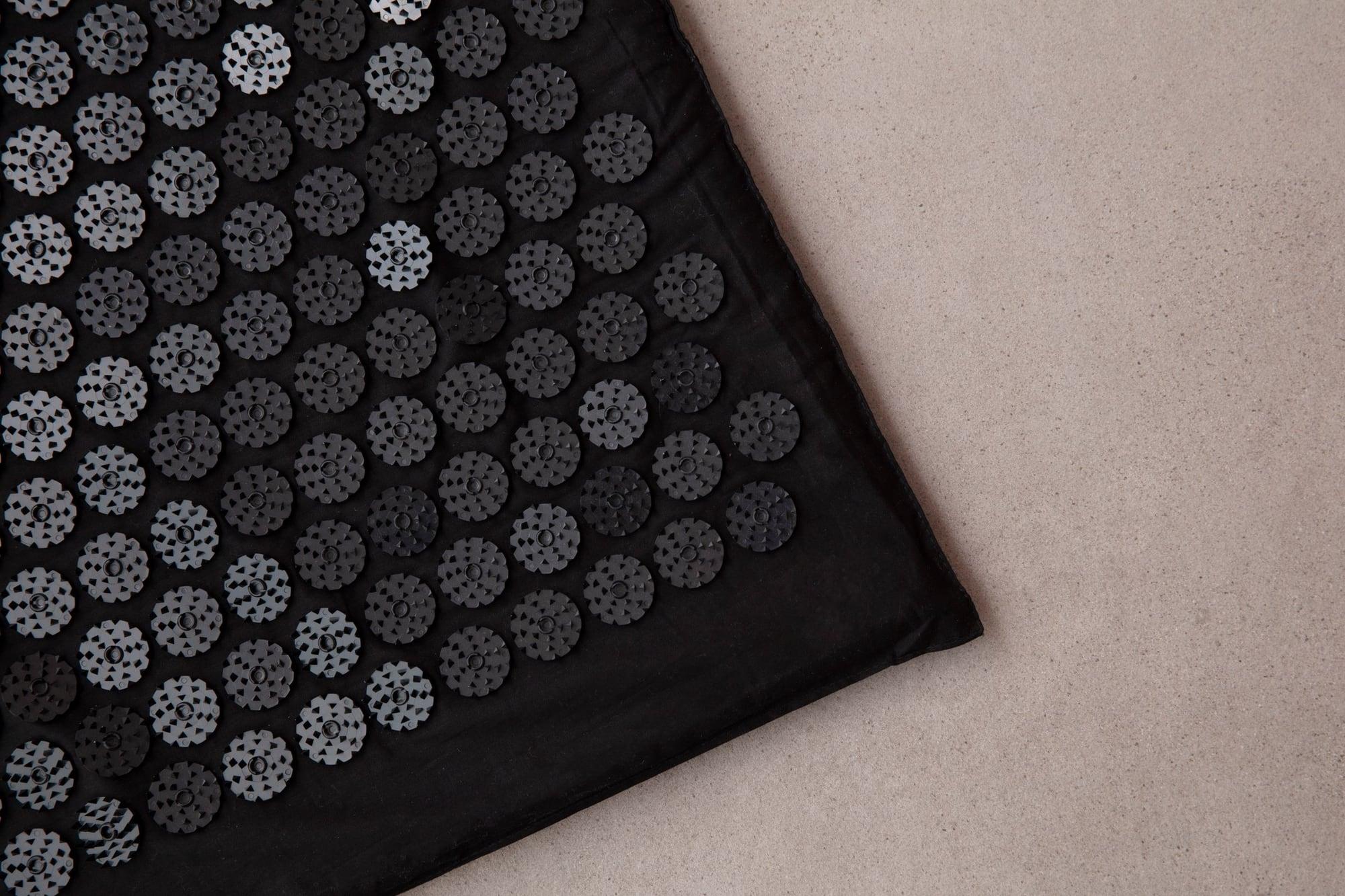
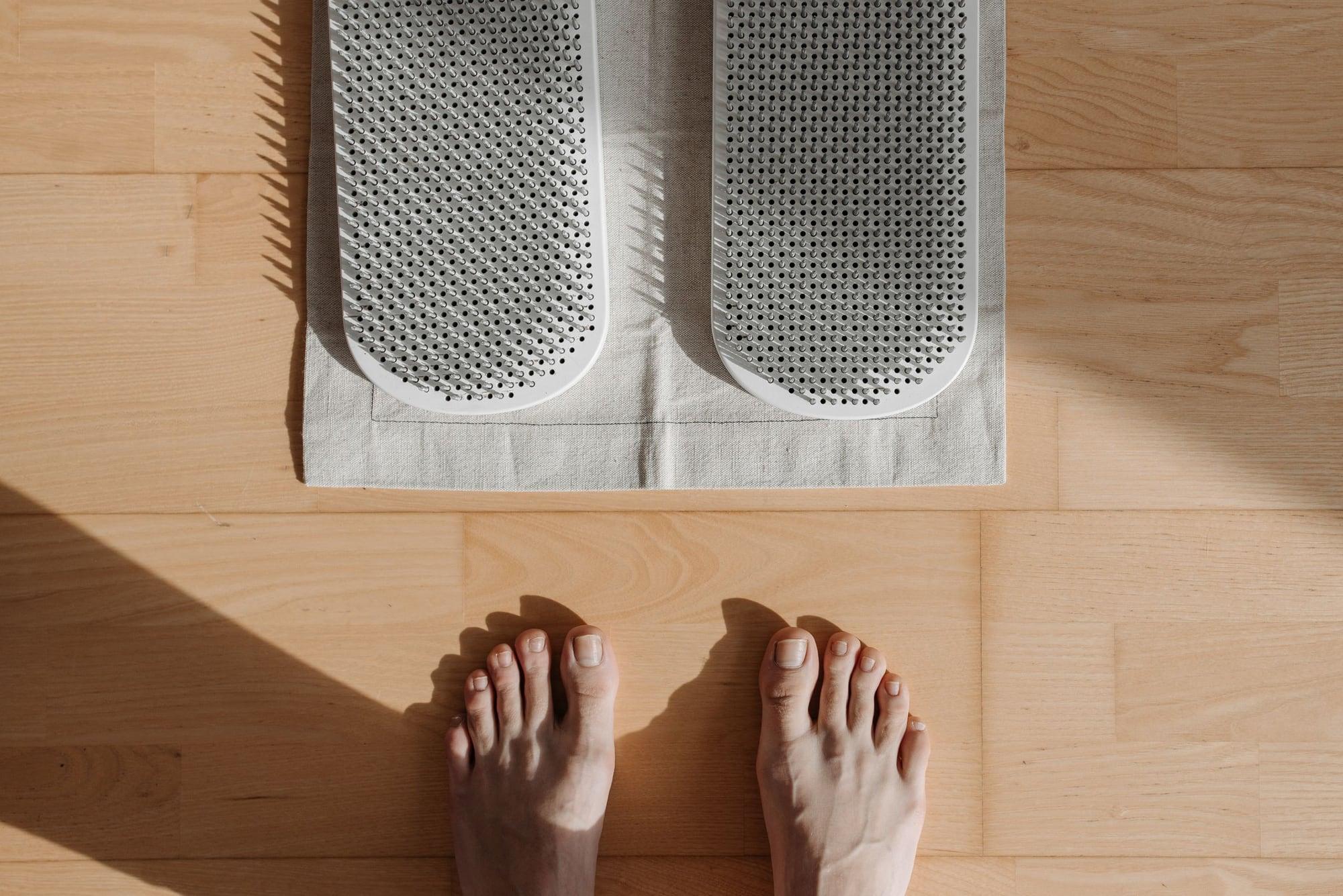
You have two formats to choose from: one end of a full-size mat, or a small foot pad. They work the same way. What changes the feel is how far apart the spikes are and how much of your weight is on them. Fewer spikes under the foot means more pressure on each one.
How to use an acupressure mat for feet
Seated: start here
Put the mat on the floor in front of a sturdy chair. On a hard floor, lay it on a rug or towel so it cannot slide.
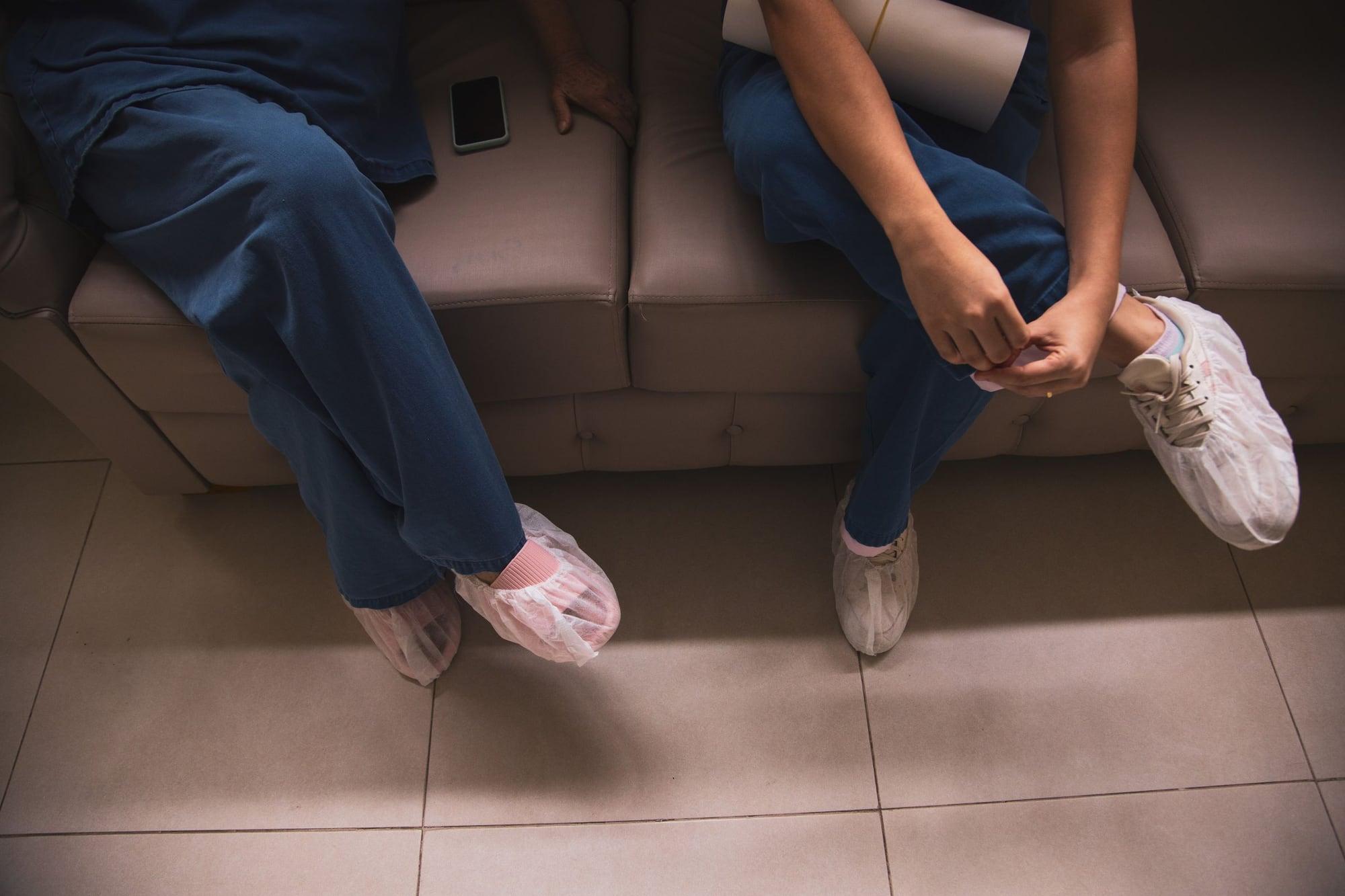
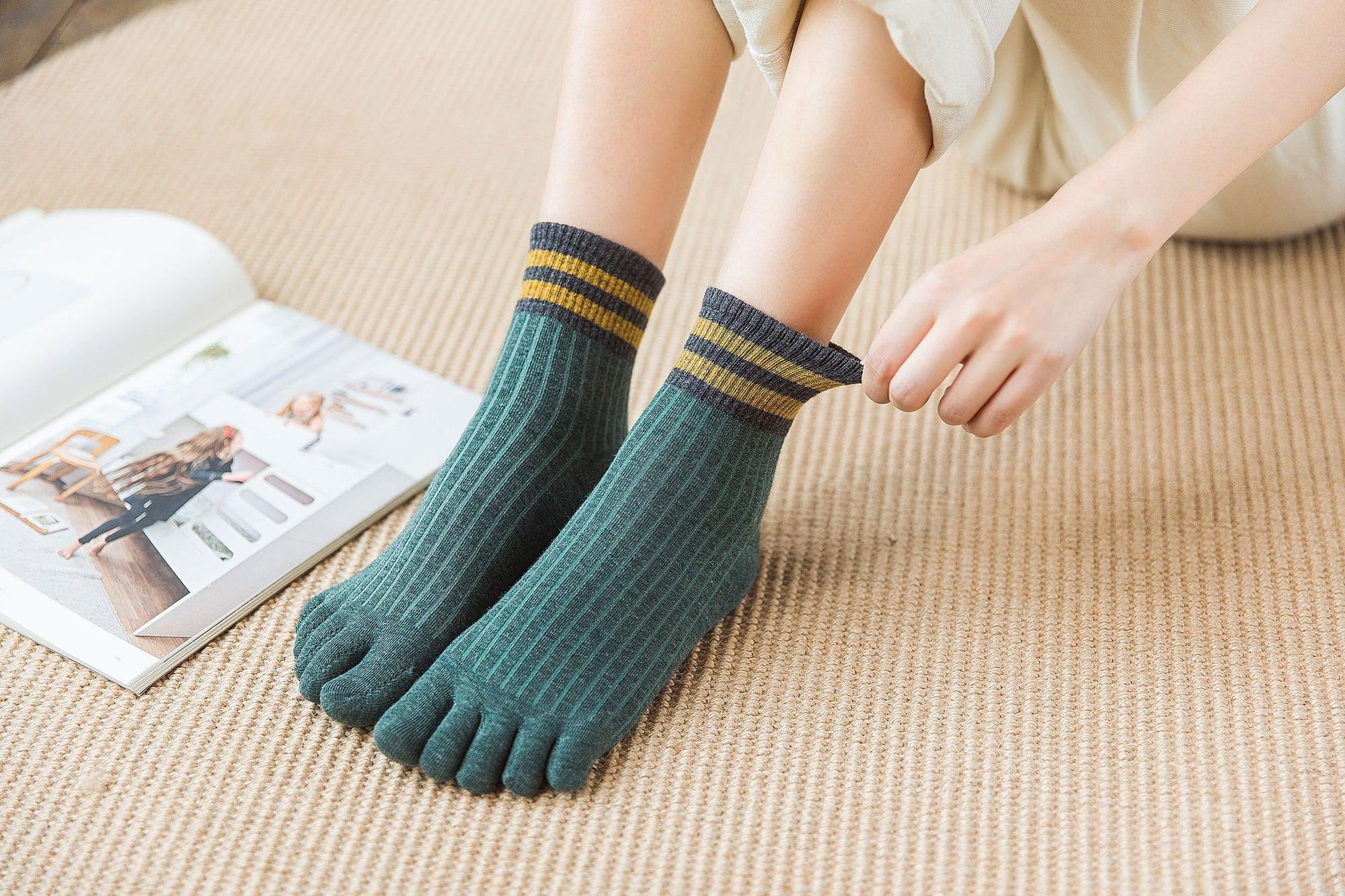
Keep thin socks on for the first few sessions.
Sit down, then lower both feet onto the spikes. Let the weight of your legs rest there. Do not push yet.
After a minute, lean your forearms on your knees to add pressure, or lift a heel and roll slowly from heel to toes.
Move your feet now and then so the spikes meet a new patch of skin.
Seated use is the gentle end of the scale, because the chair carries most of your weight. It is also the only version we found in a published trial. [1]
Standing: the strong version
Standing puts your whole body weight on two soles' worth of spikes. That is a big step up from sitting.
Stand beside a counter, a wall or the back of a heavy chair, and hold on.
Step on with one foot while the other stays on the floor, then swap. You control how much weight the mat gets while you find out how it feels.
With both feet on, stand evenly. Shifting from foot to foot, or rocking from heels to toes, changes which spikes bite.
Step off backward onto the floor, not onto the edge of the mat.
Do not stand on a mat when you feel dizzy or when the floor is slippery.
How long to stay on
Position
Load on the spikes
A cautious start
Build toward
Seated, thin socks
The weight of your legs
2 to 3 minutes
10 minutes
Seated, bare feet
The weight of your legs
1 to 2 minutes
10 minutes
Standing, one foot on
As much as you shift onto it
10 to 20 seconds a foot
1 to 2 minutes
Standing, both feet on
Your full body weight
20 to 30 seconds
A few minutes
These are our cautious starting points, not researched doses. The only published figure is the 10 minutes of seated use in the German trial. [1] More time has not been shown to do more.
What it should feel like
Sharp and prickly at first, then duller as you get used to it. In a lab study of healthy adults lying on a mat, pain ratings peaked within 30 seconds and then faded. [3] Nobody has measured the same curve for feet, so simply expect the first minute to be the worst.
Step off if the feeling stays sharp, if part of your foot goes numb, or if you see broken skin. Some people never take to it. In one study of a spike pad used on the back, eight of 91 adults found it too painful to keep using. [4] Disliking it is a normal result, not a failure.
Do acupressure foot mats actually work?
As a way to press firmly on your soles, yes. As a treatment, there is nothing to show.
No trial has tested a foot mat on its own. The published studies of acupressure mats are small and mostly about lying on one with neck or back pain. We go through them in do acupressure mats work.
In healthy people, a mat has not beaten simple rest. In a 2024 trial, students who lay on a mat three times a week for three weeks improved no more on stress or sleep ratings than students who lay down without one. [5]
The reflexology claims are unproven. Foot mats are often sold with a reflexology chart, on which each area of the sole is traditionally associated with another part of the body. The US National Center for Complementary and Integrative Health (NCCIH) says the claim that pressing these points causes relaxation and healing in those body parts has not been proven. [6]
Pressure on the feet does feel good. Cleveland Clinic's review of reflexology puts it simply: having your feet worked on is relaxing and calming, and there are no well-designed studies showing that reflexology does more than an ordinary foot massage. [7]
So use a foot mat because you like how it feels. That is reason enough.
Who should not use an acupressure mat on their feet
The first rule is that you need to be able to feel your feet. You cannot judge pressure you cannot feel.
Numbness or diabetes-related foot problems. The US National Institute of Diabetes and Digestive and Kidney Diseases (NIDDK) explains that nerve damage can keep you from feeling a pebble in your sock or a blister on your foot, and that poor blood flow makes sores slow to heal. Its advice to people with diabetes is not to walk barefoot, even indoors. [8] A spike mat runs against that advice.
Open wounds, a foot fracture or active gout. The University of Minnesota's reflexology guidance says to avoid foot work in each of these cases, and with a current blood clot. [9]
Pregnancy, blood thinners, heart or blood vessel disease. The same guidance asks for caution in pregnancy and a doctor's input for vascular disease in the legs or feet. [9] Mat makers advise against use in pregnancy, with blood thinners and with cardiovascular disease, as reported in the 2024 trial. [5] Trials have also left out people with bleeding tendencies and with skin disease where the mat touches. [1]
Unsteady balance. Stay seated.
The NCCIH adds a point that covers every tool on this page. The risk of harm from massage appears to be low, but do not use it to put off seeing a health care provider about a medical problem. [10]
Acupressure mat vs nub sock for your feet
A mat is one way to press on your soles. A reflexology sock with nubs inside is another. They overlap less than you might expect. (The other kind of reflexology sock, a printed chart, applies no pressure at all. Our reflexology socks guide explains the difference.)
Acupressure mat
Nub sock
Where the pressure comes from
Your body weight
You, pushing your foot against a wall, a footboard or your other foot
Intensity
High. Pointed spikes, adjustable from seated to standing
Lower. Nubs, not spikes, and only as firm as you push
Position
Sitting or standing
Lying down
What it touches
Mainly the parts of the sole that meet a flat surface: heel, ball and outer edge
Wherever the sock has nubs, including the toes and the arch
Other body areas
Back, neck, shoulders and legs
Feet only
Balance needed
Yes, for standing
No
Research
A few small trials, none on feet alone
Depends on the sock. Ours has not been tested
What a mat does better
Intensity. Nothing worn on the foot matches body weight on pointed spikes. If you want a strong sensation, the mat wins.
Effort. Gravity does the pressing. Seated, you just rest your feet.
Range. The same mat works on your back, neck and shoulders.
Research. Thin as the evidence is, mats have some published trials behind them.
What a sock does better
Lying down. A mat on the floor needs you upright to load your feet. A nub sock is used in bed.
Reach. A flat mat mostly meets the heel, the ball and the outer edge, and a high arch may barely touch it. Nubs inside a sock sit against the arch and under the toes.
Gentleness. Nubs spread pressure more than points do, which suits people who find spikes too much.
No balancing. Nothing to stand on or step off.
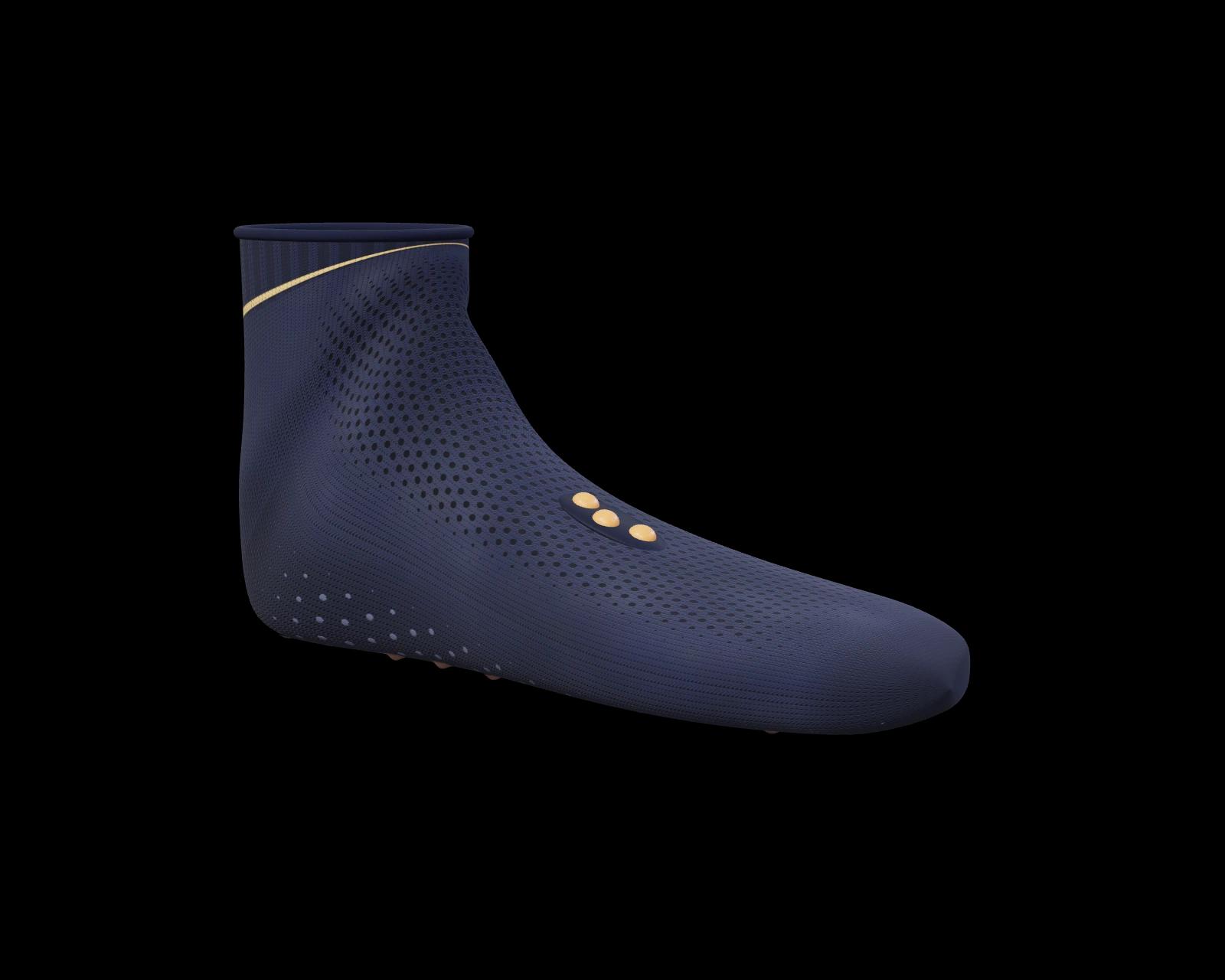
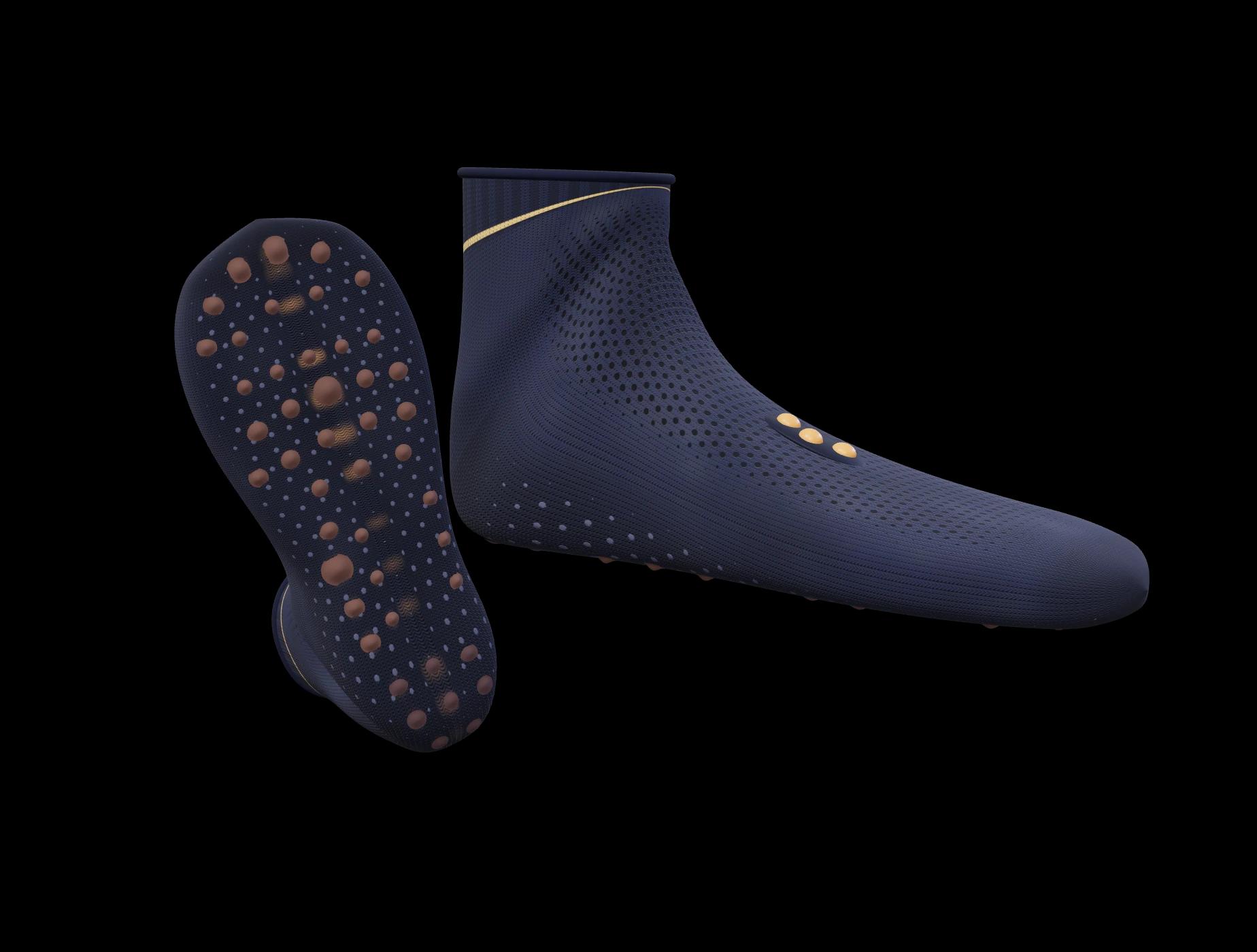
We make one of these socks, so weigh this part accordingly. Somnisole is a thin, breathable sock with 45 firm silicone nubs bonded inside the sole, covering the toes, the toe groove, the ball, the inner arch, the outer edge and the heel. Larger 3.5 mm nubs sit at the center of the ball and the arch, the standard nubs are 2.5 mm, and softer 1.5 mm domes sit under the heel. It is made for achy, tired, restless-feeling feet at bedtime: you press your soles into a wall or footboard, sole to sole, or one sole over the other foot's instep. Our how it works page shows each position.
The inner arch often floats above a flat mat. Somnisole places larger 3.5 mm nubs there and at the center of the ball.
Somnisole is a pre-order that has not shipped, so there are no customer reviews or test results to point to, and we make no treatment claims for it.
Not for feet with numbness, open wounds, diabetes-related foot problems or poor circulation without a doctor's OK.
Which should you choose?
Choose a mat if you want the strongest sensation, you are happy sitting or standing for a few minutes, or you want one tool for your back as well.
Choose a nub sock if you want something milder that you can use lying in bed, or if spikes are simply more than you enjoy.
Choose your thumbs if you want full control at no cost. Our guide to how to massage your own feet walks through a 5 to 10 minute routine.
There is no rule against owning more than one. They are different tools, and none of them is medicine.
Common questions
What is the best acupressure mat for the feet?
There is no tested winner, because no published trial has compared foot mats. Choose by type and fit: a small foot pad and one end of a full-size mat do the same job. Look for closely spaced spikes if you are new to it, a base that will not slide, and a size that lets you use it seated.
Do acupressure foot mats actually work?
They do deliver firm, prickly pressure to the soles, and many people find that pleasant once the first minute has passed. No published trial has tested a foot mat on its own for any health outcome, and the reflexology claim that points on the feet affect other parts of the body has not been proven. Use one because it feels good, not as a treatment.
Is it better to stand or sit on an acupressure mat?
Sit first. Seated, the chair carries most of your weight and your legs decide how much goes onto the spikes. Standing puts your whole body weight on your soles, so save it for when seated use feels easy, and hold on to something steady.
How long should you stand on an acupressure mat?
There is no researched time for standing. The only published figure is from a German back pain trial, in which participants pressed both feet on a spike pad for 10 minutes while seated. For standing, start with well under a minute and add time slowly, stepping off if the feeling stays sharp or part of your foot goes numb.
Who should not use an acupressure mat on their feet?
Anyone who cannot feel their feet properly, because you cannot judge pressure you cannot feel. That includes numbness linked to diabetes or other nerve problems. Skip it too with open wounds, a foot fracture, active gout or a current blood clot, and ask a doctor first if you are pregnant, take blood thinners or have poor circulation.
Can you use an acupressure mat with socks on?
Yes, and it is the sensible way to start. A thin sock takes the edge off the spikes while you learn how much pressure you like. Thick socks blunt most of the sensation, so move to thinner socks or bare feet as you get used to it.
Somnisole puts firm silicone nubs over every zone of the sole, inside a sock thin and breathable enough to sleep in. Made for achy, tired, restless-feeling feet at bedtime.
Somnisole is a wellness product, not a medical device. Not for feet with numbness, open wounds, diabetes-related foot problems or poor circulation without a doctor's OK.