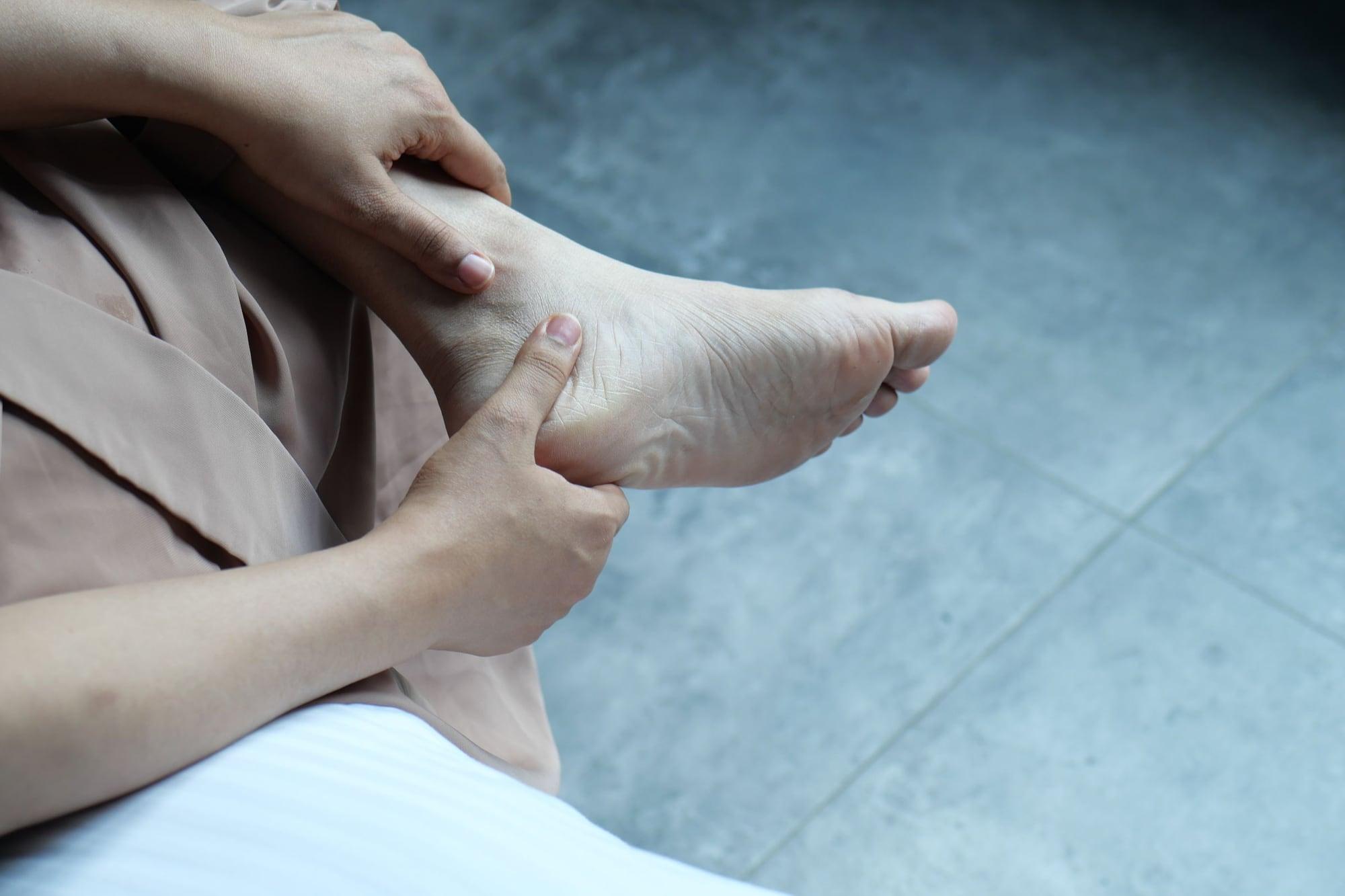
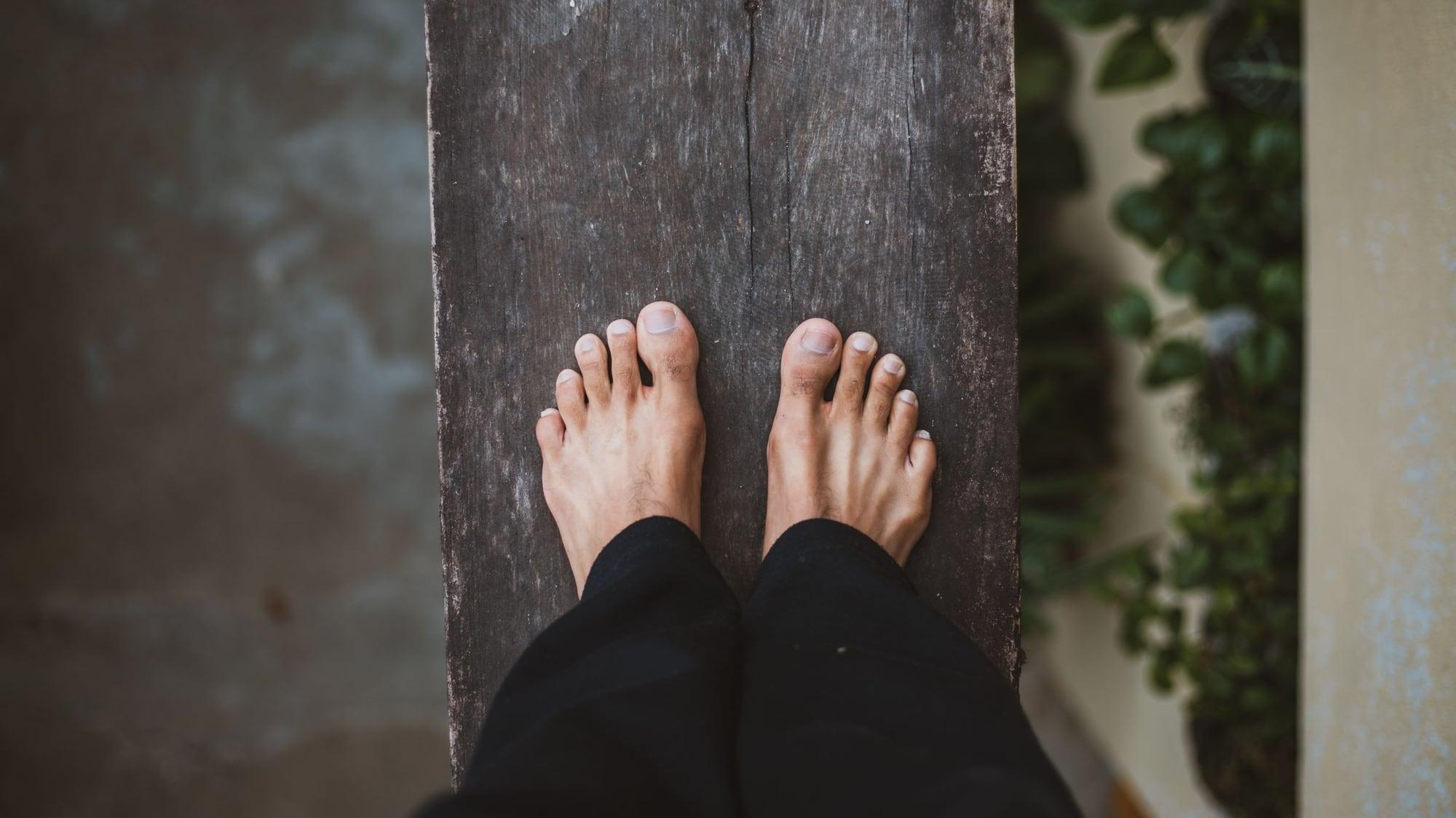
Feet that hurt at night are often reacting to the day: long hours of standing, overuse, or shoes that do not fit. Pain near the heel is commonly plantar fasciitis, while burning, tingling or numbness points toward a nerve-related cause that a doctor should check. See a doctor if the pain is severe, follows an injury, lasts more than two weeks, or if you have diabetes.
You get into bed, the day goes quiet, and your feet start to ache, throb or burn. The possible explanations run from a long day in the wrong shoes to conditions that need a doctor's attention. This guide walks through what reputable medical sources say about why feet hurt at night, how to tell a tired-feet ache from something that should be examined, and the gentle self-care those sources support. It is educational. It cannot diagnose you.
Why feet hurt at night in bed more than during the day
Three things tend to stack up at bedtime.
The day's load shows up late. Cleveland Clinic lists standing for prolonged periods, overuse and shoes that do not fit properly among the general causes of foot pain [1]. MedlinePlus adds long periods on your feet, excess weight and too much walking or sports activity [2]. With plantar fasciitis, the American Academy of Orthopaedic Surgeons (AAOS) notes that pain tends to be greater after activity, not during it [4]. A foot can feel fine at 3 in the afternoon and sore at 11 at night.
There is less to distract you. Writing about nerve pain, a Cleveland Clinic neurologist explains that attention influences how we perceive pain, and that pain can stand out once the distractions of the day are gone. The same article suggests that damaged nerves might read the slight drop in body temperature at night as pain or tingling, and that stress and poor sleep can amplify pain signals [7].
Some conditions keep a night schedule. The NHS says most people who get leg cramps have them at night or when resting [8], and that restless legs syndrome is usually worse at night [9]. Gout flares often start suddenly at night [10]. The symptoms of peripheral neuropathy are often worse at night too [6].
Where it hurts is a clue
Location and sensation will not give you a diagnosis, but they are the first things a doctor will ask about. It helps to be able to describe them.
The six regions of the sole named in this article: toes, toe groove, ball, inner arch, outer edge and heel. The drawing only names the areas. It is not a diagnosis or treatment guide.
What you notice
What sources say it can be
A dull ache across the foot after a long day
Long periods of standing, overuse, or shoes that do not fit [1]
Pain under the heel or between the arch and heel, sharpest on the first steps after rest
Burning, aching or cramping in the toes or forefoot when you lie flat
Reduced blood flow, as in advanced peripheral artery disease [11]
What causes feet to hurt at night
A long day on your feet
This is the ache that tracks with how hard the day was. Standing for prolonged periods and overuse sit at the top of Cleveland Clinic's list of general causes, alongside aging, injury and excess body weight [1]. AAOS singles out standing for long periods on hard surfaces as a risk factor for plantar fasciitis, and names healthcare workers, factory workers and teachers as examples [4].
Shoes that do not fit
Footwear appears on every list. Cleveland Clinic names shoes that do not fit properly [1]. MedlinePlus names poorly fitting or thinly cushioned shoes [2]. The NHS advises against high heels and tight, pointy shoes, and says pain in the ball of the foot is often caused by shoes that are too tight [3][5].
Plantar heel pain
The plantar fascia is a long, thin ligament that connects the heel to the front of the foot and supports the arch. When it becomes irritated and inflamed, the result is plantar fasciitis, which AAOS describes as one of the most common causes of pain on the bottom of the foot at the heel, with about 2 million patients treated for it every year [4].
The pattern matters. The classic signs are pain near the heel with the first few steps after getting out of bed or after a long rest, and more pain after activity than during it [4]. So if your heel protests when you get up in the night, that fits. AAOS reports that more than 90 percent of patients improve within 10 months of starting simple treatment methods [4].
Pain in the ball of the foot
The NHS says this is often caused by exercise such as running, shoes that are too tight, or a condition such as arthritis. A sharp, burning or shooting pain near the toes that feels like a lump or pebble underfoot can be Morton's neuroma [5].
Nerve-related causes
Nerve pain feels different from a muscle ache. Cleveland Clinic describes it as burning, tingling or electric-shock sensations, and lists peripheral neuropathy, diabetes-related neuropathy, tarsal tunnel syndrome and sciatica among the possible sources [1]. The NIDDK says peripheral neuropathy can make the feet feel burning, tingling like pins and needles, numb, painful or weak, and that symptoms are often worse at night [6].
Nerve symptoms are a reason to book an appointment, not to experiment at home. The Cleveland Clinic neurologist mentioned earlier urges people to talk to a doctor sooner rather than later [7]. If heat is your main symptom, see why are my feet hot at night.
When your legs and feet hurt at night
If the pain reaches above the ankle, a few more causes come up in the sources:
Cramps. A muscle suddenly tightens and hurts for anywhere from a few seconds to 10 minutes. The calf is the usual site, the feet less often [8].
Restless legs syndrome. A strong need to move the legs, with uncomfortable tingling, throbbing or itching [9].
Gout. Flares often begin in a big toe or lower limb, start suddenly at night, and can be painful enough to wake you [10].
Reduced blood flow. In advanced peripheral artery disease, pain at rest develops when blood flow to the feet is severely limited. Lying flat removes the help of gravity, which is why some people find themselves dangling a leg over the side of the bed [11].
See a doctor if
Based on the guidance from Cleveland Clinic, MedlinePlus and the NHS [1][2][3], make an appointment if:
the pain is sudden or severe, or you cannot walk
it started after an injury
it has lasted longer than two weeks without improving, is getting worse, or keeps coming back
you see redness, swelling, an open sore, or you have a fever
you have tingling, numbness, loss of sensation or weakness in your feet
you have diabetes or a condition that affects blood flow
cramps or restless legs are disturbing your sleep [8][9]
One more deserves its own line. Leg or foot pain that wakes you, or that forces you to hang your legs off the bed, is described by a Cleveland Clinic physician as a warning sign that warrants medical attention [11].
Gentle self-care that sources support
For ordinary sore feet with none of the red flags above, the NHS, MedlinePlus and AAOS describe much the same short list.
Rest and raise. Put your feet up when you can, and cut back on whatever seems to trigger the pain [2][3].
Ice. The NHS suggests an ice pack wrapped in a towel for up to 20 minutes every 2 to 3 hours [3].
Change your shoes. Look for plenty of room, a low heel and a soft sole, and consider soft insoles or pads [3]. MedlinePlus recommends supportive, cushioned shoes with a wide toe box [2].
Stretch gently. AAOS describes a calf stretch against a wall and a seated stretch in which you cross the foot over the opposite knee and slowly pull the toes toward you, each held for 10 seconds [4]. For cramps, the NHS suggests regular calf stretches [8].
Pain relievers. Cleveland Clinic and MedlinePlus list over-the-counter options such as acetaminophen or ibuprofen. Follow the label, and check with a doctor or pharmacist first if you have a history of ulcers or liver problems [1][2].
Mind your evenings. For restless legs, the NHS suggests regular daytime exercise, a steady sleep schedule and a warm bath before bed [9].
Give home care about two weeks. If nothing has changed by then, that is your cue to be seen [3].
Where a bedtime foot ritual fits, and where it does not
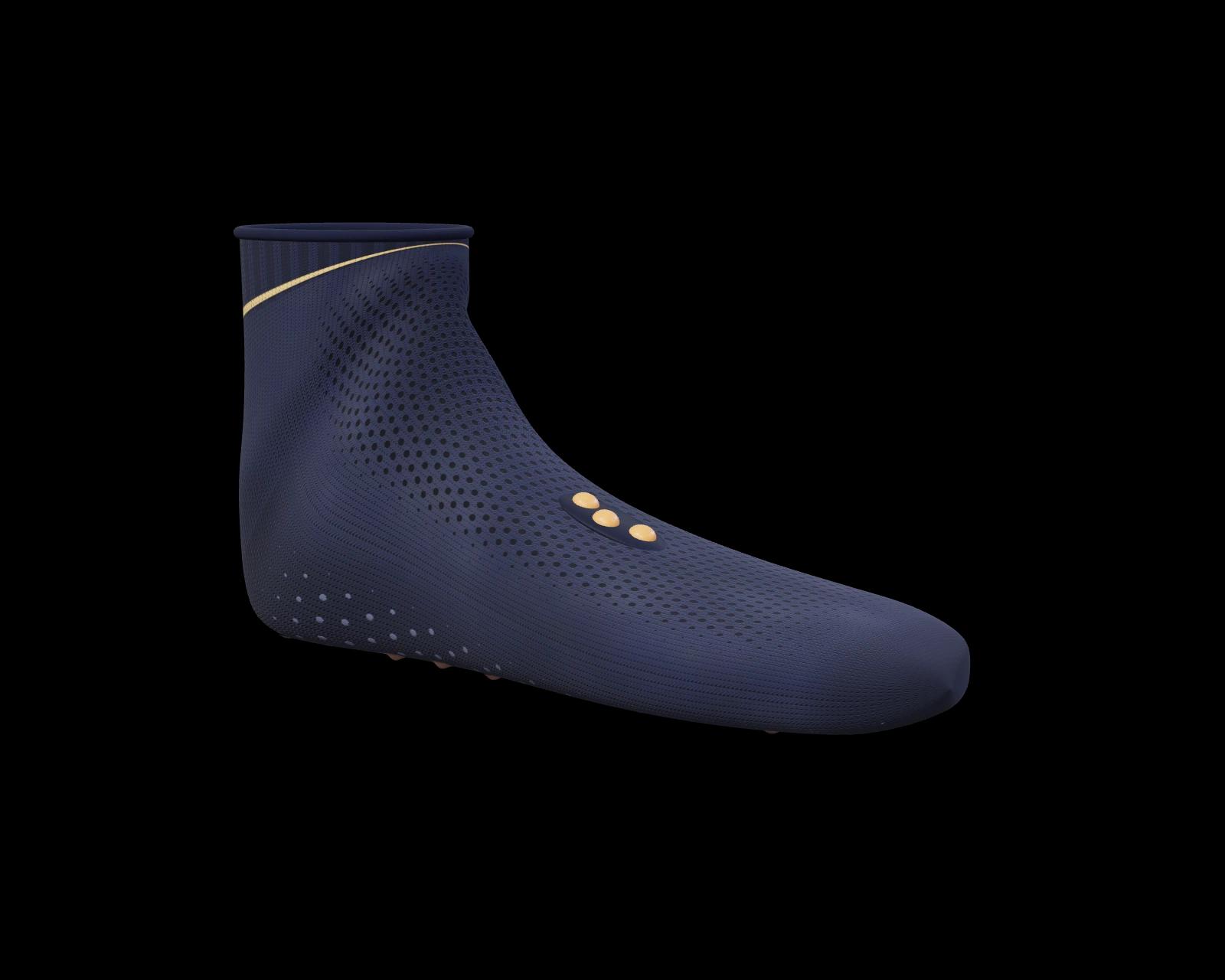
Nothing above requires buying anything. Some people simply like firm pressure on tired soles as a way to wind down, in the same way a foot rub feels good. That is the only thing Somnisole is made for. It is a sock with silicone nubs inside the sole, for achy, tired feet at bedtime and a 5-minute wind-down ritual.
It is a comfort product. It does not treat any cause on this page, and it should not delay a visit to a doctor. Not for feet with numbness, open wounds, diabetes-related foot problems or poor circulation without a doctor's OK. The reason for that caution is simple: the NIDDK explains that nerve damage can stop you from feeling a pebble in your sock or a blister on your foot, and reduced blood flow makes sores harder to heal [12].
If you are curious about the tradition behind foot pressure, our guide to pressure points on the feet covers what reflexology charts say and what the evidence does not support. For a hands-on routine, see how to massage your own feet.
Common questions
How do I stop my feet from hurting when I lay down?
Start with what the NHS and MedlinePlus suggest for sore feet in general: rest and raise your feet, use a wrapped ice pack for up to 20 minutes, wear roomy cushioned shoes during the day, and do gentle foot and ankle stretches. If the pain wakes you, comes with burning, tingling or numbness, or has not improved after two weeks of home care, see a doctor instead of trying more home remedies.
What is plantar fasciitis?
Plantar fasciitis is irritation and inflammation of the plantar fascia, the long, thin ligament that runs along the bottom of the foot from the heel to the front of the foot and supports the arch. The American Academy of Orthopaedic Surgeons describes it as one of the most common causes of pain on the bottom of the foot at the heel. The pain is typically sharpest with the first steps after sleep or a long rest.
What could be causing pain in the ball of my foot?
The NHS says pain in the ball of the foot is often caused by exercise such as running, shoes that are too tight, or a condition such as arthritis. A sharp, burning or shooting pain near the toes that feels as if there is a pebble under your foot can be Morton's neuroma. See a doctor if it has not improved after two weeks of home care, or if you have tingling or loss of sensation.
Why do my feet hurt so bad after work I can barely walk?
Standing for prolonged periods, overuse and shoes that do not fit properly are among the general causes of foot pain listed by Cleveland Clinic. Standing for long periods on hard surfaces is also a listed risk factor for plantar fasciitis. If you cannot walk or the pain is severe, get medical advice urgently instead of waiting it out.
Why do my legs and feet hurt at night?
When the legs are involved too, sources point to several different things. The NHS says most leg cramps happen at night or when resting, and that restless legs syndrome causes a strong need to move the legs that is usually worse at night. Nerve problems and reduced blood flow can also cause night pain, so leg or foot pain that wakes you up should be checked by a doctor.
When should I see a doctor about foot pain at night?
See a doctor if the pain is sudden or severe, follows an injury, has lasted longer than two weeks without improving, or comes with redness, swelling, an open sore or fever. Tingling, numbness or weakness in the feet should also be checked. Anyone with diabetes or a condition that affects blood flow should have foot pain looked at promptly.
12Diabetes & Foot Problems. National Institute of Diabetes and Digestive and Kidney Diseases (NIDDK), NIH. Accessed 2026-11-05.
The sock with the chart built in.
Somnisole puts firm silicone nubs over every zone of the sole, inside a sock thin and breathable enough to sleep in. Made for achy, tired, restless-feeling feet at bedtime.
Somnisole is a wellness product, not a medical device. Not for feet with numbness, open wounds, diabetes-related foot problems or poor circulation without a doctor's OK.