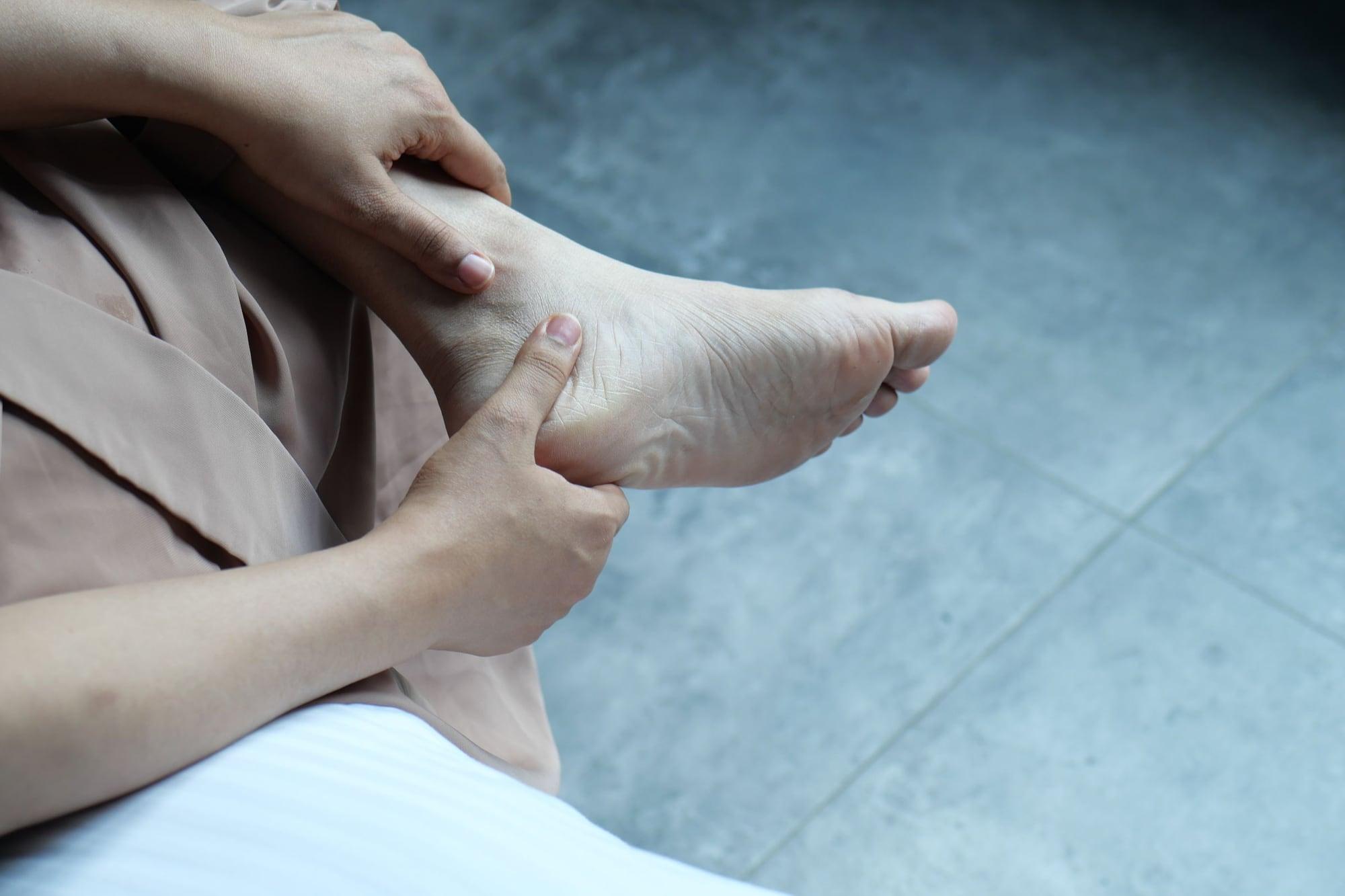
Sore arches usually develop from overuse, unsupportive shoes, weight gain or an injury, and most arch pain involves strain or inflammation of the plantar fascia, the ligament that supports the arch. Flat feet, high arches, a tendon problem on the inner ankle, a compressed nerve and stress fractures are other causes that medical sources describe. See a doctor if the pain is severe, follows an injury, comes with numbness or weakness, or has not improved after two weeks of home care.
Your arch carries a share of your weight with every step, which is why a long day on your feet, a new pair of shoes or a jump in mileage often shows up there first.
Foot and ankle surgeons define arch pain simply: pain across the bottom of the foot at any point between the heel and the ball. [2] This guide covers what medical sources say causes it, what they suggest doing at home, and when to see a doctor. It is educational and cannot diagnose you.
The inner arch, shaded, lies between the heel and the ball of the foot. The drawing names the area only. It is not a diagnosis or treatment guide.
Why the arch of your foot hurts: causes by how it feels
In most cases, according to the American College of Foot and Ankle Surgeons, arch pain develops from overuse, unsupportive shoes, weight gain or an acute injury. [2] The NHS says pain in the bottom of the foot is often caused by exercise such as running, or by shoes that are too tight. [1]
What you notice
What sources say it can be
Sharp pain between the arch and heel that feels worse when you start walking
The plantar fascia is a long, thin ligament that lies directly beneath the skin on the bottom of the foot. It connects the heel to the front of the foot and supports the arch. [3] Most arch pain is due to strain or inflammation of this ligament, which is known as plantar fasciitis. [2]
In most cases it develops without a specific, identifiable reason, but the American Academy of Orthopaedic Surgeons (AAOS) lists factors that make it more likely: new or increased activity, repetitive high-impact activity such as running, standing for long periods on hard surfaces, flat feet or a high arch, tight calf muscles, obesity and age. [3]
The classic pattern is pain on the bottom of the foot near the heel, pain with the first few steps after getting out of bed or after a long rest, and greater pain after exercise, not during it. More than 90 percent of patients improve within 10 months of starting simple treatment methods. [3]
For pain closer to the heel, see our guide to sore heels.
Flat feet and fallen arches
Flat feet, or fallen arches, are where your feet press flat on the ground. The NHS says flat feet are common and usually nothing to worry about, and that you do not need to do anything if they are not causing any problems. [4]
Sometimes they do. You may have pain around your ankle or lower leg, or the inner side of your foot may ache. A foot specialist may suggest wide, comfortable shoes with a low heel, insoles and foot stretches. The NHS notes that these will not change the shape of your feet, but can help with things like pain or stiffness. [4]
A falling arch: the posterior tibial tendon
A flat foot that develops in adulthood is a different matter from one you have always had. The posterior tibial tendon attaches a calf muscle to the bones on the inside of the foot, and its main function is to hold up the arch. When it becomes inflamed or torn, it may not be able to provide stability and support for the arch. AAOS calls the result progressive collapsing foot deformity, formerly known as adult acquired flatfoot. [5]
It is more common in women and in people over 40. The symptoms AAOS describes are pain in the arch or along the inside of the foot and ankle, sometimes with swelling, pain and weakness with activity, and later pain on the outside of the ankle. [5]
AAOS says symptoms are relieved in most patients with appropriate nonsurgical treatment, such as rest, shoe inserts, braces and physical therapy. [5]
High arches
A high arch, also called pes cavus, is the opposite of flat feet and much less common. MedlinePlus notes that, unlike flat feet, highly arched feet tend to be painful, because more stress is placed on the section of the foot between the ankle and the toes. High arches can be caused by a bone or nerve condition. [6]
Not everyone with high arches has pain. In mild cases, proper shoes and arch supports may provide relief, and MedlinePlus advises contacting your provider if you think you have foot pain related to high arches. [6]
Nerve-related arch pain
Tarsal tunnel syndrome happens when the tibial nerve is damaged or compressed where it passes through the ankle. Cleveland Clinic says it usually causes pain on the inside of the ankle or the bottom of the feet, along with burning, numbness, tingling or pins and needles, and weakness in the foot muscles. Flat feet, high arches and injuries such as ankle sprains are among the causes it lists. [7] Symptoms like these are a reason to see a doctor.
Stress fractures
A stress fracture is a small crack in a bone, and the most common cause is a sudden increase in activity. In the midfoot, AAOS says stress fractures of the navicular bone cause pain that is difficult to pinpoint and that is worsened by weight-bearing. It advises seeing a doctor as soon as possible if you think you have a stress fracture, because the bone may break completely if the pain is ignored. [8]
Arch pain at night and first thing in the morning
First steps. Plantar fasciitis pain typically arrives with the first few steps after sleep or a long rest. [3]
Cramps. A muscle that suddenly tightens in the arch may be a cramp. The NHS says cramps can affect the muscles in the feet, that most people have them at night or when resting, and that they last from a few seconds to 10 minutes. It advises seeing a doctor if cramps are disturbing your sleep. [10]
Pain that carries on at rest or wakes you is worth describing to a doctor. See also why feet hurt at night.
What you can do at home
For arch pain with none of the warning signs below, the NHS suggests: [1]
Rest and raise your foot when you can.
Ice. Put an ice pack, or a bag of frozen peas wrapped in a towel, on the painful area for up to 20 minutes every 2 to 3 hours.
Roomy shoes with a low heel and a soft sole. Skip high heels and tight, pointy shoes.
Soft insoles or pads in your shoes.
Gentle stretching of your foot and ankle.
A break from the trigger. Do not do the sport or activity you think is causing the pain, and do not walk or stand for long periods.
Pain relievers such as acetaminophen or ibuprofen.
MedlinePlus adds: check with your health care provider before taking over-the-counter pain relievers if you have a history of ulcers or liver problems, and build exercise back up gradually. [11]
Two stretches AAOS describes
AAOS describes stretching the calves and the plantar fascia as the most effective of the simple measures for plantar fasciitis. [3]
Calf stretch. Lean forward against a wall with one knee straight and the heel on the ground. Place the other leg in front, with the knee bent. Push your hips toward the wall in a controlled way. Hold for 10 seconds and relax. Repeat 20 times for each foot.
Plantar fascia stretch. Sit down and cross the affected foot over the knee of your other leg. Grasp the toes and slowly pull them toward you. Hold for 10 seconds. Repeat 20 times for each foot. This one is best done in the morning before standing or walking.
AAOS also suggests rolling your foot over a cold water bottle or ice for 20 minutes, 3 to 4 times a day, and avoiding shoes that are worn out or do not provide support. [3]
How long to give it
Sources differ. The NHS says pain in the bottom of the foot often gets better in a few weeks, and sets two weeks of home care as the point to see a doctor. [1] The American College of Foot and Ankle Surgeons advises being seen if arch pain persists beyond a few days. [2]
Where a bedtime foot ritual fits, and where it does not
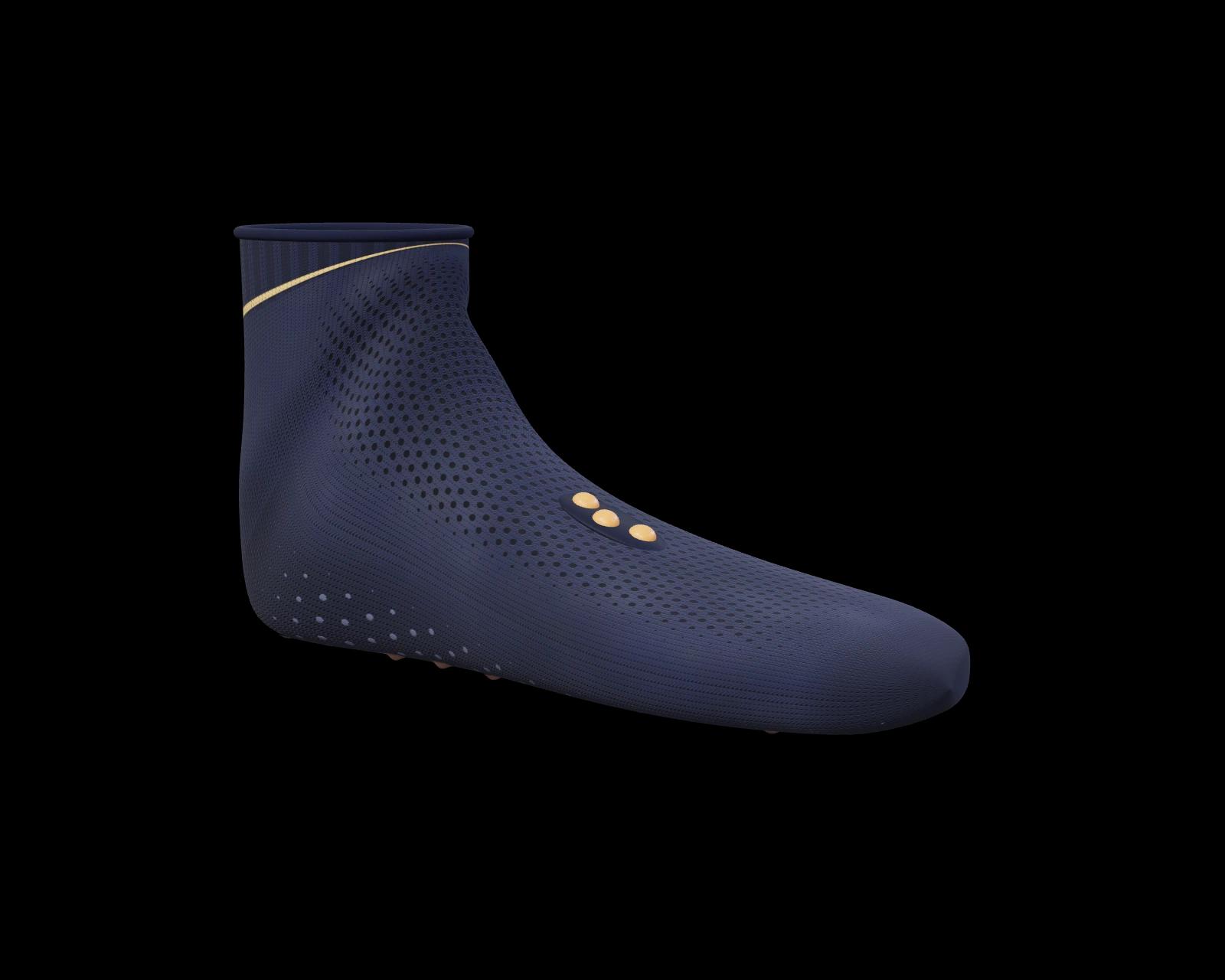
Nothing above requires buying anything. We make Somnisole, a thin bedtime sock with silicone nubs inside the sole, for achy, tired, restless-feeling feet at bedtime and a 5-minute wind-down ritual. It is a comfort product, not arch support. It does not treat any cause on this page, and pressing on an arch that is injured, swollen or numb is not a way to speed anything up. Not for feet with numbness, open wounds, diabetes-related foot problems or poor circulation without a doctor's OK. The reason is simple: nerve damage can keep you from feeling a pebble inside your sock or a blister on your foot. [12] For the tradition behind foot pressure, and what the evidence does not support, see our guide to pressure points on the feet.
Common questions
Why do the arches of my feet hurt?
In most cases arch pain develops from overuse, unsupportive shoes, weight gain or an acute injury, according to the American College of Foot and Ankle Surgeons. Most of it involves strain or inflammation of the plantar fascia, the ligament that supports the arch. Flat feet, high arches, a posterior tibial tendon problem, a compressed nerve and stress fractures are other causes that sources describe.
Is arch pain the same as plantar fasciitis?
Not always, but they overlap. Foot and ankle surgeons say most arch pain is due to strain or inflammation of the plantar fascia, which is known as plantar fasciitis. The NHS describes it as a sharp pain between the arch and heel that feels worse when you start walking. Flat feet, tendon problems and nerve compression can also make an arch sore, so pain that does not fit that pattern or does not improve should be examined.
Can flat feet cause sore arches?
They can, though most flat feet cause no problems. The NHS says flat feet are common and usually nothing to worry about, but that sometimes the inner side of the foot may ache. See a doctor if your flat feet are painful, stiff, weak or numb, if only one foot is affected, or if you did not have flat feet before.
Why does the arch of my foot hurt when I walk?
Arch pain that builds with walking or standing can come from overuse or unsupportive shoes, from the plantar fascia, or from the posterior tibial tendon, which holds up the arch. The American Academy of Orthopaedic Surgeons describes pain in the arch or along the inside of the foot and ankle, with weakness during activity, when that tendon is inflamed or torn. Midfoot pain that worsens with weight-bearing can also be a stress fracture, which should be checked promptly.
Why does my foot arch hurt at night or in the morning?
Plantar fasciitis typically hurts most with the first few steps after sleep or a long rest, and more after activity than during it. A sudden, tight pain in the arch at night may be a muscle cramp, which the NHS says most often happens at night or when resting. Burning, tingling or numbness is a different kind of symptom and should be checked by a doctor.
When should I see a doctor for arch pain?
Get urgent help for severe pain, a foot you cannot walk on, a change in the shape of the foot, or a snap or pop at the time of an injury. Make an appointment if the pain has not improved after two weeks of home care, keeps coming back, or comes with tingling, numbness or weakness. People with diabetes should have any foot pain checked, and an arch that has recently flattened should be examined.
12Diabetes & Foot Problems. National Institute of Diabetes and Digestive and Kidney Diseases (NIDDK), NIH. Accessed 2026-11-06.
The sock with the chart built in.
Somnisole puts firm silicone nubs over every zone of the sole, inside a sock thin and breathable enough to sleep in. Made for achy, tired, restless-feeling feet at bedtime.
Somnisole is a wellness product, not a medical device. Not for feet with numbness, open wounds, diabetes-related foot problems or poor circulation without a doctor's OK.