What Is Foot Reflexology, and Is It Real?
Updated November 6, 2026 · 9 min read
The short answer
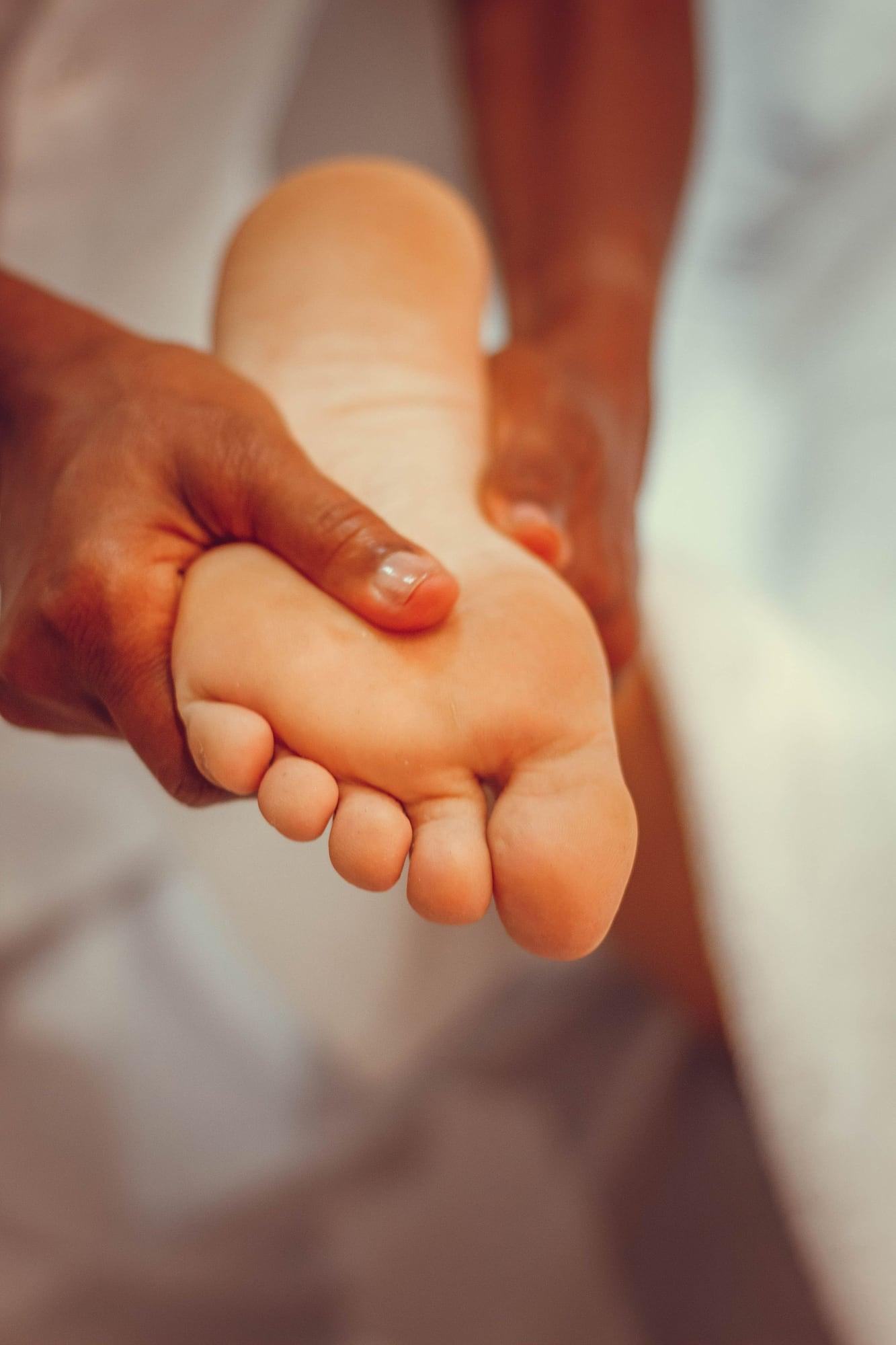
Foot reflexology is a practice in which a therapist presses specific points on your feet, guided by a chart that links each area of the foot to another part of the body. The session is real and many people find it relaxing. The chart is the part that has not held up: systematic reviews have not found convincing evidence that reflexology is an effective treatment for any medical condition.
Foot reflexology has loyal fans and blunt critics, and both groups are partly right. People who try it often find it deeply relaxing. Researchers who test its central idea, that the sole of the foot is a map of the body, keep coming back empty-handed.
This article sets out what reflexology is, where it came from, what a session involves, what the systematic reviews conclude, and how it differs from massage and acupressure.
What is foot reflexology?
The US National Center for Complementary and Integrative Health (NCCIH) defines reflexology as a practice in which different amounts of pressure are applied to specific points on the feet or hands. Those points are believed to match up with different parts of the body. [1]
The map is what sets reflexology apart. A reflexology chart divides each sole into areas, and each area is traditionally associated with an organ or a body part. For example, charts draw a waistline halfway down the foot, and the area above it is traditionally associated with the upper back and the organs related to it. [4]
The University of Minnesota's guide says reflexology is not used to diagnose or cure disease, and that people use it alongside other care. [2]
What is a reflexology foot massage?
In everyday language it is the same thing. Spas and clinics use the phrase for a session of thumb and finger pressure that follows a reflexology chart.
Strictly speaking, the two differ. Massage therapists manipulate larger areas of soft tissue, while reflexologists apply pressure to specific points on the feet, hands and ears. [2]
Where does reflexology come from?
You will often read that reflexology is thousands of years old. The support for that is thin. The University of Minnesota says the practice was possibly first recorded as a pictograph in an Egyptian tomb dated to 2330 BC. [3] A 2015 review repeats the common claim of ancient Chinese origins and adds that no documentation has been found. [4]
The modern history is better recorded, and it runs through the United States.
- William Fitzgerald (1872-1942). A physician often called the father of modern reflexology. In 1917 he wrote about ten vertical zones running the length of the body, an idea known as zone therapy. [3] [4]
- Shelby Riley. A doctor who added horizontal zones and drew a detailed map of reflex points on the feet and hands. [3]
- Eunice Ingham. A physiotherapist who worked for Riley. She judged the feet to be the most sensitive and responsive area, developed the foot maps and charts still used today, and introduced reflexology to the general public in the 1930s. [3] Her books include Stories the Feet Can Tell. [4]
So the foot chart is less than a century old, and it grew out of what a few clinicians observed in their own practice. A 2009 systematic review points out that the theories behind it have not been submitted to sufficient experimental testing. [7]
What happens in a reflexology session?
According to the University of Minnesota, a first visit usually goes like this. [5]
- The practitioner takes a brief health history and may ask you to sign a consent form.
- You stay dressed, take off your shoes and socks, and sit or lie down. Your feet may be washed or soaked in warm water.
- The practitioner checks your feet for wounds, rashes, warts or bunions and asks about any foot pain.
- Work starts at the toes and moves down the foot, covering all the points on both feet with gentle pressure.
- The session ends with calming touch, and you should not be rushed out.
A session generally lasts 30 to 60 minutes. [5] Cleveland Clinic puts most appointments at around 50 minutes, about 25 per foot, and notes that lotion or cream is optional. [6]
People commonly report a general feeling of relaxation, sometimes with tingling or warmth, and some fall asleep. You can ask for the session to stop at any time. The same guide is clear about limits: reflexology is not a substitute for medical treatment, and reflexologists do not diagnose. [5]
How is reflexology supposed to work?
Several explanations are offered, and the University of Minnesota presents each one as a theory. [11]
- Zone theory. The body is divided into 10 vertical zones, and points on the foot are thought to be connected to body parts in the same zone.
- Nervous system theory. Pressure on the feet is said to send calming signals through the nerves.
- Pain theory. Lower stress and a better mood are said to change how pain is felt.
- Vital energy theory. Reflexology is said to keep a vital energy flowing.
None of these has been confirmed. The NCCIH states that the claim that reflexology causes relaxation and healing in the matching parts of the body has not been proven. [1]
Is foot reflexology real? What systematic reviews conclude
The word real can mean three things here, and the answer is different for each.
Is the experience real?
Yes. Even reflexology's sharpest academic critic writes that there is little doubt a foot massage is pleasantly relaxing. [7]
Is the map real?
This is where the evidence is weakest. In a blinded study, two experienced reflexologists examined the feet of 18 adults who had one or more of six specified health conditions, and rated how likely each condition was to be present. Their ratings were very poor at telling who had what, and the two examiners did not agree with each other. The authors concluded that the results do not suggest reflexology is a valid method of diagnosis. [10]
Is it a medical treatment?
Two systematic reviews of randomized trials have asked that question across all conditions.
| Review | Trials | What it found |
|---|---|---|
| Ernst, Medical Journal of Australia, 2009 | 18 | Quality often poor, samples small. Five trials suggested positive effects and 12 did not convincingly show any. |
| Ernst, Posadzki and Lee, Maturitas, 2011 | 23 | Quality often poor. Among the high-quality trials, nine were negative and five positive. |
Both reached the same conclusion: the best evidence does not convincingly demonstrate that reflexology is an effective treatment for any medical condition. [7] [8] A 2015 review that looked across ten systematic reviews agreed that reflexology does not have sufficient evidence to support its clinical use. [4]
The NCCIH's examples show the pattern. In a study of women with advanced breast cancer, a few symptoms such as shortness of breath improved with reflexology, but others such as nausea and pain did not. For most multiple sclerosis symptoms and for irritable bowel syndrome, it says there is too little evidence. [1]
What about newer, more positive studies?
You will also find pooled analyses with encouraging headlines. A 2020 meta-analysis combined 26 randomized trials with 2,366 participants and reported large improvements in self-rated depression, anxiety and sleep quality after foot reflexology. [9]
The same paper explains why those numbers need care. All 26 trials were rated as having a high or unclear risk of bias in at least one area. Only one managed to keep participants unaware of which treatment they were getting. Results varied widely from trial to trial, the outcomes were self-reported, and the authors called for larger and more rigorous studies. [9]
There is a simpler issue too. Cleveland Clinic notes that most studies compare reflexology with usual care, and that no well-designed studies show reflexology to be better than a foot massage. [6] A trial of that kind cannot separate the chart from the rest, attention and pleasant touch that come with any session.
The fair summary
- The session is real, and the relaxation people report is real.
- The claim that points on the foot affect organs has not been demonstrated.
- Reflexology has not been shown to be an effective medical treatment, and it is not a way to diagnose anything.
Reflexology vs massage vs acupressure
| Reflexology | Massage | Acupressure | |
|---|---|---|---|
| Where | Feet, hands or ears | Soft tissues of the body, feet included | Points all over the body |
| Guided by | A chart of reflex points and zones | Muscles and other soft tissue | Acupoints along the 14 meridians of traditional Chinese medicine |
| Technique | Pressure on specific points | Manipulating larger areas of tissue | Steady pressure with fingers or thumbs |
The reflexology and massage columns follow the University of Minnesota and the NCCIH. [2] [13] The acupressure column follows Cleveland Clinic, which describes acupressure as targeting similar spots to acupuncture without the needles. [12]
Is foot reflexology safe?
For most healthy people, a gentle session carries little risk. The NCCIH reports that in the breast cancer study reflexology was safe even for the most fragile patients, and it describes the risk of harm from massage in general as low. [1] [13]
The risks that matter are mostly indirect. The 2009 review warns that reflexology used as a diagnostic tool will produce false results, and that relying on it in place of medical care for a serious condition can be life-threatening. [7] The NCCIH's advice on massage applies here as well: do not use it to postpone seeing a health care provider about a medical problem. [13]
Some situations call for skipping it or asking a doctor first:
- A foot fracture, an unhealed wound or active gout in the foot. The University of Minnesota says to avoid foot reflexology. [14]
- A current blood clot. People with thrombosis or embolism should not receive reflexology. [14]
- Pregnancy, osteoarthritis in the foot or ankle, or vascular disease in the legs or feet. Check with your provider first. [14]
- Diabetes or numb feet. Diabetes can cause a loss of feeling in the feet, so you may not notice pressure that is too hard. [15]
Cleveland Clinic's general advice is to talk to your healthcare provider before trying reflexology. [6]
Trying foot pressure at home
You do not need a practitioner to find out whether you like firm pressure on your soles. Our guide to massaging your own feet walks through a 5 to 10 minute routine, and the pressure points on the feet page shows where the charts put each point.
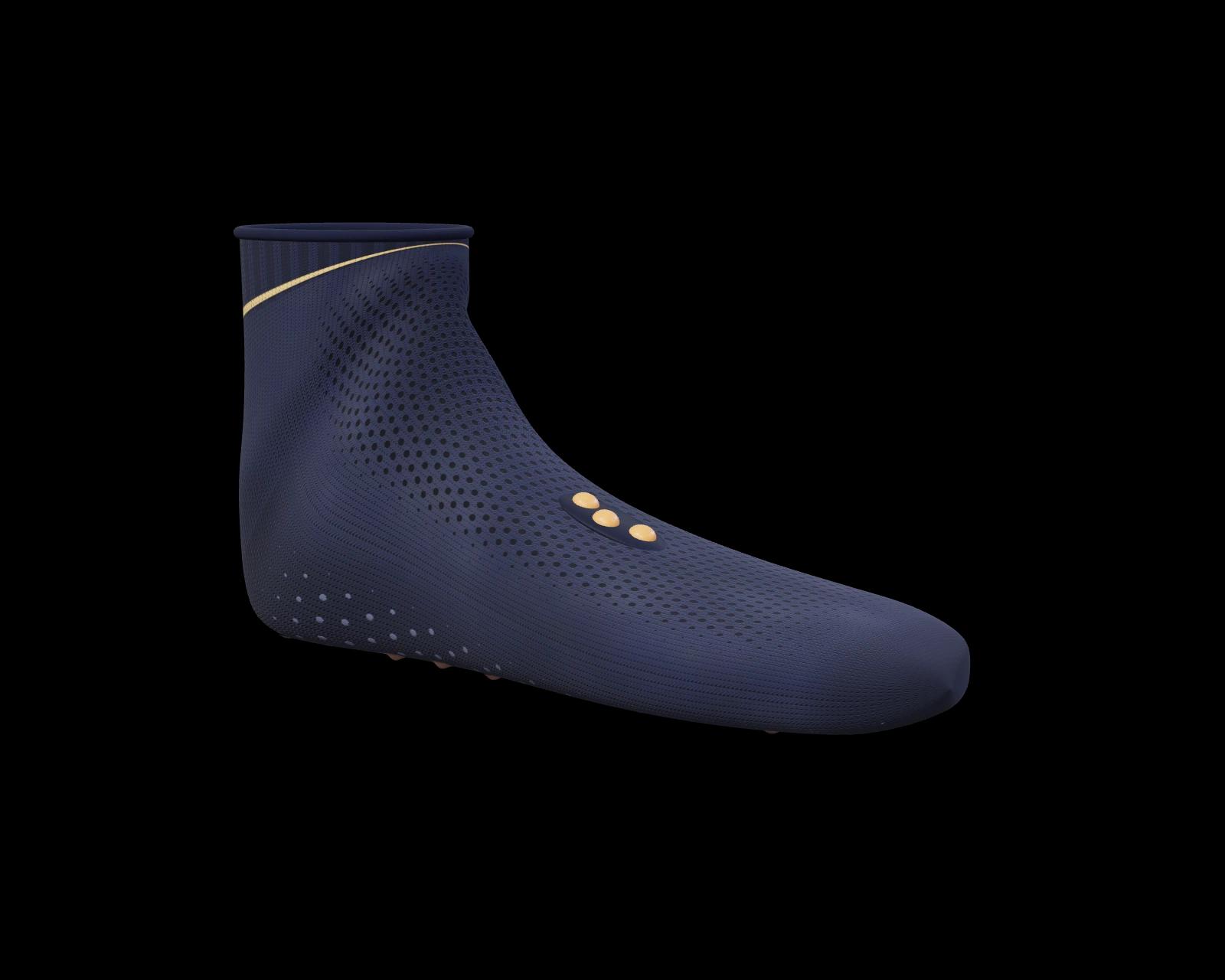
We also make a product in this space, so weigh this paragraph accordingly. Somnisole is a thin, breathable sock with 45 firm silicone nubs inside the sole, mapped to every reflexology zone. We use the chart as a layout, so that no part of the sole gets missed, and we do not claim that pressing any zone affects another part of your body. It is made for achy, tired, restless-feeling feet at bedtime, as a 5-minute wind-down ritual. It is a pre-order and has not shipped yet, so there are no reviews or test results to share. Not for feet with numbness, open wounds, diabetes-related foot problems or poor circulation without a doctor's OK.
If you are comparing options, the reflexology socks guide explains the difference between printed chart socks and socks with nubs.
Common questions
What is a reflexology foot massage?
It is a session of thumb and finger pressure applied to the feet in a set order, following a reflexology chart. A general foot massage works the muscles and soft tissue for their own sake, while reflexology presses particular points that are traditionally associated with other parts of the body. Cleveland Clinic says most appointments last around 50 minutes.
Is foot reflexology real or fake?
The session is real, and so is the relaxation people report. The theory behind it, that areas of the foot connect to organs, has not been demonstrated. When reflexologists were tested blind, they could not tell which health conditions people had by examining their feet.
Does reflexology actually work?
For relaxation, many people say yes, and even skeptical reviewers agree that a foot massage is pleasantly relaxing. As a medical treatment, two systematic reviews concluded that the best evidence does not convincingly show it to be effective for any medical condition. Newer pooled analyses report better self-rated mood and sleep, but every trial in the largest one had a high or unclear risk of bias.
What is the difference between reflexology and a foot massage?
Technique and intent. Massage therapists manipulate larger areas of soft tissue, while reflexologists apply pressure to specific points on the feet, hands or ears according to a chart. Cleveland Clinic notes there is no evidence that reflexology provides more benefits than a traditional foot massage.
Who invented reflexology?
The modern version dates from the early 1900s. Dr. William Fitzgerald wrote in 1917 about ten vertical zones running the length of the body, and in the 1930s Eunice Ingham, a physiotherapist, developed the foot maps and charts still used today. Claims of ancient Egyptian or Chinese origins are common but hard to verify.
Is foot reflexology safe?
For most healthy people a gentle session carries little risk. The University of Minnesota advises avoiding it on a foot with a fracture, an unhealed wound or active gout, and says people with a current blood clot should not have it. If you are pregnant or have vascular disease, diabetes-related foot problems or numbness in your feet, ask your doctor first.
Sources
- 1Reflexology. National Center for Complementary and Integrative Health (NCCIH), NIH. Accessed 2026-11-06.
- 2Reflexology. University of Minnesota, Taking Charge of Your Wellbeing. Accessed 2026-11-06.
- 3What Is the History of Reflexology?. University of Minnesota, Taking Charge of Your Wellbeing. Accessed 2026-11-06.
- 4Revisiting reflexology: Concept, evidence, current practice, and practitioner training. Journal of Traditional and Complementary Medicine, 2015. Accessed 2026-11-06.
- 5What Can I Expect in a First Reflexology Visit?. University of Minnesota, Taking Charge of Your Wellbeing. Accessed 2026-11-06.
- 6Reflexology: What It Is and How It Works. Cleveland Clinic Health Essentials. Accessed 2026-11-06.
- 7Is reflexology an effective intervention? A systematic review of randomised controlled trials. Medical Journal of Australia, 2009. Accessed 2026-11-06.
- 8Reflexology: an update of a systematic review of randomised clinical trials. Maturitas, 2011 (PubMed abstract). Accessed 2026-11-06.
- 9Effect of Foot Reflexology Intervention on Depression, Anxiety, and Sleep Quality in Adults: A Meta-Analysis and Metaregression of Randomized Controlled Trials. Evidence-Based Complementary and Alternative Medicine, 2020. Accessed 2026-11-06.
- 10A blinded investigation into the accuracy of reflexology charts. Complementary Therapies in Medicine, 2000 (PubMed abstract). Accessed 2026-11-06.
- 11How Does Reflexology Work?. University of Minnesota, Taking Charge of Your Wellbeing. Accessed 2026-11-06.
- 12What Is Acupressure and Does It Work?. Cleveland Clinic Health Essentials. Accessed 2026-11-06.
- 13Massage Therapy: What You Need To Know. National Center for Complementary and Integrative Health (NCCIH), NIH. Accessed 2026-11-06.
- 14Are There Times When I Shouldn't Have Reflexology?. University of Minnesota, Taking Charge of Your Wellbeing. Accessed 2026-11-06.
- 15Diabetes & Foot Problems. National Institute of Diabetes and Digestive and Kidney Diseases (NIDDK), NIH. Accessed 2026-11-06.
The sock with the chart built in.
Somnisole puts firm silicone nubs over every zone of the sole, inside a sock thin and breathable enough to sleep in. Made for achy, tired, restless-feeling feet at bedtime.
Somnisole is a wellness product, not a medical device. Not for feet with numbness, open wounds, diabetes-related foot problems or poor circulation without a doctor's OK.
Keep reading: the foot reflexology chart or all articles.